Mental Illness Is No Joke By Deborah Hill, LCSW (Ret.)
Mental illness is a health condition that affects thoughts, feelings, and behaviors—and makes everyday functioning harder. (NIH) Think: Depression, Anxiety, Bipolar Disorder, PTSD, Schizophrenia, ADHD, and more.
I often write about how we all make choices to meet our needs. But for those living with mental illness, that process can feel like walking through fog. Brain chemistry can distort reality and make even basic questions harder to answer:
What do I want?
What am I doing to get it?
Is it working?
Why or why not?
What could I do instead?
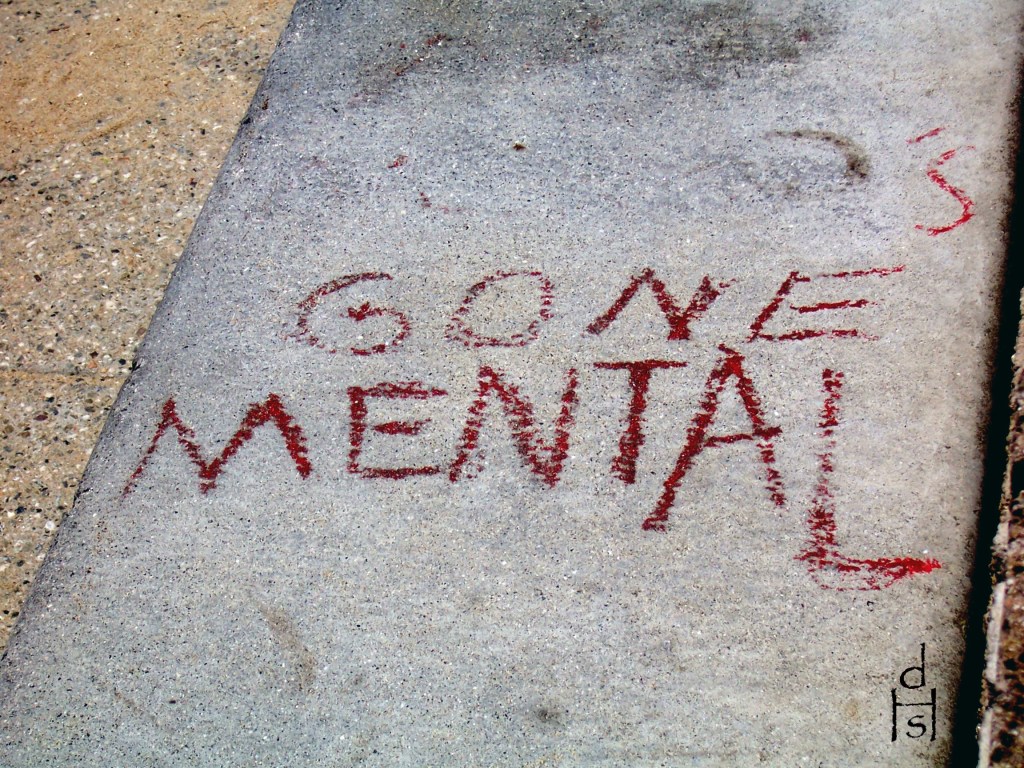
Mental illness isn’t a character flaw. It’s not weakness. It’s not “just in your head.” And it’s definitely not a joke.
Working with a trained therapist can help untangle thoughts, challenge distorted beliefs, and build a life worth living—even if a cure isn’t possible.
If you’re struggling, please know: You are not alone. You are not broken. And you can feel better—with help.
Many people live with chronic mental health conditions—depression, anxiety, ADHD, PTSD, and more. These are real, brain-changing diagnoses that often require medication and therapy just to maintain a sense of “normal.” For some, the illness is severe enough that the old normal no longer applies. They’re left to build a new one from scratch.
The same is true for those facing chronic or life-altering physical illness. They too must learn how to cope, adapt, and find a new way forward.
I live with CPTSD, depression, and anxiety. Over the years—both personally and professionally—I’ve seen a pattern: we often see ourselves as broken pieces of china, trying desperately to glue the fragments back together. But at the same time, we treat ourselves like disposable red Solo cups—crushed under the weight of perceived failure, the loss of a “normal” life, self-blame, and anger toward ourselves, others, the universe, even God.
It doesn’t have to be this way.
We deserve better from ourselves. Healing is hard enough. Beating yourself up will only make it harder.
If life has chipped or cracked your fine china, you have every right to grieve. You have every right to mend. But stop letting yourself—or others—treat you like a crushed plastic cup.
Here are some ways to start reclaiming your worth:
Know your limitations—and respect them. Boundaries aren’t weakness; they’re wisdom.
Create a safe space. Whether physical or emotional, make a place where you’re untouchable.
Practice stress reduction. Listen to music. Meditate. Read. Walk in nature. Do what calms your nervous system.
Pay attention to your self-talk. Are you your own worst enemy? Are you constantly angry, hopeless, or stuck in shame?
Spend time with supportive people. Seek out those who lift you up, not tear you down.
Explore a spiritual practice. Remind yourself that you are more than this moment, this diagnosis, or this body. There is a bigger picture—and you are a meaningful part of it, even if you don’t fully see it yet.
You are not broken. You are fine china—fragile, perhaps, but still beautiful. Still valuable. Still worth protecting.
The Show Must Go On: Children Using Perfectionism & Performance to Cope with Trauma.
by: Deborah Hill LCSW (Ret.)
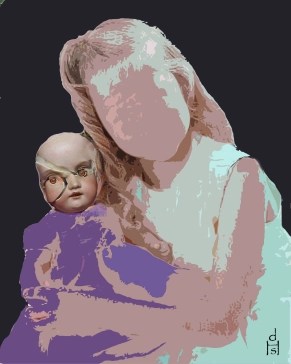
Anna, age four, and Michael, age two (children’s names and ages were changed), were found in their home surrounded by blood and the dead bodies of their parents. At first, everyone understood the devastation these children experienced. Then there came a point where the notoriety wore off, and they were expected to act and feel like they behaved before—only they didn’t. They became super-kids—children who use perfection and performance to cope with trauma.
(I need to make two caveats. Trauma can be from a messy divorce, a close death in the family, or severe illness of the child or a parent, or a terrible car accident. The list can go on and on. The second, not everyone who becomes a performer or perfectionist has trauma in their background.)
Super-kids are children who try to be overly helpful, compliant, or high-achieving to avoid upsetting someone, attempt to gain control of a situation, or feel safe and valued. They tend to take on adult roles or act older than their age, often described as having an old soul. They hide their emotions, appearing fine when inside they are struggling.
How does using perfectionism and performing help the child cope?
1. It offers control in a chaotic world, rather than feeling helpless.
2. In many environments, love and safety feel conditional. A child may learn that being good, impressive, or entertaining earns approval or protection.
3. Performance and perfectionism can provide a powerful distraction from pain.
4. Instead of feeling inherently unworthy, they learn to find value in performance.
5. They give the impression that the child can prevent anything from going wrong by staying ahead of the potential threat.
6. They give the child the feeling that they can control how others perceive them.
I want to emphasize that a child does not consciously choose which skills are necessary to survive. And the behaviors may not initially appear to be performance or perfection coping skills.
What a child wants is to feel safe, protected, and loved. They will do what they need to do, be it perfectionism or performance, to achieve that. The super-kid, is the one nobody expects to be ravaged with internal turmoil.
Important note: Trauma affects each child differently based on age, personality, support system, and type/duration of trauma. One child might act out aggressively; another might become extremely quiet and withdrawn. All trauma responses are adaptations—they made sense at the time the trauma occurred.
References for this blog:
Bessel van der Kolk, The Body Keeps the Score, Diane Poole Heller, The Power of Attachment, Richard C. Schwartz, No Bad Parts, Pete Walker, Complex PTSD: From Surviving to Thriving, Judith Herman, Trauma and Recovery

 Deborah Sickle Hill