Category: Scenes from Real Life

  • JUST HIT SEND!

    JUST HIT SEND!

    JUST HIT SEND!

    I finished it a month ago—my latest novel, Dark Consequences. Normally, I self-publish. More creative control, no middleman, a say in the logistics of the book, the title, and the cover. The best part, I don’t have to wait a year for the final product to come out.

    For reasons that escape me, I’ve decided to get this book commercially published. You know the rat race—finding an agent, finding a publisher, rewrites to fit someone else’s ideas of publishable, and a decrease in creative say in the book cover.

    I know why—I’m tired of hearing self-published authors don’t count. Bull sh–! Tired of my lack of marketing skills, damn introversion.

    Are these the real reasons, or do I suffer from imposter syndrome? I’ve never held a book opening event. Just quietly published, made some posts, and let it ride. People tell me both books, Death in Disguise and The Revelation, are gripping, with well-developed characters and plots and subplots that keep the reader engaged.  So what the f—- is my problem?

    Everything is ready: The synopsis, the query letter, the pitch. I think it’s a great story.  Just hit SEND!

    Did I tell you it’s the first novel of a four-part series—all of it written? Just hit SEND!

    You want to know what the story is about? It’s a dark historical supernatural novel. Set in 1848 Maryland amid the upheaval of a quarry town, the story blends gothic atmosphere with folk horror and social tension. It explores superstition, grief, and the resilience of working-class families. There is no reason not to hit SEND!

    Here I sit, everything ready to go, a destination picked out, and a fear of HITTING THE DAMN SEND BUTTON! Can anyone relate to this? If so, I’d love to hear how you overcame this affliction.

  • Chasing Giants on the Autumn Sea

    Chasing Giants on the Autumn Sea

    Chasing Giants on the Autumn Seas

    I’ve never chased a giant before. The reason is simple. Except for several black bears in the Great Smoky Mountains. Buffaloes and other residents of Yellowstone National Park—wildlife avoid me.

    It’s a running joke between my husband and me. Still, traveling across the U.S.A., my camera or cell phone is always at the ready. One day, I know, the ultimate image of my Leviathan will come—even if I don’t know what that looks like. But I’ll know it when I see it!

    The search reminds me of Herman Melville’s quest to find Moby Dick—wait! That’s it! Whales!

    The advertisement stated, ‘Guaranteed to see whales and dolphins!’Location: Gloucester, Massachusetts. Hmm, whales and dolphins, guaranteed. How could I lose?

    We’ll be in New England this fall—think brisk air, fiery foliage. I booked the tour, purchased waterproof pouches for our phones, and researched what we would need for the four-hour tour—namely, heavy coats (waterproof), hats, and gloves. Apparently, it’s twenty degrees colder out at sea in Massachusetts than on land.  Um, spending four hours in thirty-something to forty degrees temperature with a wind chill. I was not prepared for that. Bring sea-sickness pills. I didn’t think that through. I get very sick on amusement rides and cruises. Thank goodness for Bonnine!

    Hesitation fills my brain and dreams. We miss the boat. I vomit the entire trip. I drop my phone in the ocean. There are no whales. I see whales—but I’m not fast enough to take pictures. What the hell? This was supposed to be a great adventure! Now, wait a minute. Mind-shift.

    It’s going to be a great adventure! A lot of fun! It will be like Mr. Scott says to Captain Kirk in Star Trek IV, “Captain, there be whales here!”  Like Herman Melville, I’m going to get my whale! I’ll have a picture worthy of National Geographic! One can dream. Wish me luck.

  • Memento Mori- Remember You Will Die

    MEMENTO MORI- REMEMBER YOU MUST DIE

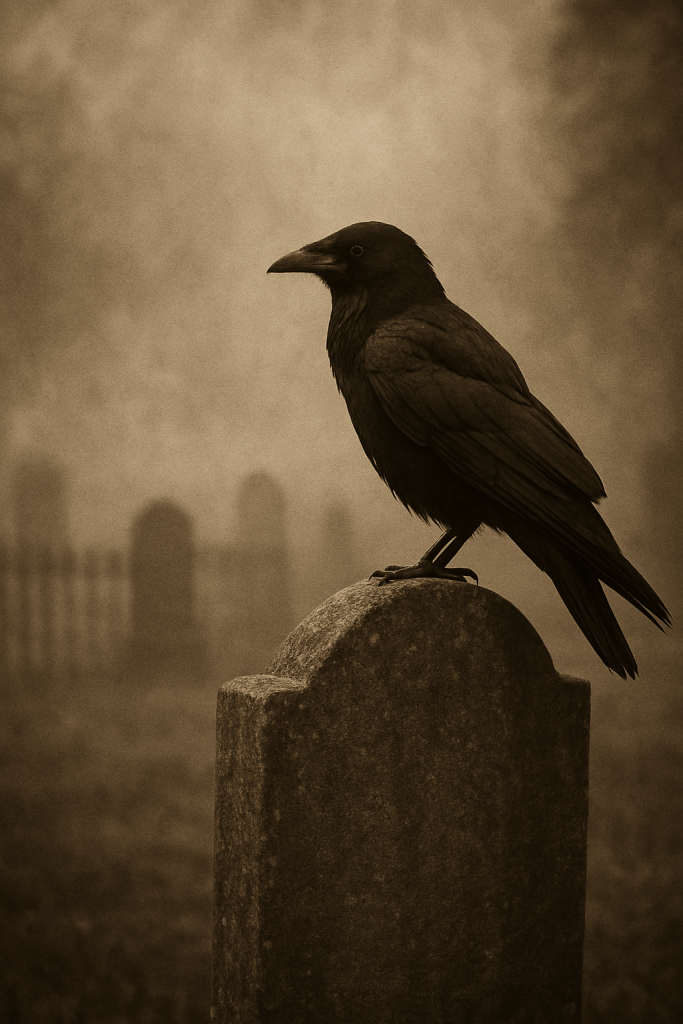
    Call me morbidly curious, gothic—not goth, macabre, perhaps even a dark coper. They all mean about the same thing. Paraphrased from the dictionary, someone having a fascination for dark and unpleasant subjects, the supernatural, death, and melancholy. A dark coper, a person who uses scary media to process fear to gain a sense of preparedness for real-world dangers.

    You would never know this looking at me. I don’t advertise. This leads me to a quandary: trying to explain my writing to people who view dark fiction (horror) as slasher movies and grotesque. Yes, there is a market for this type of film. It’s not my market, and it is definitely only a sub-genre of a vast cornucopia of artistic endeavors.

    To me, a good dark fiction novel contains deep, well-rounded characters with strong arcs and meaningful relationships. They encounter, because of their own actions or the actions of someone or something else, a situation(s) leading them to a life and death situation. Physically or psychologically. A cause to reevaluate everything they thought they knew about life. A chance to make a difference. An opportunity to do the greater good—even if the result is self-sacrifice.

    Yes, there are works of fiction where the antagonist is the main character. The twists and turns of a mind deliberately cause the protagonist to struggle. Even then, both the antagonist and the protagonist need to be well-rounded characters—why else would you root for success? Though in some situations, the result is disquieting as the antagonist wins, leaving the reader with their own sense of dread or self-evaluation. The Invasion of the Body Snatchers is a good example of this. Spoiler: the aliens win.  

    Someone asked me, “Why do you write horror? Why not write romance or dramas?”

    All my novels contain historical drama and romance. However, my answer is simple.  It’s a great way to have a safe place to explore fears and past traumas. It’s cathartic, entertaining. I like it when a character beats the odds and comes out whole. And of course, it harks back to Memento Mori. I’m drawn to it like a moth to a flame, unable to resist its calling.  (Not today—at least I hope not!)

    To date, I’ve written and self-published two fiction books. Death in Disguise is a dark murder mystery taking place in the 1950s in a small fictional town. The Revelation is a dark, supernatural tale set on an archaeological site in the 1980s. My latest finishedwork, currently vying for an agent, is called Dark Consequences, about an Irish famine victim, forced to come to America, where he makes a fateful decision bringing death to the small quarry community where he settles. It’s book one of a four-part series.

    If you’re interested in well-developed characters living somewhere in history, a solid cast of characters and plots where the consequences of decisions are life-changing, exploring the world of the supernatural, give me a try. I’m really not that scary.

  • The Legacy of a Grandmother

    The Legacy of a Grandmother

    The Legacy of a Grandmother

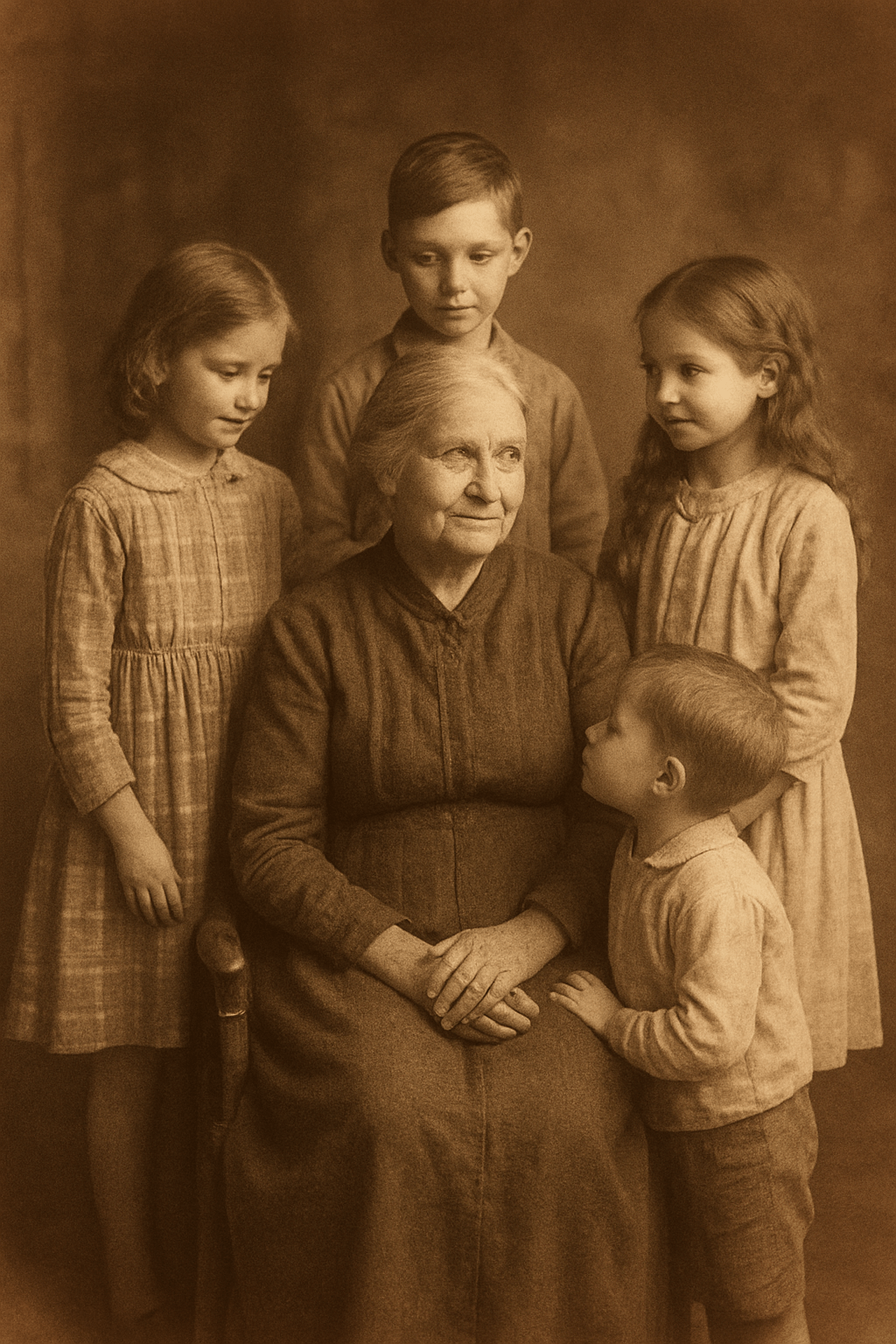
    I had a grandma, a grandmom, and a nanna. Three very different women, born of different circumstances, and yet very much the same.

    We lived with Nanna during my youngest years. Her home was a powerhouse of fond memories. She was a strong German woman who took in numerous foster children, one of whom was my mother. As an adult, my mom needed a wheelchair, and Nanna became partly her caretaker. As a child, I saw her as weak, but she was fierce in her strength.

    Grandmom was my father’s mother, the daughter of a candymaker in Baltimore. She birthed thirteen children and had more grandchildren than anyone could count. I was one of them, yet when I was with her, she made me feel like the only one. Gentle and traditional, she baked the best cakes and grew the finest roses.

    Grandma, my mother’s mother, lived on what we called “poverty row.” Her ex-husband, my grandfather, was abusive and an alcoholic, and a government agency split their three children apart. Fiercely religious and spiritual—a holy roller, a savior of the lost and downtrodden—she treated me like an angel. She laughed easily, knelt on my level, and helped pull me through the grief of losing Karen.

    My mother, the grandmother of my children, spent most of her own childhood and teen years in the foster care system. Yet she became the most loving, involved grandmother of all. I was blessed with a model mother, and she carried that care into her role as “Grandma.”

    Now it’s my turn. I carry forward elements of all four women, adding my own. I know some people never knew their grandmothers. Others may not have had positive experiences. But behind each of us is a legacy of women—whoever they were, however they lived—who shaped our lives.

    Today, as I prepare for my grandson’s Wednesday visit, I feel those women with me—their laughter, their resilience, their love—woven into who I am as a grandmother.

    What about you? What influence, positive or negative, did the women of the older generation leave on your life?

  • A Portrait of Grief

    A Portrait of Grief

    A Portrait of Grief

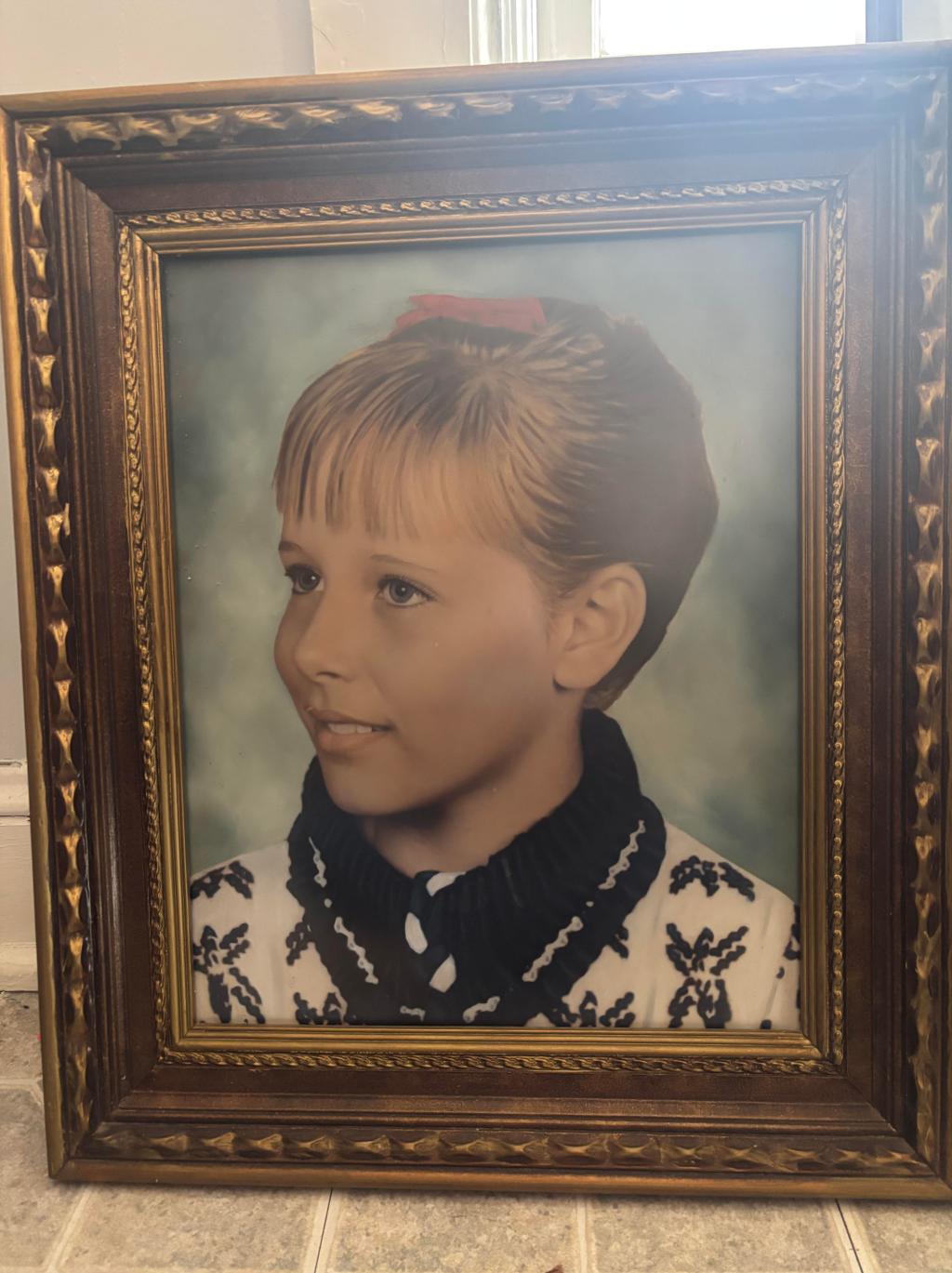
    It’s been fifty-seven years since she passed. I keep mementos around my office and bedroom, so she’s never far from my thoughts. About fifteen years ago, I realized I could talk about her and see pictures of her without losing my mind. Our long book of grief was finally closed and set on the shelf. Then I was given the portrait.

    A huge school picture, the kind meant for hanging over a fireplace. I’d stared at this picture and longed for it most of my life. Now it sits in my office, still without a place on the wall. Part of me wants to hang it prominently in the living room—but she means nothing to my family. My office? Would that be hiding her away—or finally putting her where she belongs?

    Last night, she sat in my living room while we watched TV. I think I spent as much time watching her as I did the screen. Remembering words I never got to say. I was probably much too young to speak them then. Not that I haven’t talked with her over the years—countless hours lying by her grave, telling her about my day, playing our music, and getting lost in our past. My portrait. Her face.

    I always thought I should have been the one to pass on, me being the sickly one. Irrational, but a part of me still carries that guilt. Growing up, I wanted to be perfect so I’d get to heaven and see her again. I wanted to be the best to fill the hole her absence left. I was just a kid—I’ve had plenty of therapy since then.

    So why am I sitting here now, lightly sobbing? It’s only a portrait that needs a home. But I wonder if I ever told her I loved her—not after the fact, but in the moment, when she could answer back.

    It’s been fifty-seven years since she passed, fifteen since I stopped punishing myself. And now this portrait sits here, reminding me that maybe grief isn’t a closed book after all—it’s a story that keeps finding its way back into my hands.

  • When a Muse Takes a Nap

    When a Muse Takes a Nap

    When a Muse Takes a Nap

    Some days, the words just don’t come. Today is one of those days. I haven’t written a blog in two weeks, and instead of writing, I’ve been building Super Mario characters for Halloween and planning a trip.  Creative, yes — but not the kind of writing I promised myself I’d be doing. And today? I’m just…blah.

    Today, though? I feel…blah. No big burst of inspiration. No profound story to share. Just the quiet reminder that creativity has its rhythms. Some days are fireworks, others are embers barely glowing. And that’s okay.

    Even “blah days” are part of the process. They give us space to rest, reset, and — eventually — return to the page with fresh eyes.

    So here’s to the ebb and flow, the spark and the silence. The muse may be napping today, but I know she’ll wake up again soon.

  • Disney Magic and a Red Car

    Disney Magic and a Red Car

    Hubby and I walk into a car rental place and pick out a Chevy Cruze the agency insists is “RED.” I call it terracotta. Chevy’s website calls it Autumn Metallic. Either way, it’s not red.

    Why does this matter? Imagine trying to find your rental in a strange lot and saying, “It’s red.” Would you look for that car? Exactly.

    The Cruze also has a dashboard computer that does everything but bake bread—without instructions. Too tired to figure it out, we grab gas and snacks at a Kangaroo mini-mart.

    While Hubby’s inside, I plug in my phone. He returns and says, “Find something on the radio. Looks like it’s got satellite.” I try, but the screen keeps asking me permission for things I don’t understand. I hit yes. Nothing happens.

    Then suddenly—music. “Yo, ho, yo, ho, a pirate’s life for me,” in a voice suspiciously like Johnny Depp. Next up: This Is Halloween from The Nightmare Before Christmas. Perfect, since we’re headed to Disney World.

    “It’s like they know we’re coming,” Hubby says. “Disney must have its own station.”

    I’m convinced. We sing along—until the songs end abruptly. Then comes a rumba ditty we hate, followed by beeps, whirls, and finally… a telephone ring.

    Hubby stares at me. “Those are your ringtones! The car is playing your ringtones. What did you plug into?”

    And just like that, the Disney magic vanishes. Johnny Depp wasn’t crooning to me after all; it was an old 99-cent ringtone download. This Is Halloween? Same story.

    So no, I don’t know how to work the car’s computer. But I do know one thing: I’m not sitting in a RED car.

    Has your car ever synced itself to your ringtones?


    I

  • The Mobility Scooter

    The Mobility Scooter

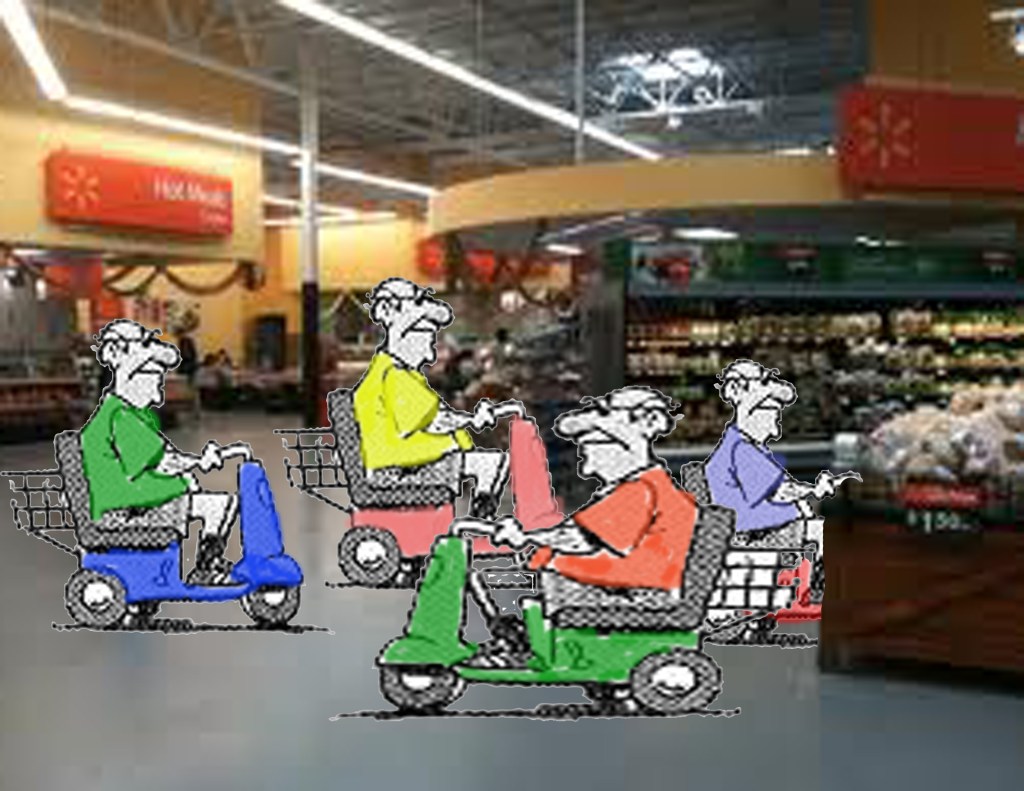
    There are reasons and times when it is necessary to buy or rent a scooter to get around. This decision does not come easily, and the public, in many cases, is not sympathetic. In fact, they are prejudice, misunderstanding, and outright cruel.

    We don’t get out much, but when we do, my husband needs to use a scooter. What we’ve encountered in people is hurtful and frustrating.

    1. They accuse him of faking his disability.
    2. Call him lazy.
    3. Accuse him of milking a system to get privileges or perks.

    My husband, to offset some of these things, wears his Navy hat. If people see the hat, they leave him alone. Assuming, I guess, that he was injured during his fourteen years of service. And that makes it okay to use a mobility scooter.

    Yes, there are reasons people act like jerks to the disabled.

    1. They do not understand hidden disabilities.
    2. They see scooters as being in the way.
    3. Some people just need to mock or discredit people with disabilities.
    4. Some people use cruelty to not have to look at their own vulnerabilities.
    5. They feel the person is being lazy and want to teach them a lesson.

    We especially have this problem in locations where multiple people are using a mobility scooter. You can hear the sighs, the jeers, the personal attacks. People going out of their way to make the person in the scooter feel small.

    It’s tough to use a mobility scooter.

    1. You have to face your own issues with loosing mobility.
    2. You are, in a way, putting a bullseye on by using the scooter.
    3. The limited ability to go to all places and terrains, and weather.
    4. I’m sure there are many more reasons it is tough to use the scooter.

    So, next time you see someone or a group of people in a mobility scooter, remember they would much rather have your mobility than sit in that chair. For the love of God, stop being so cruel!

  • How Many Sleeps Do You Have?

    How Many Sleeps Do You Have?

    How Many Sleeps do You Have Left?

    This is the question my 4-year-old grandson asked me.

    “What do you mean?”

    “You know, how many sleeps do you have before you have to go to heaven to see Jesus?”

    Blew my mind away. How do you answer? I told him nobody knows how many sleeps they will have before they meet Jesus.

    “But how many sleeps? A couple or a lot?”

    “So many sleeps I can’t count them.” Is my answer. It seems to satisfy him.

    There was the time when my 4-year-old granddaughter asked me.

    “Do you remember when I was your grandmother. I always loved you so much.”

    Blew my mind away. How do you answer? I told her, “Why not tell me about some of our times together?” 

    My memory is clear, as I was very close to my grandma. Granddaughter smiles, takes my hand, and we play.

    How about you? Do you have any experience with young children asking you profound questions concerning the afterlife? Tell me in the comments. I’d love to know.

  • THE LONG GOODBYE, THEN THE SILENCE

    THE LONG GOODBYE, THEN THE SILENCE

    My uncle was dying in a Florida hospital, a thousand miles away. The call came early: Expect the inevitable. Keep your phone close.

    He wasn’t just an uncle—he was a second father. But I was home with my daughter, helping her recover from major spine surgery. She needed me. I couldn’t leave.

    All day, I juggled logistics, wondering if I could fly down. My mother said, “Let us visit the hospital, then we’ll talk tonight.” But the call never came.

    By midnight, my imagination took over. Maybe he’d already passed. Maybe they were too distraught to tell me—like when my sister died when I was seven and I couldn’t say goodbye.

    At 12:30 a.m., I half-joked to my daughter, “Maybe he’ll come say goodbye.” I thought of my grandmother’s rocker that moved by itself after she died. Surely my uncle could find a way.

    Unable to sleep, I crept downstairs for Lucky Charms, passing my late sister’s Chatty Cathy doll. I pulled out my uncle’s old camera, set it on the table, and cried until empty. Then—a shadow at my feet. I screamed. The milk went flying.

    “Meow.” Just the cat.

    The phone rang—he was still alive. Instead of relief, I felt emptiness. The next night, the real call came: my uncle was gone. I went numb, then collapsed into wailing.

    I’ve seen a lot of grief in my practice, and I know: do whatever healthy thing you need to survive. I let my thoughts spiral. I isolated. Days later, I picked up his camera and started shooting stills while playing childhood music.

    My office door swung open. A warm, healing feeling washed over me—comforting, not frightening. I like to think my uncle came to give me a hug. It was what I needed to begin the long, twisting road of healing. Who are you to tell me it was anything different?

    IF YOU ARE GRIEVING, KNOW THESE THINGS:

    • No one grieves the same.
    • Don’t let anyone tell you you’re taking too long.
    • Use your support system.
    • Keep a treasured object.
    • Write letters to your loved one.
    • Join a support group when ready.
    • Seek counseling if you’re struggling—or simply to talk.
    • Pray, meditate, or find your own way to connect.

    If you’re grieving, my condolences. I hope my experience helps you on your journey. —Debbie