Author: DeborahSickleHill

  • Sex and Pancakes

    @Deborah Hill

    Sex and Pancakes

    Craving Connection in a World of Instant Gratification

    By: Deborah Hill LCSW (Ret.)

    I like to unwind with reruns of The Colbert Report and The Daily Show. No matter what kind of day I’ve had, that satirical hour somehow makes everything feel a little better.

    One episode featured a spoof on black-market Canadian maple syrup, comparing it to a drug cartel. The mock reporter—adamantly syrup-free—feared one taste would spiral him into addiction, crime, and sticky ruin. Naturally, he caved. The next thing you know: endless pancakes, missed work, shady street deals, and a full-blown syrup bender.

    I laughed out loud—then turned to my dog and said, “Damn, I wouldn’t mind some pancakes with syrup. Do we have any King Syrup?”

    King Syrup is the good stuff—thick, rich, slow to pour. My dad used to beg me to smuggle bottles down to Florida. You can’t get it there. He gets it. I get it. We’re syrup people.

    That night, I resisted. I had toast with peanut butter and milk in a blue Solo cup. Later, I played a few rounds of Bubble Mania, freeing kittens from bubbles (usually gratifying). But not that night. My mind was stuck on syrup.

    At 6:00 a.m., I woke up with one clear thought: Pancakes.

    I made a stack—instant mix, just add water. Three golden-brown discs with butter, warm and waiting. I pushed my work aside and gave them my full attention.

    With reverence, I poured the King Syrup (not Canadian, but Fredonia, NY—close enough?) and let it soak in. Not too long—you don’t want soggy regret. Then I ate, slowly, trying to channel the reporter’s syrup high.

    It didn’t work.

    What I got was 1,000 empty calories and the gnawing feeling that this wasn’t it. Not really.

    And then it hit me:
    What I wanted wasn’t pancakes or syrup.
    I wanted joy.
    I wanted connection.
    To feel loved, valued, seen.
    Maybe even touched. Perhaps even… sex. Or intimacy. Or something that told me I mattered.

    Sometimes, we crave comfort and reach for what’s easy—food, TV, a distraction—because it almost satisfies. It promises to fill the hole but leaves us emptier than before. We make choices that don’t serve us, not because we’re broken, but because we’re human and hungry for something deeper.

    The mind is tricky. Needs unfulfilled will find a workaround, even a ridiculous one. That Colbert sketch planted a seed. Logically, I knew pancakes weren’t the answer. But that night, syrup made sense.

    Is it any wonder our behavior can get a little wacky? That we gravitate toward something—or someone—that offers relief, even when we know better?

    What if we could pause in those moments and ask, “Is this really what I need?”

    What if we could yell STOP before that instant gratification derails something deeper?

    If you find yourself elbow-deep in pancakes and still feeling empty, it might be time to ask what you’re really craving.
    And maybe—just maybe—you’ll find a healthier, richer, more lasting way to feed that hunger.

    Bon appétit.

  • When Life is not what you Dreamed

    @Deborah Hill

    When Life Isn’t What You Dreamed: How to Reconnect with Your True Needs and Wants

    Deborah Hill LCSW (Ret.)

    (3-minute read)

    At some point, nearly everyone looks back on life and wonders, How did I get here?
    What happened to the dreams, the plans, the “could have beens” and “should have beens”?

    The answer is simple to say—but often hard to accept:
    For the most part, we made choices that brought us to where we are now.

    That’s not to say we chose the traumas, losses, or catastrophes that blindsided us. No one chooses to be hurt, abused, abandoned, or thrown into crisis. But the choices we make afterward—the way we respond, the paths we follow—those decisions shape our journey.

    And when our choices take us further from the dreams we once had, we start to feel unbalanced, unsatisfied, or even angry.


    Why Do We Make the Choices We Do?

    Most of us choose what we think is best at the time. A child throws a tantrum to get candy, believing it will work. An adult gives the silent treatment over forgotten flowers, hoping to “teach a lesson” and feel valued next time.

    Sometimes we make reactive choices. Other times, we simply lack the information or emotional tools to choose differently.

    Take the example of a teen from a broken home who joins a gang. From the outside, it’s clearly not in his best interest. But with the limited knowledge and options he sees, it’s the closest thing to a family—offering belonging, respect, and protection.


    The “Quality World” We All Carry

    As we grow, we create a personal picture of what our ideal life looks like—our Quality World. In this internal landscape, all our needs and wants are met. We feel safe, loved, successful, joyful.

    Ideally, we spend our lives making choices that move us closer to that picture. But if we don’t fully understand our needs and wants—or the options available to us—we may veer off course.

    And here’s the truth:
    Your ideal picture is probably a fantasy. But beneath that fantasy lies something very real—your core needs and desires.


    A Practical Example

    Let’s say your Quality World includes owning a Maserati. But in reality, you’re driving a rusty old Ford.

    You probably can’t buy the Maserati—but ask yourself why you want it.
    Maybe it symbolizes success, admiration, adventure, freedom.
    Maybe what you really want is to feel noticed, valued, alive.

    When we understand the why beneath the fantasy, we can start finding real-world ways to fulfill those needs—without waiting on an impossible dream.


    How to Align Your Life with What You Truly Need

    Step 1: Discover the “why” behind your fantasy.
    Use your imagination. If there were no limits—what would your life look like? What does that dream say about what you truly want?
    (Example: “I want to be on a football team” → “I want belonging, excitement, shared purpose.”)

    Step 2: Explore realistic substitutes.
    You may not become a surgeon—but can you volunteer with the Red Cross? Become a first aid officer? Help people in ways that still honor your deeper needs?

    Step 3: Examine your current choices.
    Are they aligned with your needs and wants—or taking you further away from them?

    Step 4: (Corrected numbering)
    Take small steps toward a better fit.
    Set short- and long-term goals. Think of these goals as your rudders—they help steer your ship, even when waters are rough.

    Step 5: Evaluate regularly.
    Ask yourself:

    • What do I truly want and need?
    • What am I doing to get it?
    • Is it working?
    • What could I do differently?

    Final Thoughts

    You may never have the exact life you imagined—but you can build a life that meets your real needs, a life that feels meaningful, grounded, and authentic.

    It’s never too late to rewrite your story, one intentional choice at a time.

  • You’re Fine China–Not a Crushed Solo Cup

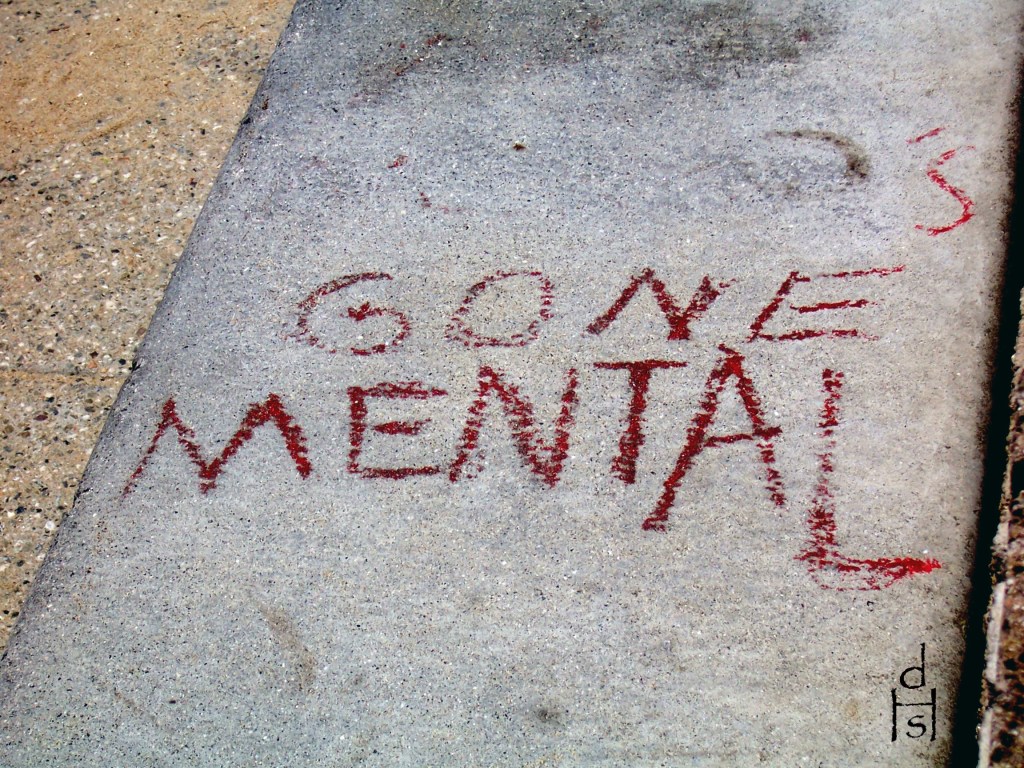
    Gone Mental ©Deborah HIll

    You’re Fine China—Not a Crushed Solo Cup

    by: Deborah Hill LCSW (Ret.)

    Many people live with chronic mental health conditions—depression, anxiety, ADHD, PTSD, and more. These are real, brain-changing diagnoses that often require medication and therapy just to maintain a sense of “normal.” For some, the illness is severe enough that the old normal no longer applies. They’re left to build a new one from scratch.

    The same is true for those facing chronic or life-altering physical illness. They too must learn how to cope, adapt, and find a new way forward.

    I live with CPTSD, depression, and anxiety. Over the years—both personally and professionally—I’ve seen a pattern: we often see ourselves as broken pieces of china, trying desperately to glue the fragments back together. But at the same time, we treat ourselves like disposable red Solo cups—crushed under the weight of perceived failure, the loss of a “normal” life, self-blame, and anger toward ourselves, others, the universe, even God.

    It doesn’t have to be this way.

    We deserve better from ourselves. Healing is hard enough. Beating yourself up will only make it harder.

    If life has chipped or cracked your fine china, you have every right to grieve. You have every right to mend. But stop letting yourself—or others—treat you like a crushed plastic cup.

    Here are some ways to start reclaiming your worth:

    • Know your limitations—and respect them. Boundaries aren’t weakness; they’re wisdom.
    • Create a safe space. Whether physical or emotional, make a place where you’re untouchable.
    • Practice stress reduction. Listen to music. Meditate. Read. Walk in nature. Do what calms your nervous system.
    • Pay attention to your self-talk. Are you your own worst enemy? Are you constantly angry, hopeless, or stuck in shame?
    • Spend time with supportive people. Seek out those who lift you up, not tear you down.
    • Explore a spiritual practice. Remind yourself that you are more than this moment, this diagnosis, or this body. There is a bigger picture—and you are a meaningful part of it, even if you don’t fully see it yet.

    You are not broken.
    You are fine china—fragile, perhaps, but still beautiful. Still valuable. Still worth protecting.

  • The Show Must Go On: Children Using Perfectionism & Performance to Cope with Trauma (Revised 2025)

    The Show Must Go On: Children Using Perfectionism & Performance to Cope with Trauma.

    by: Deborah Hill LCSW (Ret.)

    Anna, age four, and Michael, age two (children’s names and ages were changed), were found in their home surrounded by blood and the dead bodies of their parents. At first, everyone understood the devastation these children experienced. Then there came a point where the notoriety wore off, and they were expected to act and feel like they behaved before—only they didn’t. They became super-kids—children who use perfection and performance to cope with trauma.

    (I need to make two caveats. Trauma can be from a messy divorce, a close death in the family, or severe illness of the child or a parent, or a terrible car accident. The list can go on and on.  The second, not everyone who becomes a performer or perfectionist has trauma in their background.)

    Super-kids are children who try to be overly helpful, compliant, or high-achieving to avoid upsetting someone, attempt to gain control of a situation, or feel safe and valued. They tend to take on adult roles or act older than their age, often described as having an old soul. They hide their emotions, appearing fine when inside they are struggling.

    How does using perfectionism and performing help the child cope?

     1. It offers control in a chaotic world, rather than feeling helpless.

    2. In many environments, love and safety feel conditional. A child may learn that being good, impressive, or entertaining earns approval or protection.

    3. Performance and perfectionism can provide a powerful distraction from pain.

    4. Instead of feeling inherently unworthy, they learn to find value in performance. 

    5. They give the impression that the child can prevent anything from going wrong by staying ahead of the potential threat.

    6. They give the child the feeling that they can control how others perceive them.

    I want to emphasize that a child does not consciously choose which skills are necessary to survive. And the behaviors may not initially appear to be performance or perfection coping skills.

    What a child wants is to feel safe, protected, and loved. They will do what they need to do, be it perfectionism or performance, to achieve that. The super-kid, is the one nobody expects to be ravaged with internal turmoil.

    Important note: Trauma affects each child differently based on age, personality, support system, and type/duration of trauma. One child might act out aggressively; another might become extremely quiet and withdrawn. All trauma responses are adaptations—they made sense at the time the trauma occurred.

    References for this blog:

    Bessel van der Kolk, The Body Keeps the Score, Diane Poole Heller, The Power of Attachment, Richard C. Schwartz, No Bad Parts, Pete Walker, Complex PTSD: From Surviving to Thriving, Judith Herman, Trauma and Recovery

  • New Book Cover: Death in Disguise

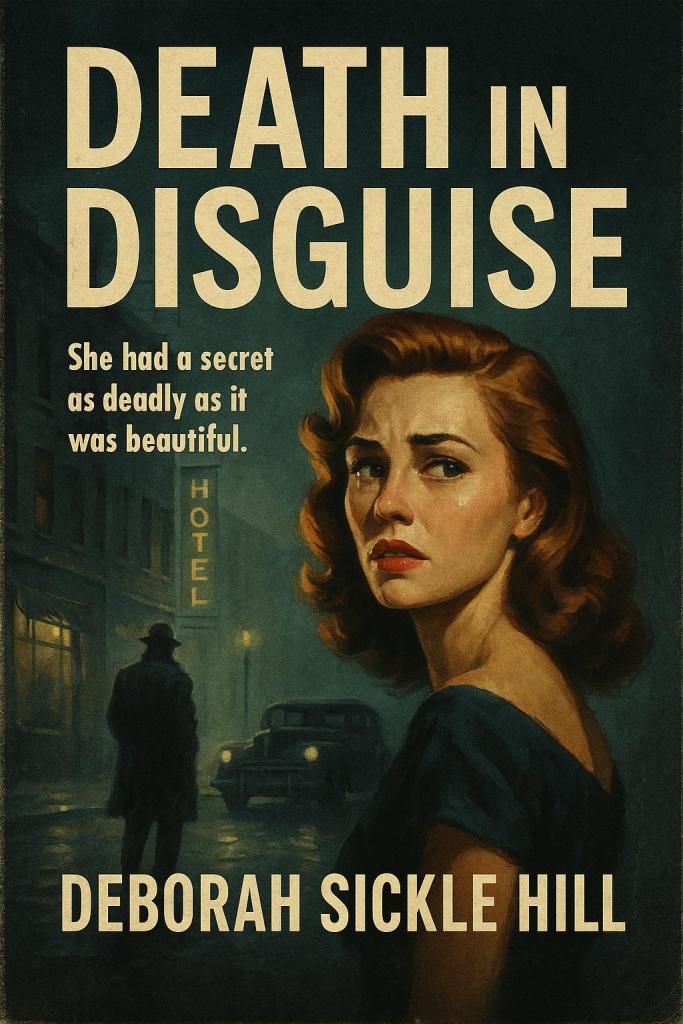
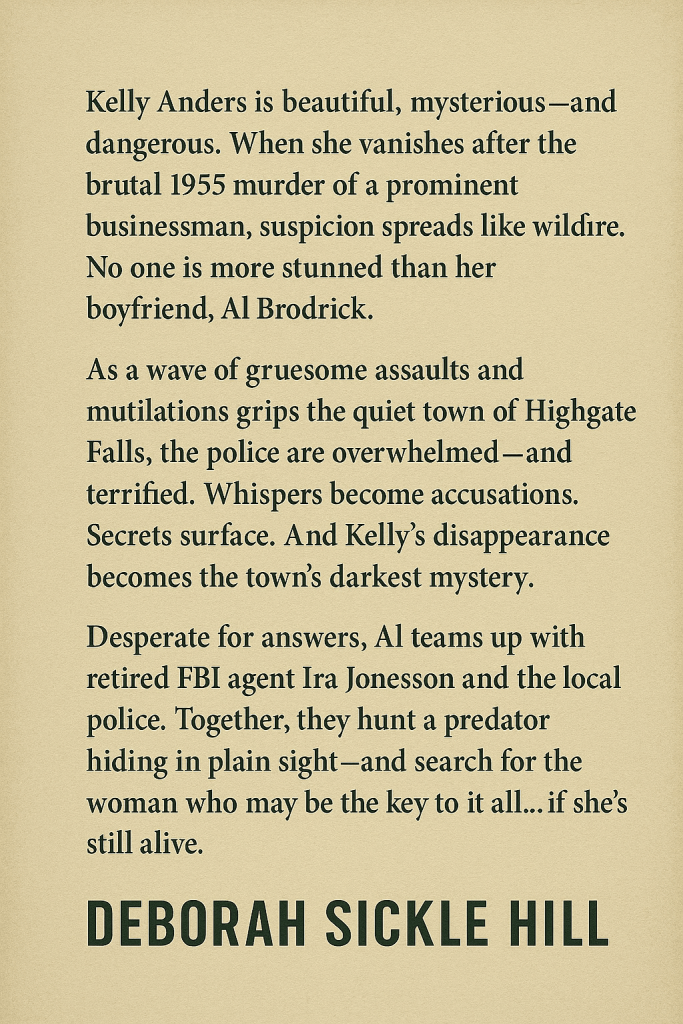
    Death in Disguise New Cover 2025

    https://amzn.to/4lz0HgK E-book

    https://amzn.to/44r2Rs0 Paperback

  • Writing the Ghost Story

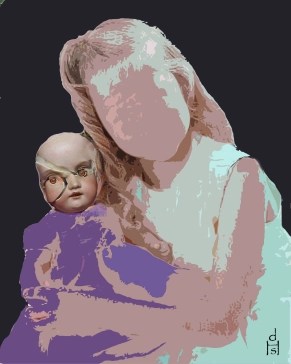
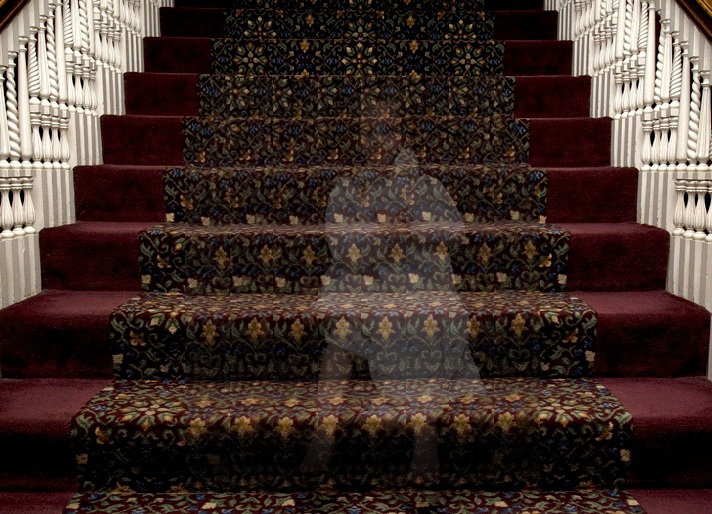
    Altered Image: Ghost on Stairs, Stanley Hotel © Deborah Hill


    Writing the Ghost Story

    4-5 Minute Read

    What makes a ghost story truly haunting?

    Ghost stories have chilled our bones for centuries—not just because of the specters themselves, but because of what they stir in us. The best ghost stories don’t just go bump in the night; they linger, unsettling our minds long after the last page is turned or the fire has burned low.

    If you’re hoping to write a ghost story—whether spine-tingling, sorrowful, or somewhere in between—here are a few timeless elements to guide your way:


    1. Atmosphere Is Everything

    A compelling ghost story begins with setting. Think of your setting not just as a backdrop, but as a character with a mood of its own—dripping with memory, silence, or decay. A fog-drenched marsh, a creaking farmhouse, a cold hospital corridor—these places pulse with potential.

    “It is the house that is haunted.” – Shirley Jackson


    2. Root It in Emotion

    The most enduring ghost stories tap into something deeply human: grief, guilt, longing, trauma. The supernatural often becomes a mirror for the emotional state of your characters. Ask yourself: What does the ghost represent?

    Whether it’s a metaphor for a buried secret or the echo of a tragedy, a ghost tied to emotion will resonate long after the scare fades.


    3. The Power of Restraint

    Don’t show everything. Let tension simmer. Often, what’s not seen is more terrifying than what is. Hint. Suggest. Let your readers’ imaginations fill in the blanks. A shadow under the doorframe. A child’s voice in an empty room. A chair rocking slowly in the attic.

    Ambiguity can be far more haunting than clarity.


    4. A Strong, Unsettling Hook

    Start with something slightly “off.” Maybe it’s a character who hasn’t slept in days. A letter that arrives from someone long dead. A recurring dream. The earlier you plant a sense of unease, the deeper your story will dig into the reader’s mind.


    5. Make It Personal

    Why this character? Why now? The haunting should feel intentional. Is it a long-buried family secret? An unresolved betrayal? A child who vanished without a trace? When the haunting is personal, the stakes rise—and so does the fear.


    6. Let the Truth Unravel Slowly

    Don’t give away the whole ghostly tale at once. Breadcrumbs of revelation—an old photograph, a diary, a recurring phrase—allow tension to build. A ghost story is a mystery wrapped in fog; each step forward should feel like sinking deeper into something forgotten.


    7. The Ghost (or Its Absence) Matters

    Some ghosts howl. Others whisper. And sometimes, the most terrifying presence is one the reader never fully sees. Whether it’s a pale figure at the foot of the bed or the unexplained scent of lavender where no one has been, make your ghost memorable—visually, emotionally, or symbolically.


    8. There Should Be Consequences

    By the end of a good ghost story, something has changed—someone is haunted, altered, broken, or freed. A ghost should leave a mark, not only on the characters but on your reader.


    Final Thought: A ghost story is never just about a ghost. It’s about what haunts us—personally, culturally, emotionally. If you write with that in mind, your story will do more than frighten. It will linger.

    Written with refinement from ChatGPT

  • Finding Happiness in an Uncertain World

    Deborah Hill LCSW (Ret.)

    Estimated reading time: 3–4 minutes

    The world right now feels unpredictable. We’re flooded daily with news—some real, some not—that stirs up anger, helplessness, depression, and anxiety. At the same time, life marches on. We celebrate birthdays, plan weddings, cherish family moments, and get promotions—while wars rage, politics divide, and personal struggles like job loss or divorce quietly unfold behind the scenes.

    It may seem counterintuitive, but finding happiness amid turmoil isn’t denial—it’s survival. It’s not forgetting what’s happening or pretending to be unaffected. It’s more like holding an umbrella in a storm or finding the strength to lift your hand above rising waters.

    Happiness, in times like these, becomes a quiet act of resistance. Here are 15 ways to cultivate it—even when the world feels heavy:

    1. Smile more. Find joy in simple moments and the people around you.
    2. Take breaks from the news and social media. Constant exposure fuels stress and fear.
    3. Stay connected. Nurture relationships and activities that uplift you.
    4. Give generously. Compliments, kindness, and small gestures go a long way.
    5. Acknowledge your feelings. Journal, move your body, or channel your emotions into purpose.
    6. Challenge negative self-talk. When your inner critic speaks up, reframe the message.
    7. Let go of hate. Hatred solves nothing—it only poisons the vessel that carries it.
    8. Stop living in the past. Release the “should haves” and “what ifs.”
    9. Immerse yourself in music. Let it lift, heal, or energize you.
    10. Nourish your spirit. Whatever your beliefs, cultivate a deep spiritual life.
    11. Don’t assume or judge. You can’t read minds, and you never know someone else’s story.
    12. Prioritize self-care. You can’t pour from an empty cup.
    13. Declutter your space. A clear environment helps create a clearer mind.
    14. Get good sleep. Rest isn’t a luxury—it’s a necessity.
    15. Step into nature. Even a brief walk can reset your soul.

    Life is complicated, but within the chaos, we can choose moments of peace, joy, and connection. The goal isn’t to ignore what’s hard—it’s to find the light that helps us move through it.

  • The Pink Elephant in the Pews: Christianity & the Supernatural

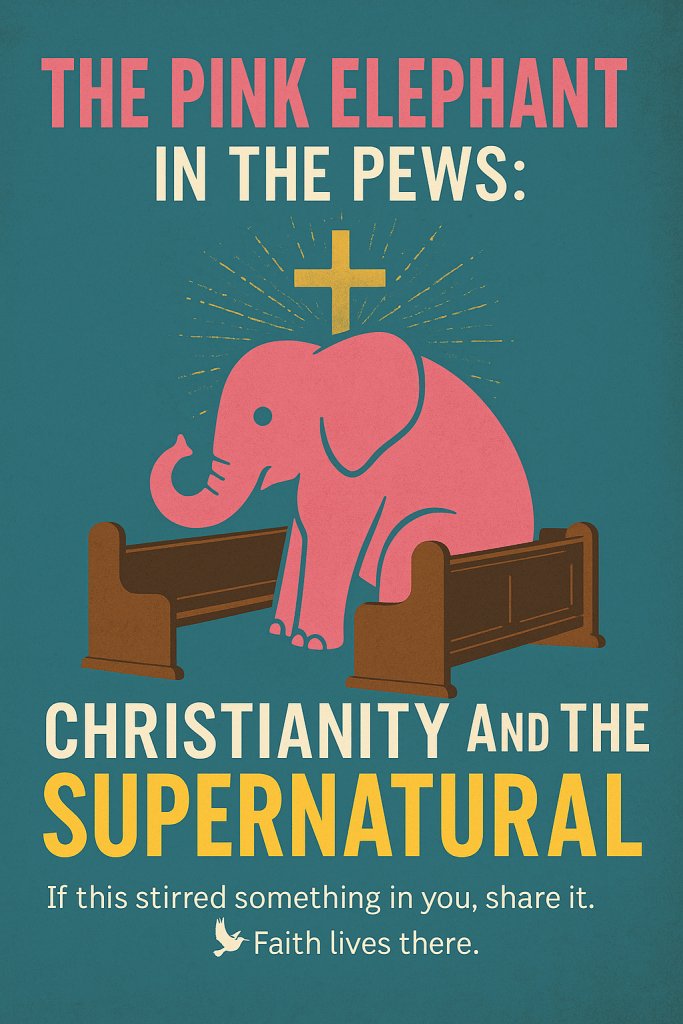
    The Pink Elephant in the Pews: Christianity and the Supernatural

    Reading time: ~4 minutes

    “The supernatural is the manifestation of events attributed to forces beyond scientific understanding or the laws of nature.”
    New Oxford American Dictionary

    What does the supernatural have to do with Christianity?

    Everything.

    Without the supernatural, there is no God. No miracles. No answered prayers. No angels or demons. No resurrection. No afterlife. No parting of the Red Sea or plagues in Egypt. Remove the supernatural, and you’re left with a shell of spiritual tradition—fairy tales dressed in Sunday clothes.

    So why do so many Christians hesitate to say they believe in it?

    It’s like caring for a beloved pink elephant and then denying it exists the minute someone asks.
    “What pink elephant? I don’t believe in pink elephants. That’s absurd!”

    But supernatural experiences didn’t end thousands of years ago, did they?

    Some argue, “The age of prophets is over.”
    Others say, “Only Jesus could perform miracles.”
    Still others cite Scripture’s warnings against sorcery, divination, and necromancy—as if these verses deny supernatural reality. In fact, they confirm it. You can’t be warned about something that doesn’t exist.

    Remember when Saul summoned the spirit of Samuel from the dead? He didn’t imagine it. Samuel appeared and spoke. That’s not symbolism. That’s a ghost. It’s right there in the Bible.

    So why the discomfort?

    Why do some Christians shut down when the supernatural is brought up—as if faith in the unseen doesn’t require belief in the unexplainable?

    Here’s the truth: If you don’t believe in the supernatural, you can’t fully believe in Christianity.

    Spirituality and the supernatural are intertwined. Without one, the other crumbles. The Bible isn’t just a collection of moral stories. It’s a chronicle of the extraordinary breaking into the ordinary. A burning bush. A virgin birth. Water turned to wine. A man raised from the dead.

    In fact, the more literally you take the Bible, the more you must embrace the supernatural. It’s not just the foundation of the faith. It is the faith.

    U.S. Catholic magazine affirms this in Tim Townsend’s article, “Paranormal Activity: Do Catholics Believe in Ghosts?” It states:

    “Ghosts confirm, rather than refute or disturb, Catholic theology of the afterlife.”
    Belief in the seen and the unseen isn’t optional—it’s essential.

    And yet, in conversations, I’ve heard this:

    “Of course I’m a Christian. Jesus died and rose again for my sins.”

    “So you believe in the supernatural?”

    “No, absolutely not. You don’t really believe in that stuff, do you?”

    Sigh.

    Why are we hiding our light under a bushel? Is it fear of judgment? Of being called foolish or irrational?

    It can’t be fear of God—because without the supernatural, there is no God to fear.

    If we deny the supernatural, we deny the very core of our faith. No resurrections. No divine interventions. No hope for eternal life. No visions, no visitations, no burning hearts stirred by an unseen presence.

    Without it, there is no mystery. No wonder. No awe.

    In the same article, theologian John Newton reflects on those who claim to see ghosts:

    “I certainly see no good reason, all other factors being equal, to deny that someone who claims to have seen a ghost has not had a genuine experience of some sort. The question then is: what sort of experience has occurred?”

    Exactly.

    Should Christians run from the supernatural? If we did, we’d have to throw out half the Bible and all of our hope.

    Without it, there’s no revival. No being born again. No faith healing. No dreams or visions. No heaven. No hell. No divine purpose. Just Sunday routines, stripped of spirit.

    And if we deny it out of fear or pride, are we not like Peter when the rooster crowed?

    So I’ll ask you plainly:
    Do you believe in the supernatural?

    Maybe the language feels uncomfortable. Maybe it’s easier to say “God” than “spirits” or “angels” or “miracles.” But that doesn’t make them any less real. We’re ants trying to comprehend the foot that built the stars. And if God could create the laws of nature, DNA, time, and consciousness itself—how arrogant are we to say what can’t be?

    We don’t have to understand the supernatural.
    But we do have to acknowledge that it’s always been part of the story.


    Call to Action:
    If this stirred something in you, share it. Start a conversation. Acknowledge the pink elephant. And most importantly—don’t be afraid to believe in what you cannot see.
    🕊️ Faith lives there.

  • Writing Blogs: Fiction or Reality

    I’ve found myself a bit of a casualty in today’s world of misinformation and half-truths online.
    Okay—casualty might be a strong word. Let’s say: misunderstood.

    I write what I know. Sometimes I embellish, sure—but it’s always rooted in truth, unless I clearly say otherwise. Maybe I should start putting disclaimers on each post:
    This is true.
    This is fiction.

    Take my recent blog about the miracle fish story. It actually happened. As unbelievable as it sounds, it was real. It didn’t even occur to me that readers might think I made it up—until one of my daughters commented, “I remember this.” That’s when someone reached out and asked, “Wait… this actually happened?”

    They were stunned when I said yes.

    Why do I write this blog?
    To share information. To offer insight. To spark a laugh. To make people think. But most of all, to leave the reader with a genuine sense of me—the person behind the words.

    Am I succeeding?

    Writing can feel like a blind art form. I can’t bring a blog post to show-and-tell the way someone might with a painting or sculpture. Writers can’t always tell where they stand with their work until there’s engagement. And when that engagement shows that I missed the mark—especially when something true is mistaken for fiction—it’s a shock to the system.

    How could someone not know this really happened? (I have to shake my head, I can definitely see how this example could be taken as fiction.)

    Clearly, I need to rethink that.
    Maybe other writers have been here too. Maybe it doesn’t matter as long as people enjoy the story. But I’m genuinely curious: Do you think the truth vs. fiction distinction matters in a personal blog?

    And, just for fun—
    How many of you thought the fish story was made up?

    Let me know in the comments. I’d love to hear what you think.

  • Miracles Happen When You Least Expect Them.

    Photo generated using ChatGTP

    Miracles happen when you least expect them—or maybe it’s luck, or fate?

    It was an ordinary Tuesday, except the dryer was on the fritz. So, the jeans were strung across a rope from the dining room buffet to the living room bookcase. I should also mention that a gallon of Country Pink paint was sitting—lid half-on—on a stack of newspapers atop the buffet. (I’d been painting before the dryer died.)

    And then there was Frodo—a York Fair goldfish—swimming peacefully in his bowl, completely unaware that things were about to go terribly wrong.

    As usual, I was dancing around the living room, music loud, getting in my daily “exercise.” The second verse of Ghost Dance by Robbie Robertson was playing when all hell broke loose.

    The top of the buffet collapsed.

    The paint can launched into the air.

    The jeans came crashing down.

    And Frodo—poor Frodo—soared skyward, caught midair in a rain of pink. I watched, helpless, as he splashed down into the tangled denim, disappearing into a puddle of Country Pink on the carpet.

    “Help me!” I yelled into the phone at my husband.

    “What do you want me to do?” he asked, calm as ever.

    “Frodo is in there somewhere!” I cried. (Forget the jeans, the broken buffet, the ruined carpet. I had a fish to save.)

    “Well, if the fall didn’t kill him, the paint probably did. Start looking.”

    I hung up and began frantically sifting through the wreckage. Five minutes passed. Then ten. Frodo was nowhere to be found.

    And then—I spotted him. A small, motionless blob in a deep pink puddle. He wasn’t moving. I’d killed him.

    Panicked, I picked up his slimy, paint-covered body and rushed him to the sink. I knew chlorine could kill a fish—but figured you can’t kill a fish twice. I rinsed him gently under running water, laid him on a paper towel, and stared at his lifeless body.

    What was I going to tell the kids?

    Then I saw the bowl—miraculously unbroken. I cleaned it, filled it with water, and—though it felt absurd—I dropped Frodo in.

    He floated.

    I walked away, too heartbroken to do anything else, and started the monumental task of cleaning up the mess.

    Thirty minutes passed.

    At some point, between loading the washer and mopping the floor, I passed the sink—and stopped. Frodo was swimming.

    He was alive.

    We renamed him Lazareth. He lived for years after that in a bigger, better aquarium, in a much safer spot.

    So how do I explain it?

    I don’t know. Was it a miracle? Maybe. Does the creator of all things get involved at that level? Perhaps. Was it luck? Fate?

    I’ll leave that up to you.

    (The image above, developed by ChatGTP)