Tag: Writing life

  • JUST HIT SEND!

    JUST HIT SEND!

    JUST HIT SEND!

    I finished it a month ago—my latest novel, Dark Consequences. Normally, I self-publish. More creative control, no middleman, a say in the logistics of the book, the title, and the cover. The best part, I don’t have to wait a year for the final product to come out.

    For reasons that escape me, I’ve decided to get this book commercially published. You know the rat race—finding an agent, finding a publisher, rewrites to fit someone else’s ideas of publishable, and a decrease in creative say in the book cover.

    I know why—I’m tired of hearing self-published authors don’t count. Bull sh–! Tired of my lack of marketing skills, damn introversion.

    Are these the real reasons, or do I suffer from imposter syndrome? I’ve never held a book opening event. Just quietly published, made some posts, and let it ride. People tell me both books, Death in Disguise and The Revelation, are gripping, with well-developed characters and plots and subplots that keep the reader engaged.  So what the f—- is my problem?

    Everything is ready: The synopsis, the query letter, the pitch. I think it’s a great story.  Just hit SEND!

    Did I tell you it’s the first novel of a four-part series—all of it written? Just hit SEND!

    You want to know what the story is about? It’s a dark historical supernatural novel. Set in 1848 Maryland amid the upheaval of a quarry town, the story blends gothic atmosphere with folk horror and social tension. It explores superstition, grief, and the resilience of working-class families. There is no reason not to hit SEND!

    Here I sit, everything ready to go, a destination picked out, and a fear of HITTING THE DAMN SEND BUTTON! Can anyone relate to this? If so, I’d love to hear how you overcame this affliction.

  • Memento Mori- Remember You Will Die

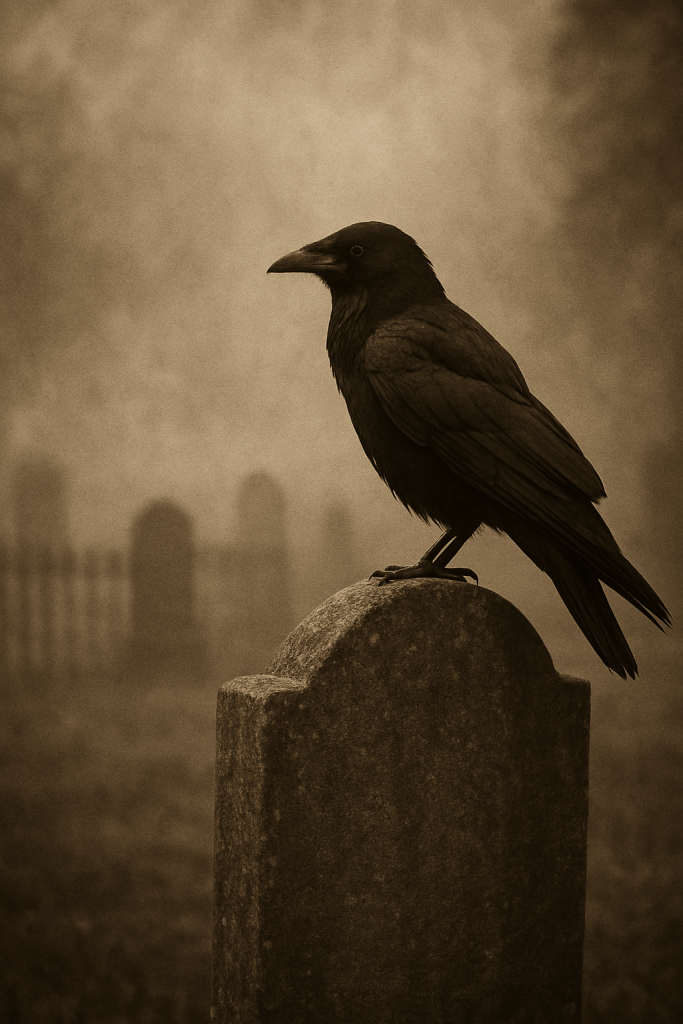
    MEMENTO MORI- REMEMBER YOU MUST DIE

    Call me morbidly curious, gothic—not goth, macabre, perhaps even a dark coper. They all mean about the same thing. Paraphrased from the dictionary, someone having a fascination for dark and unpleasant subjects, the supernatural, death, and melancholy. A dark coper, a person who uses scary media to process fear to gain a sense of preparedness for real-world dangers.

    You would never know this looking at me. I don’t advertise. This leads me to a quandary: trying to explain my writing to people who view dark fiction (horror) as slasher movies and grotesque. Yes, there is a market for this type of film. It’s not my market, and it is definitely only a sub-genre of a vast cornucopia of artistic endeavors.

    To me, a good dark fiction novel contains deep, well-rounded characters with strong arcs and meaningful relationships. They encounter, because of their own actions or the actions of someone or something else, a situation(s) leading them to a life and death situation. Physically or psychologically. A cause to reevaluate everything they thought they knew about life. A chance to make a difference. An opportunity to do the greater good—even if the result is self-sacrifice.

    Yes, there are works of fiction where the antagonist is the main character. The twists and turns of a mind deliberately cause the protagonist to struggle. Even then, both the antagonist and the protagonist need to be well-rounded characters—why else would you root for success? Though in some situations, the result is disquieting as the antagonist wins, leaving the reader with their own sense of dread or self-evaluation. The Invasion of the Body Snatchers is a good example of this. Spoiler: the aliens win.  

    Someone asked me, “Why do you write horror? Why not write romance or dramas?”

    All my novels contain historical drama and romance. However, my answer is simple.  It’s a great way to have a safe place to explore fears and past traumas. It’s cathartic, entertaining. I like it when a character beats the odds and comes out whole. And of course, it harks back to Memento Mori. I’m drawn to it like a moth to a flame, unable to resist its calling.  (Not today—at least I hope not!)

    To date, I’ve written and self-published two fiction books. Death in Disguise is a dark murder mystery taking place in the 1950s in a small fictional town. The Revelation is a dark, supernatural tale set on an archaeological site in the 1980s. My latest finishedwork, currently vying for an agent, is called Dark Consequences, about an Irish famine victim, forced to come to America, where he makes a fateful decision bringing death to the small quarry community where he settles. It’s book one of a four-part series.

    If you’re interested in well-developed characters living somewhere in history, a solid cast of characters and plots where the consequences of decisions are life-changing, exploring the world of the supernatural, give me a try. I’m really not that scary.

  • WRITING NAKED (REVISED)

    “You have quite the internet presence,” the woman said during my second interview for a part-time therapy position.
    “You’re exactly what we’re looking for—except… well, this is complicated.”
    She hesitated.
    “I’m not sure what I think of what you write. The topics you explore, you know? Granted, it’s not fair to judge you based on your writing. The other applicants don’t have the same visibility. It’s just—I’m more comfortable hiring someone whose beliefs and ideas are unknown to me.”

    I sat there, feeling naked.
    I had purposely exposed myself to the world through my writing—and now someone was judging those parts of me that, at the time, had nothing to do with my clinical career. I was shocked, to say the least.

    And I did the unthinkable: I stopped writing. No writer should do that. You would not like me when I’m not writing. It’s in my blood. It’s in my soul.

    Years later, while running my private practice, the urge returned—louder, deeper. And with it came the question:
    Am I prepared to get naked again in front of friends, family, clients, the whole world, by picking up the pen?

    I thought I was. I wrote two novels. And then… I let them sit. I was terrified to send them out into the world. Maybe I wasn’t ready to face that vulnerability after all.

    Would I lose something—too much? Would total strangers stumble across my blog and turn away?

    Screw it.

    I self-published those novels—then looked over my shoulder.
    People bought and read them. No angry mobs, no torches. But I still felt exposed. I didn’t market them. Fear had crept back in.

    Then came the saga: a historical fiction rooted in supernatural folklore and local legend. I poured my soul into it. Polished it to death. And again, fear gripped me—this time because I wanted to try querying agents.

    Talk about nakedness.

    I gave the manuscript to my parents. They’d seen me naked before (literally), so it felt safe. They gave positive feedback. Of course, they’re my parents.
    And still, the manuscript sat. Maybe it needed read-through number fifteen.

    Eventually, I checked out agents. Wrote a query letter. Created hooks, taglines, back cover blurbs. And then I hesitated. I needed a web presence again.

    And that same old fear of being naked returned.

    I fought it. Damn you, fear.

    I built a website. Shared my work. People responded positively. I even sold a few copies of those old books. But still—every keystroke felt risky. Any moment, someone might show up—someone I know, someone unexpected—and say, “I don’t like you naked.”

    Well—too bad, buck-o.

    I am who I am. I write what I know, and what stirs my curiosity. If that’s not to your liking, as one of my loved ones would say:

    Don’t let the door hit you in the ass.

    I sweat just typing that. Ha. I can be such a wuss.

    But seriously—there’s nothing wrong with being naked. Get out there. Do what your soul tells you to do.

    (Just… make sure it’s legal.)

  • Writing My Saga is Driving me Crazy (But I Wouldn’t Trade it for Anything)

    Five years ago—somewhere between too many coffees and too many visits to the psychiatrist—I finally sat down to write the saga that had been spinning in my head for years. It was time. The stories, the voices, the haunted places—they wouldn’t wait any longer.

    Since then, I’ve thrown myself into this world. I write every day, often for hours. I’ve researched until my eyes burned and the screen blurred. I’ve taken trips to key locations, walking where my characters walk, learning what they need to know to breathe fully on the page.

    Now, five years later, I’ve written four books in the series. And for the first time, I think I’m done. The first book is ready—really ready—to send to an agent. That’s a step I’ve never taken before. Wish me luck.

    My characters have taken on lives of their own. Sometimes they slip into my real world—I’ve caught myself calling friends by a character’s name more than once. Oops. I suppose that’s the sign of a story well-lived… but I’ll try to keep it in check. Maybe.

    Now comes the business side of writing. The query letter. The dreaded synopsis. Somehow, I’m expected to distill a nearly 400-page novel (double-spaced!) into a two-sentence pitch, a logline, a tagline—a hook sharp enough to snag a stranger’s attention in seconds. It threatens to swallow me whole, but I’m doing my best to learn the ropes.

    And then there’s the author website. I’ve spent two full weeks wrestling with it. Turns out, I’m a bit tech-challenged. Okay, more than a bit. But I’m determined to get it right—if it’s the last thing I do. The pages have to link up, the design has to make sense, and I will figure it out. Eventually.

    This whole writing business is a wild mess. A beautiful, maddening, soul-stretching mess. I might lose a few hairs and collect a few scraped knees along the way, but I wouldn’t trade it for anything.