Tag: Wellness

  • My Stress has Stress! Send Help!

    A stress is something in your environment that convinces your body to react as though it’s in danger.  It can be simple things such as new responsibilities at work, changes in your schedule, or ever stimulation such as overcrowding, too much light, too much noise.

    Stress can be Positive, Negative or Neutral. 

    Negative: It can quickly cause headaches, muscle tension, irritability, anxiety, and anger. Examples: Losing a job, health scares, being burgled, too many deadlines.

    Neutral stress typically has the slowest reactions, unless multiple stresses combine.  Examples: Finishing a project, moving to a new city, or a change in family dynamics.

    Relationships are like trees. When the storm of stress hits, it will either bend or snap. All relationships experience stress. You can’t avoid it.

    If you start out with the great relationship, increased stress will still put a strain on that relationship.  If you have a mediocre or poor relationship increased stress will make the road much rockier and possibly snap the relationship.

    The severity of the stress, the couple’s support system and how well they communicate will help determine how strong and healthy their relationship will be after the storm. Therefore, I always tell people they should have stress inoculation.

    Each person handles threats in a different way.  You may remember being taught that people either flee, fight, freeze or flop. Stress is experienced in the brain as a threat.

    Two people in the same situation can react completely differently from each other.

    Fleeing: One person in the relationship may need to take more walks alone or go out with friends more often.  This person is fleeing.  They need to escape the situation, even if only temporarily.  They feel if they don’t flee they will be unable to tolerate the situation.

    Fighting: Another person may start arguments, have tantrums, or start physical fights when they are stressed.  They may tell you they feel they’re up against the wall and need to react this way to protect themselves.  There really is no physical danger or need for protection, but their biology and past learning convinces them otherwise. These people are the fighters.

    Freeze: Another person will do nothing. These people become quiet, withdrawn and can’t handle having confrontations.  The more upsetting the stress around them the more they shut down.  These people are the freezers.

    Flop: Another person will flop.  Flopping means the person falls down or faints.  This usually occurs during times of extreme, sudden stress.

    Adrenaline fatigue is an example of flopping (burnout) can happen when a person experiences a long-term stressful environment. It manifests as extreme fatigue sometimes debilitating, and the person can’t function.   In time the body wears down and the person gets sick more often and in severe cases can cause or speed the rate of heart disease and death.

    So how can a person stress inoculate?

    Step one: remember stress happens it’s only a matter of when and what kind.

    Step two: know how you react to stress.  Are you a flopper, the fleer, a fighter, or someone who freezes?

    Step three: if you’re in a relationship, which of these reactions does your significant other use?

    Step four: acknowledge and accept that the way your significant other reacts does not have to be the way you react.

    Step five: develop good communication before stress hits.  If you’re already in the stress boat, take a timeout away from home in neutral territory where you can discuss the stress and how it affects each of you.

    Step six: do not bring other parties into your conflict.  This is not about he said, she said, he’s bad, she’s bad, I’m right, they’re wrong.  It’s about coping when you’re not your best or when loved ones are not at their best

    Step seven: do not make any life changing decisions while under extreme stress unless absolutely necessary.  You’re not in your normal thinking mind.  You’re in survival mode and the part of your brain that deals with rational thinking has taken a side seat to your primitive survival brain.

    Step eight: focus your thinking on elements in your life that currently give you joy.  There is no such thing as not having joy.  Joy is a way of looking at elements in your life that bring peace, appreciation, good healthy feelings if viewed in a positive light.  Find it and make it significant.

    Step nine: this too shall pass.  The outcome of a stressful event may not be positive but the events unfolding are moving in time as you are.  You’ll either make decisions for change to get in a better place or the events will change and there will be release.

    Step 10: after riding that storm of stress, sit down and evaluate how you reacted and how you both reacted as a team.  What worked, what needs tweaked and what needs changed to prepare for the next round.

    In the end I’d like to think that most people want their relationships to be healthy, happy and supportive.  Remember you are team. Even if you didn’t say the words, for better or worse, as part of a marriage ceremony or you have a committed relationship of any kind, the intent is implied.  If your relationship starts looking rocky, do a stress evaluation for both of you.  Do it together.  Remember, this too shall pass.
  • Why We Do What We Do (Even When It Doesn’t Make Sense)

    ©AI Generated

    Let’s continue the conversation about how to build healthier relationships—with others and with yourself.

    Here’s a powerful truth to sit with:

    Everything we think, feel, or do is based on what we believe is in our best interest at the time.
    Even when it looks like the exact opposite.

    That’s a hard concept to swallow—especially when we think about someone staying in an abusive relationship, joining a gang, getting hooked on drugs, or constantly procrastinating. Even in these situations, the person believes—on some level—that their actions are helping them survive, cope, or meet a deep emotional need.

    We all do things that aren’t in our best interest sometimes. That’s human. (And if you think you never do, you may want to call a mental health provider. Just saying.)

    So why do we act against our own well-being?

    It comes down to how our brains are “programmed.”

    Think of your brain like a computer. It only works based on the data it’s been fed. You were born with some basic instincts—crying when hungry, searching for comfort—but most of your programming came from your parents, your environment, school, relationships, and everything you’ve experienced since birth.

    And the earlier that programming is installed, the deeper it runs.

    Let’s say Joe is a warm, affectionate guy who grew up in a cold, distant home. His inner radar is now tuned to search for love and connection—sometimes in all the wrong places. If his need is strong enough, he might even engage in risky or self-destructive behaviors just to feel loved or valued.

    Our brains are always scanning for ways to meet our needs, just like we search for a deal on ground beef or the right words to win an argument. Every choice we make—whether we eat a salad or grab a Big Mac—is based on our filters and beliefs about what will help us feel better, safer, happier, or more in control.

    So here’s your challenge:
    Pause today and ask yourself why you’re doing (or not doing) something.

    • Why did you hold the door for someone?
    • Why did you snap at your spouse?
    • Why are you running late again?
    • Why are you reading this blog?

    Every action has a deeper motivation, even if it’s buried.

    Let me give you an example:
    You’re late for work, exhausted, and have to give a big presentation. You know espresso makes you jittery, but you drink one anyway—and sure enough, you flub the presentation.

    Why did you drink it? Not just because you were tired.

    Dig deeper. Maybe you were desperate to impress, hoping for a promotion. Why? Because you want to be seen as a good provider. Why? Because you want your family to love and respect you. Boom. That’s the real reason.

    But here’s the twist: What if chasing that promotion makes you less available to your family? What if it leaves you feeling even less loved?

    It’s time to ask the bigger question: What does love really look like to me?
    And are my current actions bringing me closer to it—or pushing it away?

    You don’t have to have all the answers. But if you can recognize your deeper needs, question your beliefs, and stay open to new perspectives—you can begin to make healthier, more intentional choices.

    And always remember:
    Sometimes, the choice that seems irrational to others is the best a person can do in that moment—especially when survival is on the line.

  • Eliminate the Worrywart: Understanding and Managing Everyday Anxiety

    @ Deborah Hill

    Eliminate the Worrywart: Understanding and Managing Everyday Anxiety
    By Deborah Hill, LCSW (Ret.)

    “I had a big presentation today and was up all night worrying.”
    “I’m running late again—I’m afraid I’ll lose my job.”
    “I’m so worried about Jim’s health, I can’t eat.”

    Sound familiar? We all worry. But chronic worry is more than emotional discomfort—it’s a contributor to high blood pressure, digestive issues, insomnia, and even long-term health breakdowns. Some people literally worry themselves sick.

    Worry Is an Illusion of Control

    Worrying often feels like doing something—but it’s really just a poor attempt at control. When we worry, we unconsciously think:

    • “If I think hard enough, I can stop something bad from happening.”
    • “If I don’t worry, I’ll be unprepared or uncaring.”
    • “If I mentally run every possible outcome, I can force the right one.”

    None of that is true. A woman worrying in the waiting room during her husband’s surgery isn’t helping him heal—she’s draining her own energy. If she took a walk, grabbed coffee, or talked with a friend, the outcome wouldn’t change—but her resilience to face it would improve.

    Worry = Self-Induced Stress

    Unlike external stress (deadlines, illness, difficult people), worry is internal and voluntary. It places your body on red alert:

    • Muscles tense
    • Digestion slows
    • Heart rate and blood pressure rise
    • Adrenaline spikes
    • You lose sleep, focus, and peace

    Your body thinks it’s in battle mode. But there’s no enemy. Chronic worriers stay on this battlefield for years—until their body breaks down.

    Why We Worry

    Worry can stem from love, fear, or habit. People say, “If you love someone, you worry about them.” But love doesn’t require mental telepathy. It asks for care and presence—not obsessing over things you can’t control.

    The term “worrywart” makes sense. Left unchecked, worry grows and consumes. Like a wart on the body, it starts small but can overtake everything.

    How to Squash the Worrywart

    1. Recognize What Worry Is

    Worry is a thought loop aimed at controlling the uncontrollable. You’re trying to predict, prevent, or fix something—often using nothing but mental energy.

    2. Acknowledge You’re Not Telepathic

    You cannot control life, death, illness, or other people’s decisions by thinking hard enough. No one can. And that’s okay.

    3. Tune into Your Warning Signs

    Your body gives you early alerts—like a ship moving from green to yellow to red alert. Ask yourself:

    • Are my thoughts racing?
    • Do I feel tense or sick?
    • Am I imagining worst-case scenarios?

    Name it: “I’m worrying.” Awareness breaks the cycle.

    4. Ask: Can I Control This?

    If the answer is no, accept that. Letting go doesn’t mean you don’t care—it means you’re reclaiming energy for what is within your power.

    5. Turn Worry into Work

    Prayer or Reflection

    Prayer isn’t worry—it’s surrender. It can offer peace and perspective. If prayer’s not your thing, mindful reflection or meditation works too.

    Redirect Your Thoughts

    Change your environment: get up, move around, talk to someone, take a walk, or do something tactile. Worry often fades when we shift context.

    Focus Your Mental Beam

    Engage in hobbies or tasks that require concentration—baking, puzzles, gardening, music. Focus crowds out worry.

    Move Your Body

    Physical activity releases stress. You don’t need a gym membership. Dance in your kitchen, walk the dog, clean the garage. Use that fight-or-flight energy productively.

    Get Involved

    Channel worry into action:

    • Concerned about health? Research and prepare.
    • Afraid of crime? Join a community initiative.
    • Overwhelmed by a deadline? Learn time management or ask for help.

    The Energy Shift

    “I wish I had her energy—I feel so drained.”
    She may not have more energy, just fewer leaks. Chronic worry is an energy drain. When you stop trying to control what you can’t, that energy returns. You feel lighter. Healthier. Calmer.

    Bottom Line?

    Worry is optional. Learned behavior can be unlearned. Stop rehearsing disaster. Step away from the red alert. Reclaim your body, mind, and peace. It’s never too late to squash the worry wart.

  • Sex and Pancakes

    @Deborah Hill

    Sex and Pancakes

    Craving Connection in a World of Instant Gratification

    By: Deborah Hill LCSW (Ret.)

    I like to unwind with reruns of The Colbert Report and The Daily Show. No matter what kind of day I’ve had, that satirical hour somehow makes everything feel a little better.

    One episode featured a spoof on black-market Canadian maple syrup, comparing it to a drug cartel. The mock reporter—adamantly syrup-free—feared one taste would spiral him into addiction, crime, and sticky ruin. Naturally, he caved. The next thing you know: endless pancakes, missed work, shady street deals, and a full-blown syrup bender.

    I laughed out loud—then turned to my dog and said, “Damn, I wouldn’t mind some pancakes with syrup. Do we have any King Syrup?”

    King Syrup is the good stuff—thick, rich, slow to pour. My dad used to beg me to smuggle bottles down to Florida. You can’t get it there. He gets it. I get it. We’re syrup people.

    That night, I resisted. I had toast with peanut butter and milk in a blue Solo cup. Later, I played a few rounds of Bubble Mania, freeing kittens from bubbles (usually gratifying). But not that night. My mind was stuck on syrup.

    At 6:00 a.m., I woke up with one clear thought: Pancakes.

    I made a stack—instant mix, just add water. Three golden-brown discs with butter, warm and waiting. I pushed my work aside and gave them my full attention.

    With reverence, I poured the King Syrup (not Canadian, but Fredonia, NY—close enough?) and let it soak in. Not too long—you don’t want soggy regret. Then I ate, slowly, trying to channel the reporter’s syrup high.

    It didn’t work.

    What I got was 1,000 empty calories and the gnawing feeling that this wasn’t it. Not really.

    And then it hit me:
    What I wanted wasn’t pancakes or syrup.
    I wanted joy.
    I wanted connection.
    To feel loved, valued, seen.
    Maybe even touched. Perhaps even… sex. Or intimacy. Or something that told me I mattered.

    Sometimes, we crave comfort and reach for what’s easy—food, TV, a distraction—because it almost satisfies. It promises to fill the hole but leaves us emptier than before. We make choices that don’t serve us, not because we’re broken, but because we’re human and hungry for something deeper.

    The mind is tricky. Needs unfulfilled will find a workaround, even a ridiculous one. That Colbert sketch planted a seed. Logically, I knew pancakes weren’t the answer. But that night, syrup made sense.

    Is it any wonder our behavior can get a little wacky? That we gravitate toward something—or someone—that offers relief, even when we know better?

    What if we could pause in those moments and ask, “Is this really what I need?”

    What if we could yell STOP before that instant gratification derails something deeper?

    If you find yourself elbow-deep in pancakes and still feeling empty, it might be time to ask what you’re really craving.
    And maybe—just maybe—you’ll find a healthier, richer, more lasting way to feed that hunger.

    Bon appétit.

  • Finding Happiness in an Uncertain World

    Deborah Hill LCSW (Ret.)

    Estimated reading time: 3–4 minutes

    The world right now feels unpredictable. We’re flooded daily with news—some real, some not—that stirs up anger, helplessness, depression, and anxiety. At the same time, life marches on. We celebrate birthdays, plan weddings, cherish family moments, and get promotions—while wars rage, politics divide, and personal struggles like job loss or divorce quietly unfold behind the scenes.

    It may seem counterintuitive, but finding happiness amid turmoil isn’t denial—it’s survival. It’s not forgetting what’s happening or pretending to be unaffected. It’s more like holding an umbrella in a storm or finding the strength to lift your hand above rising waters.

    Happiness, in times like these, becomes a quiet act of resistance. Here are 15 ways to cultivate it—even when the world feels heavy:

    1. Smile more. Find joy in simple moments and the people around you.
    2. Take breaks from the news and social media. Constant exposure fuels stress and fear.
    3. Stay connected. Nurture relationships and activities that uplift you.
    4. Give generously. Compliments, kindness, and small gestures go a long way.
    5. Acknowledge your feelings. Journal, move your body, or channel your emotions into purpose.
    6. Challenge negative self-talk. When your inner critic speaks up, reframe the message.
    7. Let go of hate. Hatred solves nothing—it only poisons the vessel that carries it.
    8. Stop living in the past. Release the “should haves” and “what ifs.”
    9. Immerse yourself in music. Let it lift, heal, or energize you.
    10. Nourish your spirit. Whatever your beliefs, cultivate a deep spiritual life.
    11. Don’t assume or judge. You can’t read minds, and you never know someone else’s story.
    12. Prioritize self-care. You can’t pour from an empty cup.
    13. Declutter your space. A clear environment helps create a clearer mind.
    14. Get good sleep. Rest isn’t a luxury—it’s a necessity.
    15. Step into nature. Even a brief walk can reset your soul.

    Life is complicated, but within the chaos, we can choose moments of peace, joy, and connection. The goal isn’t to ignore what’s hard—it’s to find the light that helps us move through it.

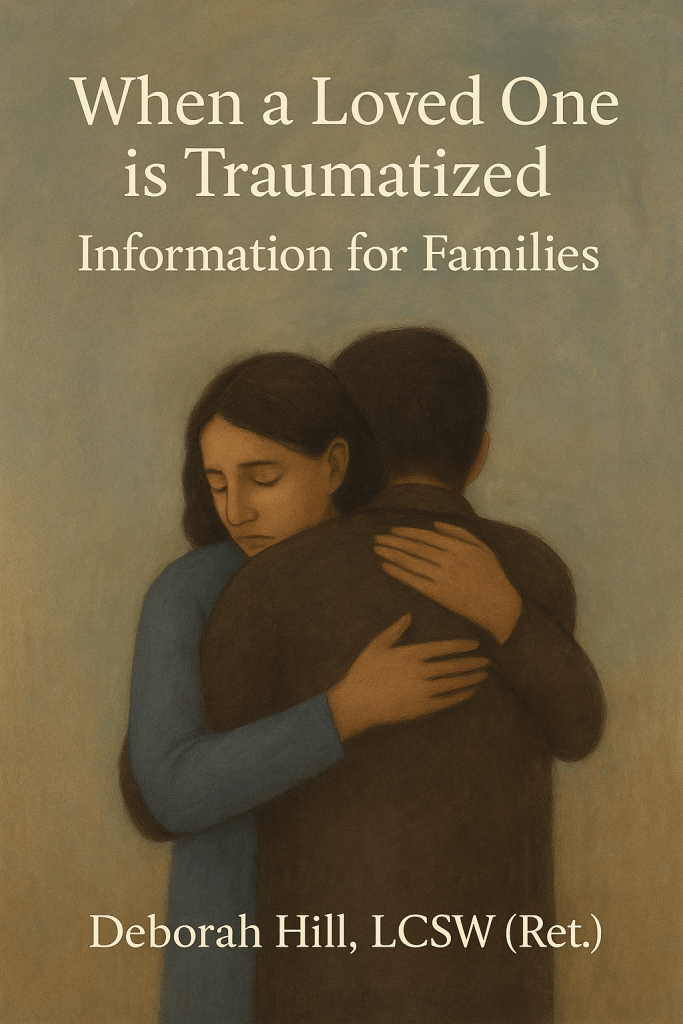
  • WHEN A LOVED ONE IS TRAUMATIZED – is now out!

    Trauma doesn’t just affect one person—it ripples through families.
    When a Loved One is Traumatized: Information for Families is a supportive and accessible guide for those who care for someone living with PTSD. Traumatic events can strike anyone, anytime, leaving lasting impacts on the mind, body, and spirit—not just of the survivor, but of everyone around them.

    This book offers clear, compassionate explanations of what trauma is, how it manifests, and what loved ones can do to support healing. From understanding triggers to navigating emotional responses, it answers the what, when, and why of life after trauma.

    Whether you’re a family member, partner, or friend—or a survivor seeking insight—this guide offers reassurance, clarity, and hope on the path to recovery.

    Available in Kindle e-book and paperback

    ISBN 979-8645316655

    https://amzn.to/3TBbStr E-book

    https://amzn.to/45TB2Lx Paperback

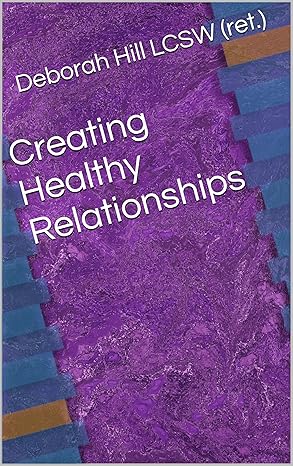
  • CREATING HEALTHY RELATIONSHIPS is in Print!!!!

    CREATING HEALTHY RELATIONSHIPS

    Healthy relationships don’t just happen—they’re built.
    Creating Healthy Relationships is your guide to understanding what makes relationships thrive. Drawing from decades of counseling experience and grounded in Choice Theory and Cognitive Behavioral principles, this book offers practical insights into forming and sustaining meaningful connections.

    Adapted from a popular blog series, this collection reads like a mini-instruction manual, exploring topics such as:

    • Spotting and avoiding relationship “killers”
    • Repurposing your life after loss or change
    • Finding the right partner (and knowing when to keep fishing)
    • Learning to live with yourself
    • Navigating life with adult children returning home

    Whether you’re starting fresh, redefining boundaries, or simply trying to connect more deeply, this book provides the tools to help you grow healthier, more fulfilling relationships in every area of life.

    Available in Kindle e-book and Amazon paperback.

    https://amzn.to/4njLnqg E-book

    https://amzn.to/4liRg5a Paperback

    ISBN: 9798666189337

  • OPEN THE THERAPIST IS IN: 101 Mental Health and Wellness Counseling Insights– THE WORKBOOK — is in publication!

    Open: The Therapist Is In, 101 Mental Health and Wellness Counseling Insights, The WORKBOOK

    Step into the therapy room—on your own terms.
    Drawing from nearly 30 years of counseling experience, this easy-to-use WORKBOOK offers a practical and insightful collection of mental health and wellness idioms. Designed for quick reference and deep reflection, each entry invites you to explore the powerful connections between your thoughts, emotions, actions, and body.

    Whether you’re looking to build resilience, navigate stress, or strengthen relationships, this workbook gives you tools to better understand yourself—and grow. With thoughtful prompts and exercises, you’ll put what you learn into action, creating a personalized path toward greater well-being.

    Perfect for anyone ready to pause, reflect, and take meaningful steps toward a healthier life.

    Available in Kindle e-book and paperback form.

    https://amzn.to/4lnSwEi E-Book

    https://amzn.to/43TtK90 Paperback

    ISBN:9798644311682

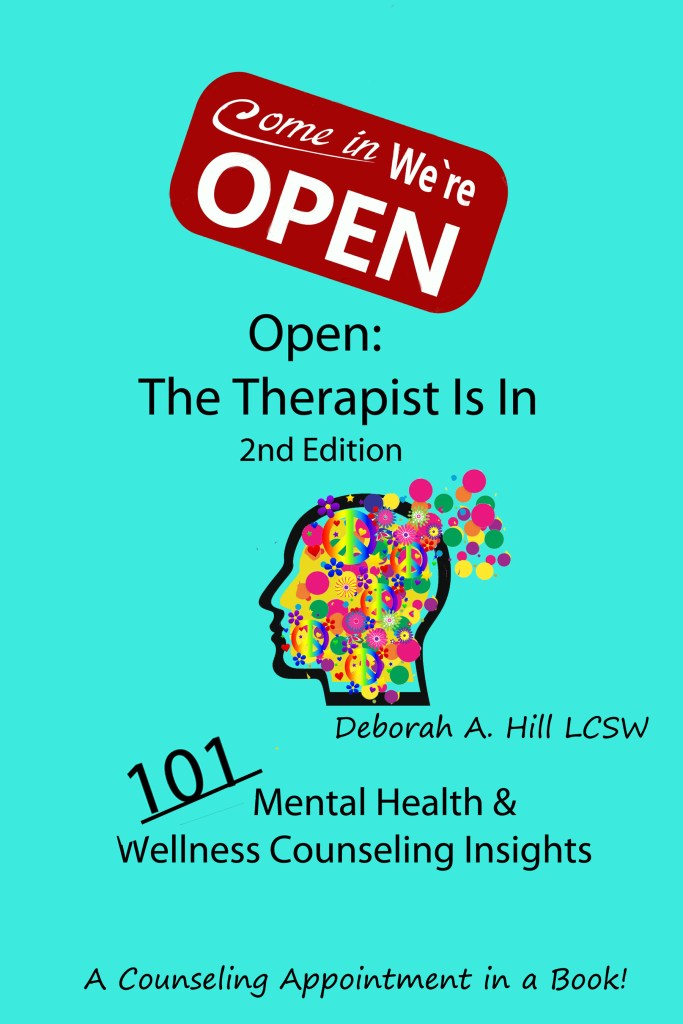
  • OPEN: THE THERAPIST IS IN,101 Mental Health & Wellness Counseling Insights, is in Publication.

    Open: The Therapist Is In, 101 Mental Health and Wellness Counseling Insights

    Step into the therapy room—on your own terms.
    Drawing from nearly 30 years of counseling experience, this easy-to-use book, a condensed version of the WORKBOOK by the same name, offers a practical and insightful collection of mental health and wellness idioms. Designed for quick reference and deep reflection, each entry invites you to explore the powerful connections between your thoughts, emotions, actions, and body.

    Whether you’re looking to build resilience, navigate stress, or strengthen relationships, book gives you tools to better understand yourself—and grow. With thoughtful prompts and exercises, you’ll put what you learn into action, creating a personalized path toward greater well-being.

    Perfect for anyone ready to pause, reflect, and take meaningful steps toward a healthier life.

    Available in Kindle e-book and paperback form.

    ISBN:979-8620992256

    https://amzn.to/3ZHV0oz E-Book

    https://amzn.to/466ga3s Paperback

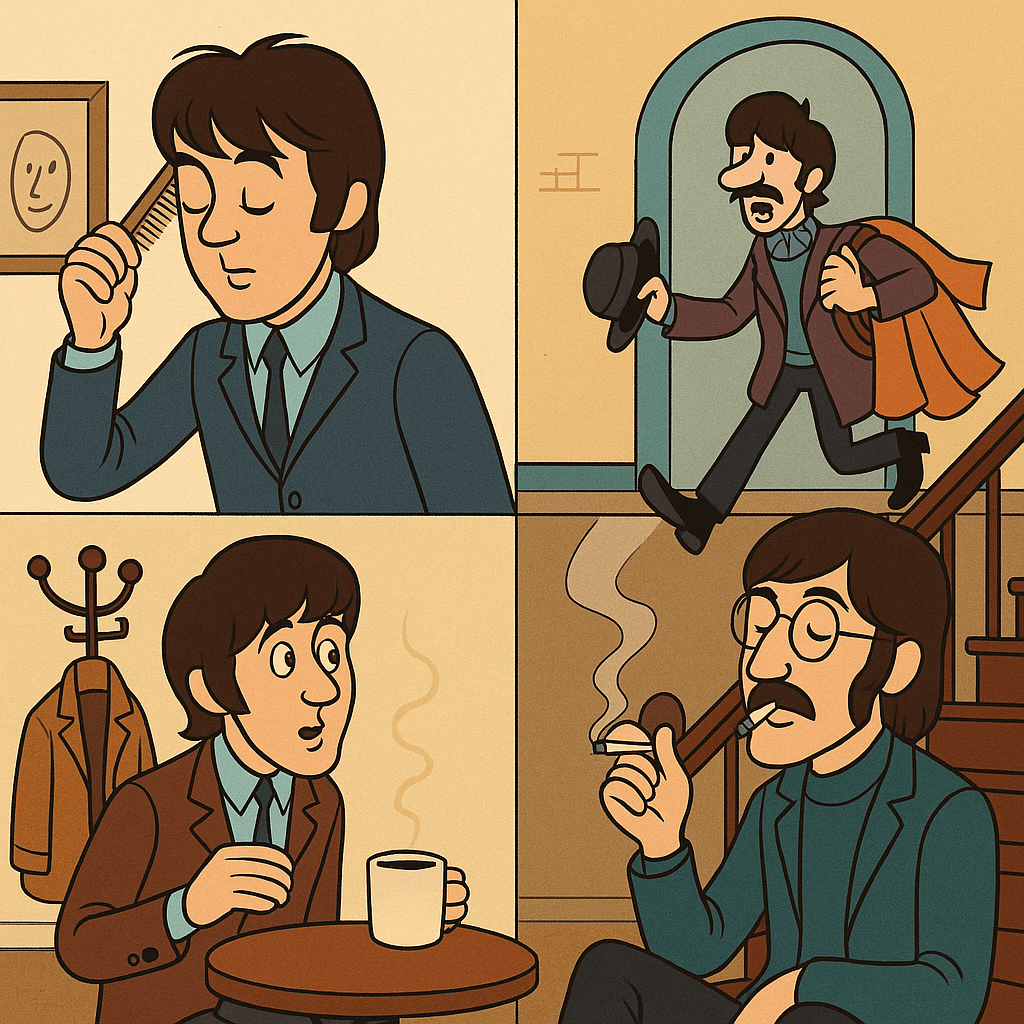
  • A Day in the Life: Finding Stillness in a World on Hyper-Speed

    A Day in the Life: Finding Stillness in a World on Hyper-Speed
    Estimated Reading Time: 5–6 minutes

    By: Deborah Hill LCSW (Ret.)

    Found my coat and grabbed my hat, Made the bus in seconds flat.
    The Beatles, “A Day in the Life”

    Even in 1967, Lennon and McCartney captured the frantic pulse of modern life. If that was fast forward, today we live in hyper-speed.

    People are burning out. Relationships are strained. Families falter. And for some, their most consistent companion is a phone, tablet, or video game.

    As a therapist, I’m often asked how to navigate this constant rush—too many responsibilities, too many places to be, and never enough time. Any crisis or transition throws the entire system into chaos. The answer I offer, tailored slightly per person, always returns to the same foundation. It’s simple to say—but practicing it is where the shift begins.

    Pay Attention. Be Aware. Have Acceptance, Be Mindful.

    Pay attention—to you. What are you doing and why? What drives your schedule, your responsibilities, your pace? Are you someone who can’t say no? Are you trying to impress someone—a parent, a boss, a partner? Are you afraid of what will happen if you slow down? Are you overcompensating for something, giving your kids everything you didn’t have, believing more is better?

    What drives you? What behaviors are rooted in that drive? Are they healthy—or are they draining the life out of you?

    Be aware. Notice the patterns that keep failing you. Staying up too late and feeling terrible in the morning? Grabbing a double espresso and then snapping at your coworkers? Signing your kids up for everything and ending up exhausted in a carpool circuit? Maybe you’re a creative soul forcing yourself into a rigid, linear mold without the tools to cope.

    We all have mindless behaviors—habits that keep us spinning. Take a few quiet moments each day. You don’t need an hour. Just enough to notice what you do on autopilot. Ask yourself: Is there a better way?

    And then, own your thoughts, your choices, your life. Blaming someone else for your reactions only prolongs the cycle. Your inner world belongs to you.

    Have acceptance. This is your life, as it is today. Maybe it’s messy. Maybe it’s far from what you planned. But it’s yours.

    Even if tragedy or trauma shaped it, what you do with that shape is up to you. Accept the parts you cannot change. Let go of gossip, comparison, chronic complaining—none of these lighten the load. They only muddy the mind.

    Drop the self-judgment. Words like should, must, bad, stupid, failure—they weigh more than you think. They don’t motivate, they demoralize. When something isn’t working, accept it. Then do what you can with what you have, right now. This moment is all you’re guaranteed.

    Angry at the driver going slow in front of you? That’s your problem, not theirs. Maybe your own rush caused the tight squeeze in the first place. Breathe. Let it go.

    Be mindful, not mindless. Find meaning in small things. Even in hardship, there’s often one thing worth noticing—worth being present for.

    Take five minutes today. Sit somewhere quiet—preferably in nature. Listen. Smell. Feel. See. Let stillness enter the storm. Know that peace is available, but it begins within.

    Ask yourself: What do I truly want? Is there a gap between that and what I’m doing? Then, gently begin to close the gap.

    This is your life. No one else can live it. Own it. Shape it. Live it.

    (If you are having life concerns and need help, I suggest you find a therapist in your area to help)