Tag: stress

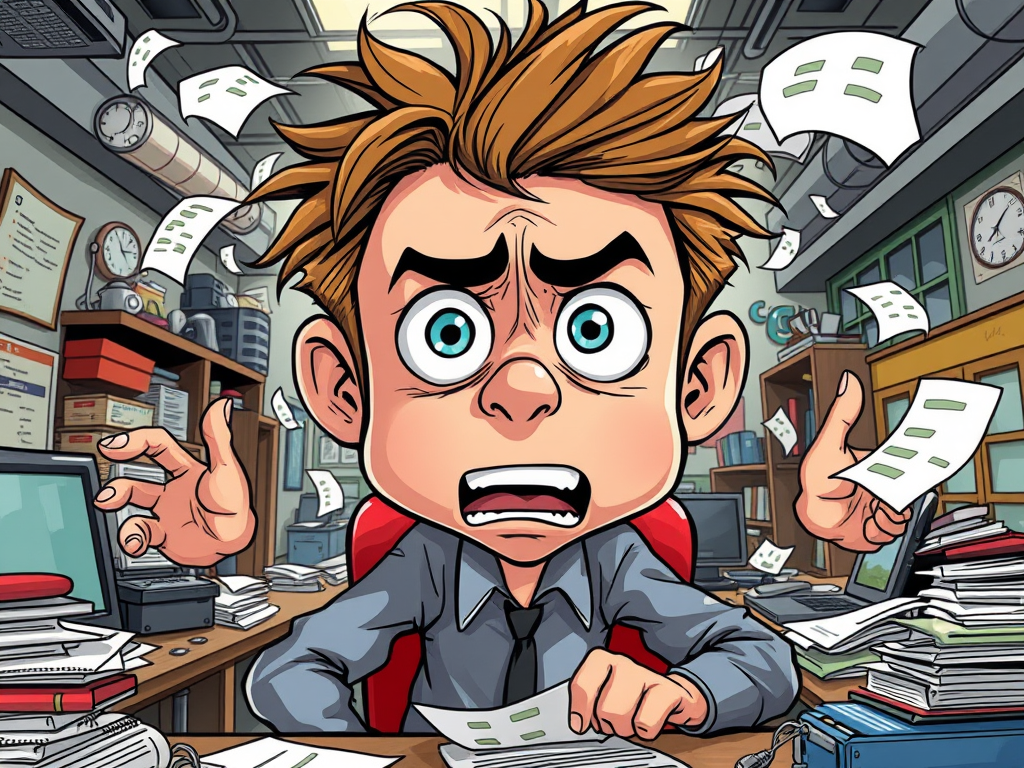
  • My Stress has Stress! Send Help!

    A stress is something in your environment that convinces your body to react as though it’s in danger.  It can be simple things such as new responsibilities at work, changes in your schedule, or ever stimulation such as overcrowding, too much light, too much noise.

    Stress can be Positive, Negative or Neutral. 

    Negative: It can quickly cause headaches, muscle tension, irritability, anxiety, and anger. Examples: Losing a job, health scares, being burgled, too many deadlines.

    Neutral stress typically has the slowest reactions, unless multiple stresses combine.  Examples: Finishing a project, moving to a new city, or a change in family dynamics.

    Relationships are like trees. When the storm of stress hits, it will either bend or snap. All relationships experience stress. You can’t avoid it.

    If you start out with the great relationship, increased stress will still put a strain on that relationship.  If you have a mediocre or poor relationship increased stress will make the road much rockier and possibly snap the relationship.

    The severity of the stress, the couple’s support system and how well they communicate will help determine how strong and healthy their relationship will be after the storm. Therefore, I always tell people they should have stress inoculation.

    Each person handles threats in a different way.  You may remember being taught that people either flee, fight, freeze or flop. Stress is experienced in the brain as a threat.

    Two people in the same situation can react completely differently from each other.

    Fleeing: One person in the relationship may need to take more walks alone or go out with friends more often.  This person is fleeing.  They need to escape the situation, even if only temporarily.  They feel if they don’t flee they will be unable to tolerate the situation.

    Fighting: Another person may start arguments, have tantrums, or start physical fights when they are stressed.  They may tell you they feel they’re up against the wall and need to react this way to protect themselves.  There really is no physical danger or need for protection, but their biology and past learning convinces them otherwise. These people are the fighters.

    Freeze: Another person will do nothing. These people become quiet, withdrawn and can’t handle having confrontations.  The more upsetting the stress around them the more they shut down.  These people are the freezers.

    Flop: Another person will flop.  Flopping means the person falls down or faints.  This usually occurs during times of extreme, sudden stress.

    Adrenaline fatigue is an example of flopping (burnout) can happen when a person experiences a long-term stressful environment. It manifests as extreme fatigue sometimes debilitating, and the person can’t function.   In time the body wears down and the person gets sick more often and in severe cases can cause or speed the rate of heart disease and death.

    So how can a person stress inoculate?

    Step one: remember stress happens it’s only a matter of when and what kind.

    Step two: know how you react to stress.  Are you a flopper, the fleer, a fighter, or someone who freezes?

    Step three: if you’re in a relationship, which of these reactions does your significant other use?

    Step four: acknowledge and accept that the way your significant other reacts does not have to be the way you react.

    Step five: develop good communication before stress hits.  If you’re already in the stress boat, take a timeout away from home in neutral territory where you can discuss the stress and how it affects each of you.

    Step six: do not bring other parties into your conflict.  This is not about he said, she said, he’s bad, she’s bad, I’m right, they’re wrong.  It’s about coping when you’re not your best or when loved ones are not at their best

    Step seven: do not make any life changing decisions while under extreme stress unless absolutely necessary.  You’re not in your normal thinking mind.  You’re in survival mode and the part of your brain that deals with rational thinking has taken a side seat to your primitive survival brain.

    Step eight: focus your thinking on elements in your life that currently give you joy.  There is no such thing as not having joy.  Joy is a way of looking at elements in your life that bring peace, appreciation, good healthy feelings if viewed in a positive light.  Find it and make it significant.

    Step nine: this too shall pass.  The outcome of a stressful event may not be positive but the events unfolding are moving in time as you are.  You’ll either make decisions for change to get in a better place or the events will change and there will be release.

    Step 10: after riding that storm of stress, sit down and evaluate how you reacted and how you both reacted as a team.  What worked, what needs tweaked and what needs changed to prepare for the next round.

    In the end I’d like to think that most people want their relationships to be healthy, happy and supportive.  Remember you are team. Even if you didn’t say the words, for better or worse, as part of a marriage ceremony or you have a committed relationship of any kind, the intent is implied.  If your relationship starts looking rocky, do a stress evaluation for both of you.  Do it together.  Remember, this too shall pass.
  • Why I Still Haven’t Painted That Wall

    The universe keeps telling me to slow down—loudly and often. Apparently, I have short-term memory loss.

    This morning started with a doable to-do list. That lasted about 30 seconds. I noticed a water stain on the wall, which reminded me the upstairs needs painting. Since I’m turning that space into an office, it suddenly felt urgent. And that’s when it all unraveled.

    7:30 a.m.
    “Okay, that wall… and that one… and wow, the ceiling? What mood am I going for? Time for a paint color deep-dive!”

    9:00 a.m.
    Two hours later, I’ve selected nothing but somehow watched a YouTube video on belly fat and found myself planning a trip to Lowe’s.

    10:30 a.m.
    In Lowe’s, I get overwhelmed by paint options. Do I want satin or semi-gloss? Quart or gallon? Also, how did I end up in the garden section eyeing Lily of the Valley bulbs?

    11:30 a.m.
    Back home with paint and leftover pizza in the microwave, I head out to the garage to get the roller. Instead, I spot the half-dug hole for a future fish pond and—naturally—start rototilling.

    11:45 a.m.
    I hit a rock, grab a trowel, and find myself digging with archaeological precision (old habits die hard). I find a marble. Then six more.

    Clearly, someone lost their marbles, and I wonder if it’s me.

    12:15 p.m.
    The rototiller hits steel wire and wraps around the axle. I flip the machine over and head to the basement for WD-40, dragging dirt through the kitchen.

    There, I realize I forgot to switch the laundry.

    12:25 p.m.
    Back outside, staring at the broken machine, I finally get it: This is one of those “slow your roll” moments from the universe. So naturally, I decide to blog about it.

    I grab my camera to document the chaos and end up taking pictures of the fish instead. They’re the real reason I came outside, after all. They survived the winter in an above-ground pond—the least I can do is give them a moment on the internet.

    Sure, getting only three hours of sleep probably didn’t help this morning’s misadventure. But if I’m honest, I’ve done this well-rested too.

    So now I’m making coffee. I’ll take it slow. I still have the afternoon to get something done.

    Maybe I’ll paint.
    Or maybe I’ll finally eat that pizza still waiting in the microwave.

  • Houston, We Have A Problem

    The oh sh-t moment when life goes from wonderful to dread and we have to act fast. We all have them. Sometimes we handle the situation well and other times, well, we ponder for decades what we could have done differently. Can a person truly be prepared for those problematic moments?

    We are all basically hard wired the same way. Note the word basically. It is rare in life when things are one-hundred percent. There are four things we are programmed to do in emergencies. They are flee, fight, freeze or flop. Pretty easy to understand. To flee is to run away from the situation. To fight is to attack the situation head-on. To freeze is to become paralyzed and not able to do much of anything. To flop is to faint.

    Which of these tactics a person picks may be the same in all emergencies or can change depending on the circumstances. A woman who suddenly has the strength to lift a car off her child (to fight), might not attack an intruder inside her home. Can we know in advance which behavior we will chose?

    Hard to say. The military trains our troops by using repetition. Instilling into them, this is what you do in the following situation. The lives of these people depend upon it. Firefighters, police officers and all other careers where lives are at stake do the same thing. But even then not everyone is able to follow that programming when needed. Why not?

    It comes back to all our past experiences. Those experiences become chemical memories in our brains. When a situation occurs similar to a past situation, the brain compares it and acts based on what worked before. No matter how much training a person has, there are times the old experiences will over-ride the current situation. Why? Because, training that your life is in danger is very different from it truly being in danger.

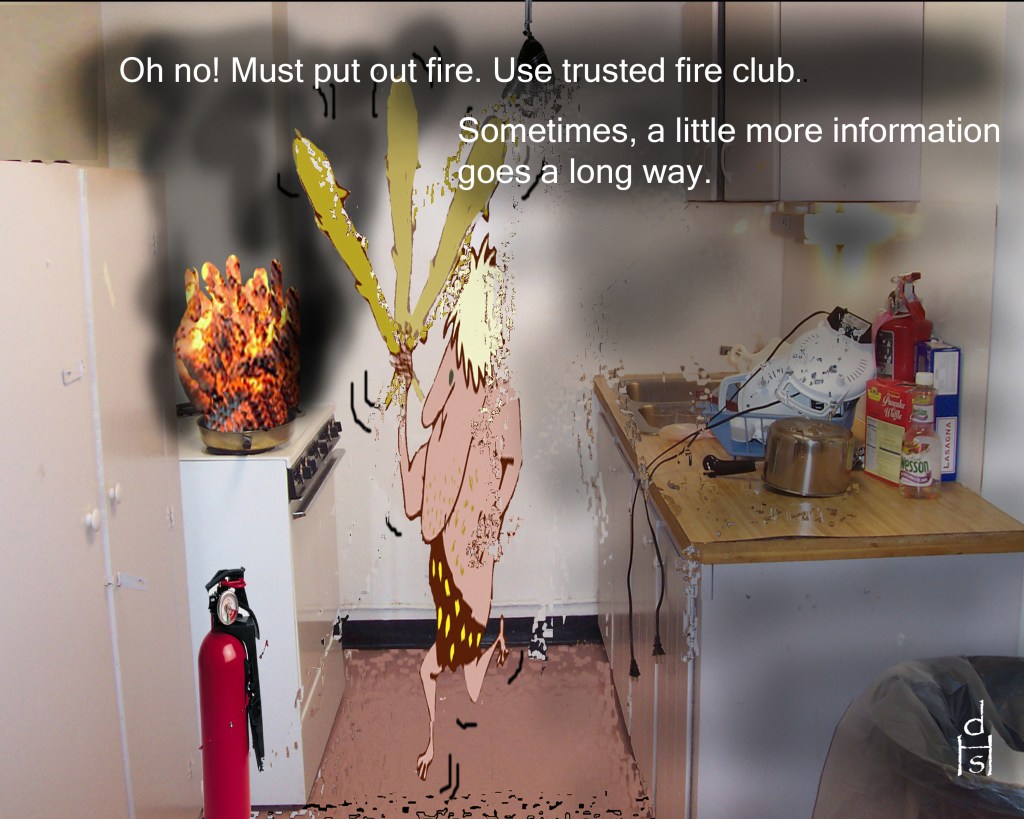
    Having said that, there are times, sometimes humorously, when our reactions are way off the mark. Like the picture above where the caveman is using a club to put out a fire. The fire extinguisher is right beside him. This is where feelings step in. Fear, panic and anxiety all play a role in how effective we will behave in an emergency.

    Stress produces the same type of reaction. The brain thinks there is a problem. It is either a possible emergency or real emergency and tells us to react. As a result our reactions maybe over the top for the situation. Think about the person who gets road rage because he/she is running late and the person in front is going the speed limit.

    Next time you know you are feeling stressed and you find yourself over-reacting (flee, fight, freeze or flop), try to pull yourself together and regroup before reacting. Good questions would be, why am I reacting this way? Is the danger real? How realistic is my thinking? The one I like the best comes from my husband. He says to me, “I think you are reacting to things not in evidence.” Meaning, I’ve either got the cart before the horse or I believe I know what is going to happen without having a crystal ball.

    None of us have true knowledge of the future but some of us think we do and base much of our choices and behaviors on this illusion. It can’t be done.

    Here’s hoping you have a reaction appropriate day.