When Life Isn’t What You Dreamed: How to Reconnect with Your True Needs and Wants
Deborah Hill LCSW (Ret.)
(3-minute read)
At some point, nearly everyone looks back on life and wonders, How did I get here? What happened to the dreams, the plans, the “could have beens” and “should have beens”?
The answer is simple to say—but often hard to accept: For the most part, we made choices that brought us to where we are now.
That’s not to say we chose the traumas, losses, or catastrophes that blindsided us. No one chooses to be hurt, abused, abandoned, or thrown into crisis. But the choices we make afterward—the way we respond, the paths we follow—those decisions shape our journey.
And when our choices take us further from the dreams we once had, we start to feel unbalanced, unsatisfied, or even angry.
Why Do We Make the Choices We Do?
Most of us choose what we think is best at the time. A child throws a tantrum to get candy, believing it will work. An adult gives the silent treatment over forgotten flowers, hoping to “teach a lesson” and feel valued next time.
Sometimes we make reactive choices. Other times, we simply lack the information or emotional tools to choose differently.
Take the example of a teen from a broken home who joins a gang. From the outside, it’s clearly not in his best interest. But with the limited knowledge and options he sees, it’s the closest thing to a family—offering belonging, respect, and protection.
The “Quality World” We All Carry
As we grow, we create a personal picture of what our ideal life looks like—our Quality World. In this internal landscape, all our needs and wants are met. We feel safe, loved, successful, joyful.
Ideally, we spend our lives making choices that move us closer to that picture. But if we don’t fully understand our needs and wants—or the options available to us—we may veer off course.
And here’s the truth: Your ideal picture is probably a fantasy. But beneath that fantasy lies something very real—your core needs and desires.
A Practical Example
Let’s say your Quality World includes owning a Maserati. But in reality, you’re driving a rusty old Ford.
You probably can’t buy the Maserati—but ask yourself why you want it. Maybe it symbolizes success, admiration, adventure, freedom. Maybe what you really want is to feel noticed, valued, alive.
When we understand the why beneath the fantasy, we can start finding real-world ways to fulfill those needs—without waiting on an impossible dream.
How to Align Your Life with What You Truly Need
Step 1: Discover the “why” behind your fantasy. Use your imagination. If there were no limits—what would your life look like? What does that dream say about what you truly want? (Example: “I want to be on a football team” → “I want belonging, excitement, shared purpose.”)
Step 2: Explore realistic substitutes. You may not become a surgeon—but can you volunteer with the Red Cross? Become a first aid officer? Help people in ways that still honor your deeper needs?
Step 3: Examine your current choices. Are they aligned with your needs and wants—or taking you further away from them?
Step 4: (Corrected numbering) Take small steps toward a better fit. Set short- and long-term goals. Think of these goals as your rudders—they help steer your ship, even when waters are rough.
Step 5: Evaluate regularly. Ask yourself:
What do I truly want and need?
What am I doing to get it?
Is it working?
What could I do differently?
Final Thoughts
You may never have the exact life you imagined—but you can build a life that meets your real needs, a life that feels meaningful, grounded, and authentic.
It’s never too late to rewrite your story, one intentional choice at a time.
I’ve said before that ALL BEHAVIOR (Everything you think, feel, and do) is based on your experiences, perceptions, and your deepest needs.
We all have the same needs, but in different degrees. Someone may have strong love and belonging needs while another has strong survivalist needs.
To understand your behaviors, figure out which universal need is your strongest. In doing so, you can get an ah-ha about your thoughts, feelings, and actions. In doing this, you can open yourself up to new experiences and understanding to hopefully make healthy choices in your life to get your need(s) met. You can have more than one strong need.
EVERYONE HAS THE SAME NEEDS IN DIFFERENT DEGREES
Love and belonging
Power
Freedom
Fun
Survival
Purpose in life (spiritual)
Below are examples of behaviors you might see in someone with a high degree of need in a specific area. See if you can find yourself. Beside each behavior, place a number based on whether it fits you. At the end of each section, count up the points and see in what order your universal needs stack up. (These are ONLY SOME examples of typical behaviors)
Scoring:
1 = Not me at all
2 = Maybe relates to me but very rarely
3 = Relates to me but only under certain circumstances
4 = I do this more often than not
5 = This is me, no question
LOVE AND BELONGING
Enjoys social activities
Cooperative with others
Likes to belong to clubs, groups, community events
Seeks out friendships
Family is very important
Craves intimacy
Self esteem derived from what others think of them
Feel lonely and/or depressed if not involved in a greater cause or group
Strives to please others
Puts others needs before their own
Has many friends
Teacher’s/boss’s pet
Tends to be affectionate
More likely to be a follower then leader
Strives to find others needs and to fill them
High need to be liked by others
Hard time saying NO
Purpose in life is in ability to help others
POWER
High achiever
Competitive
Desires recognition for achievements/ skills
Strong will for self-worth
Needs to win at games
Needs to feel correct
Pride in completing challenging goals
Enjoys being highly skilled
Need to dominate situations/and or people
Over achiever
Involvement in political/social activist activities
Aggression
Involvement in behaviors that make the person feel stronger/invincible (excessive drinking, fighting, risk taking behaviors)
Wants to be influential
Need to be affiliated with other people at the top of their game
Desires to gain higher education to feel better about self
Sexually aggressive
Gives up family/friends to climb their career ladder
Has a hard time being told they are wrong
Prefers independent sports as opposed to team sports
FREEDOM
Desire to make their own choices
Does not want responsibilities to tie them down
Does not like to listen to people in authority
Strives to be their true selves regardless of consequence
Does not want to make commitments
Does not give in to peer pressure
Independent
Likes to choose their own path
Likes to be seen as outside the box
Likes to keep their opinions open and not make decisions
Craves spontaneity
Enjoy independent thinking and creativity
Not satisfied with other’s answers, needs to find things out on their own
Restrictions make them restless
Likes to be self-sufficient
Bores easy with daily routines
Relates to other’s needs for freedom
Creative expressionism
Does not do well maintaining or seeing need for planning
FUN
Likes to throw parties
Craves the energy of new/adventurous things
Likes to be around other people with common interests
Can be indiscriminate
Pleasure centered
Easily bored with daily routines
Does not take self/life too seriously
Enjoys playing but does not need to be competitive
Humorous
Willing to break tradition for fun, excitement, joy
Searches for humorous things/people/events
Can bore easily in long term relationships
Likes to travel to learn and experience new things
Creative for pleasure and not for completion of a project
Craves originality
Does not like confrontation
Enjoys learning in nontraditional ways
Can be seen as always on the go
Enjoyment of life is seen as most important
SURVIVAL
Fears for the future
Stores or hordes food/water/survival tools
Low trust of others/government
Fears losing their freedoms
Needs to feel prepared for anything
Typically very tense
Fears the unknown
Very observant
Instinctive
Self efficient
Can become impulsive, aggressive is threat of survival is challenged
Can be considered primitive in thinking/living (so busy concern about surviving all else is put to the side)
Strong ego, pits self against others
Can be seen as greedy
Needs things to be predictable to feel safe
Sees threats where others do not
Often intolerant of differences in other people or ways of living
Can have conspiracy based thinking
Feels insecure/anxious inside
PURPOSE DRIVEN (SPIRITUALITY)
Desires to be closer in relationship with higher being/power/element
Explores self/meaning of life
Needs purpose in life to feel whole
Can become judgmental and self-righteous
Can be religious/external doctrine focused
Can fears doing the wrong thing or for the wrong reason
Can be existential and altruistic
May break from tradition to explore other cultural spiritual practices
Maybe willing to give up much to gain spiritual wisdom
May have complex rituals of behavior to feel closer to a higher power or their true being
May seek out paranormal experiences or classify experiences as miracles, demonic or other worldly
May refuse to conform to society norm of religious or doctrine related thoughts, dictates
Can be more tolerant of differences in people and cultures then average person
May have experienced one or more profound mystical, paranormal or other worldly event
May seek out others who share similar experiences or views of life and/or a higher power
May seek and find spiritual values/meaning in life based on nature/science
May engage in experimental/chemical/risk taking behaviors to find a feelings of nirvana or out of body experience
Attempts to fill voids in life/past through higher thoughts/learning/spiritual education/practice
May extend need for meaning of one’s life to reason and causation for universe and life in general
Total scores:
Love and Belonging: _________
Power: _________
Freedom: __________
Fun: ___________
Survival: ____________
Purpose of Life (Spirituality): __________
Ask someone close to you to take the same quiz and compare the results. It may help explain why you gravitated toward them or why there are conflicts between the two of you.
Let’s say you have a strong love and belonging and someone else has a strong freedom need. Can you see how these two people might have misunderstandings and conflicts? Once you know the needs, why the person chooses the behaviors they do, it gives an opportunity to communicate to find a common ground that meets both needs.
** Information based on the work of Dr. William Glasser
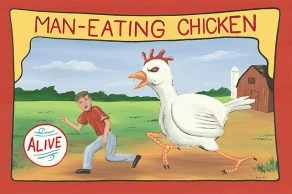
A sign in an amusement park says; look in peep hole to see a man eating chicken. Now, if you saw that sign what image do you think you’d see through the hole? Is it a man munching out on a piece of chicken? Or is it a large chicken eating a man?
What about these sentences? The man saw the boy with the binoculars. Did the man have the binoculars or the boy? Or, how about, hole found in changing room wall; police are looking into it. Are they investigating the incident or looking in the hole?
These are called syntactic ambiguities. Why am I telling you all this? Because it is a good demonstration of how our brains perceive the world around us. For every person who sees a man eating a piece of chicken there are probably equal number who see a large chicken eating a man.
If we want to understand and navigate our behaviors we have to grasp the way our brains see our world.
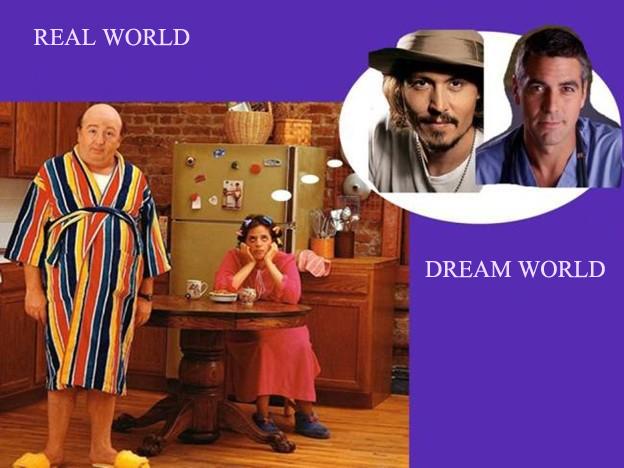
All around us is the Real World. This is everything that exists; no matter if we realize it or not. The real world contains trillions of pieces of information bombarding us constantly. Our brains are not equipped to handle all this so it selects what is most important and screens out the rest.
It is generally accepted that there are three filters used to screen select Real World information for our use. They are called: Knowledge, Values, and Perceptions.
Whatever information remaining after screening is now evaluated and a decision is made. Either, this information is in-line with our wants and needs and we feel good. This information is neutral and does not matter to us. Or this information is not in-line and may threaten our wants and needs and we feel bad.
If we decide that the information is in-line and we feel good, we keep our filters screening the same way, and continue to behave based on this information. The system is working well. However, if the opposite is true, we feel out of balance and our system goes into red-alert. Depending on how far off balance we feel determines how much drastic action we take.
For example, let’s say you are watching your child on the swing-set at a local playground. The weather is good, the park is not crowded, and your child is having fun. You feel good. All of the sudden, the swing chain brakes and endangers your child. Chances are at this point in time, your brain could care less what the weather is like or how crowded the park is. Instead information such as speed and what angle to leap in order to catch the falling child would be more practical.
Problems pop-up when we feel bad or out-of-balance and the adjustments we make are not the best. Our actions could make things worse. They could fix things in the short-run but not long term. Or the adjustments solve what we think is the real issue making us feel out-of -balance when it is another issue deeper down we have not addressed.
When we feel out-of –balance, we think, feel or do something different to feel better. The next step is, did it work? If not or it did not work the way we hoped, then a change in the information screened through the filters or an adjustment to the filters might be in order.
The filtering system is one of the easiest ways to get from out-of- balance to in-balance.
Knowledge Filter: This is a filter that contains pieces of information we already learned. I don’t think all information learned is actually in this filter. I think we have the ability to alter this. For example, I learned my ABCs in pre-school. This is always in my filter because I read and write daily. I learned to fish when I was four-years-old but never fish. I really don’t think this is in my knowledge filter. But if I pushed myself, I could remember some memory of fishing and probably some terms from hearing others talk of fishing.
If the information we are using to filter Real World information prevents us from acting in a way to feel good, get our needs met and be in-balance, we need to search for new knowledge. We can also reassess knowledge we already have and decide what needs to be added or subtracted.
This is as easy as someone saying, “Hey, remember back when and you had this happen. You did such-and-such and it worked out. Maybe you should try that now.”
Your reply, “Oh, I’d forgotten that. I’ll have to re-pull that knowledge and see how it changes my options.” Now you have added old information to your active knowledge filter.
Values Filter: This is the, how important is this information to me, filter. When information enters this filter a value is placed on it. Is it positive information? Information that helps us become balanced, meets our needs? Or is it negative, something that has the potential to prevent or hinder getting our needs met? Some information is neither and we don’t give it a value.
Perception Filter: This filter is the very selective, how we see the world based on everything that is us. This includes our gender, culture, experience, sexual orientation, parents, age, race, etc. The amount of inclusions in here can be astronomical. Because no one is the same as anyone else, each person’s Perception is different. Like the other filters, it can change. Perspective might be another good word for this area. To change our perspective is to change our perception filter.
All of the above is then evaluated against what Dr. William Glassier called the Quality World. The QW is sort of like the answer to the magic wand question many therapists ask. If you had a magic wand, what would life be like? In the Quality World we have pictures of how we think we can get our needs met in the most satisfying way. All our filters are balanced to provide the Real World information the system needs to best get to our Quality World picture.
For example: If I have a high need for love and a low need for power (see prior posting for more details), my Quality World might have a picture of me being adored by family and friends. There is never conflict. I do volunteer work and always put others ahead of my needs.
It is probably more specific than this. Maybe, I’m a stay-at-home mother with three adorable, cherub-like kids and a dog named Elmo. My husband, who looks like George Clooney, works as a Podiatrist and I go to the Sisters of Perpetual Mercy Church three times a week. I make an amazing meat-loaf. It’s to die for.
That picture is what my brain will use to set my filters and gather information from the Real World. It is through that information, evaluated against my Quality World picture that I will use to behave. I will use it to think, feel and act a certain way. My way, may not be your way.
That is why some of us see a man eating a chicken while others see a chicken eating a man!
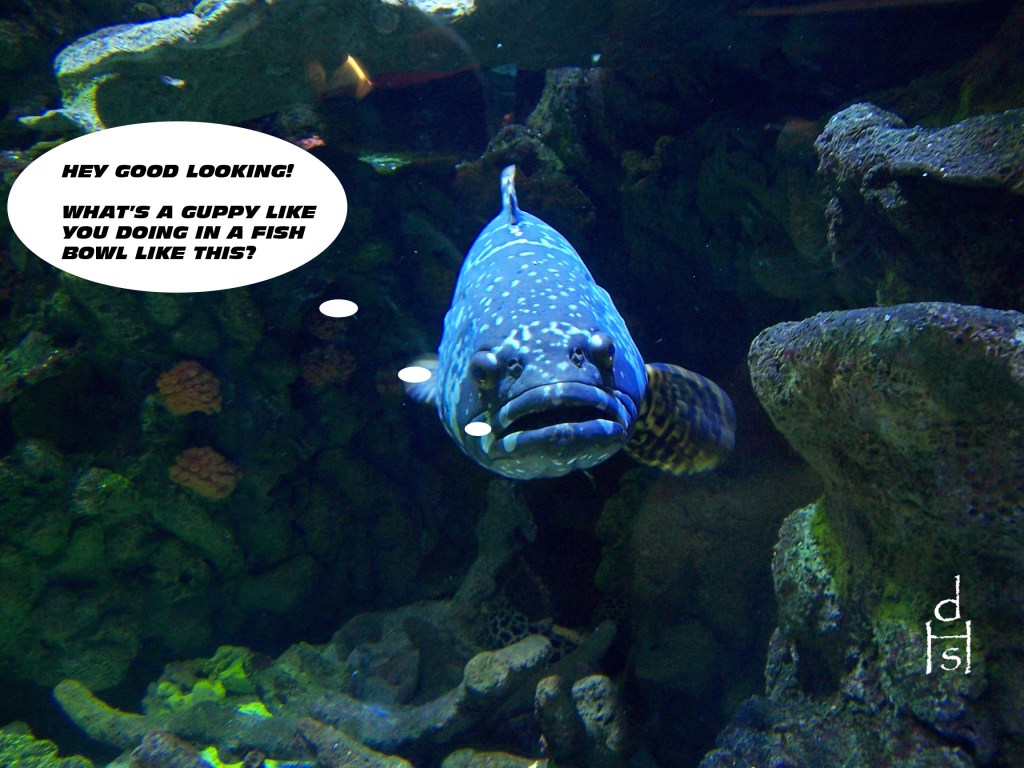
Setting out to find a life partner is like fishing. Fishermen have to know what kind of fish they are fishing for and where that type of fish is likely to be found. If they are after tuna, hopefully, you wouldn’t see them fishing in a river. They have to know what kind of bait to use to entice the fish. They have to know their own abilities and have good skills in fishing. Knowing all this, they go to their favorite fishing place and throw in their line and wait. If they are lucky a fish shows interest. Skill is in the length of time and reel play needed to keep the fish interested and not bored. Hopefully, the fisherman gets his fish.
Okay, dating is not quite like fishing. There are some differences but the basics are the same. The person looking needs to know the type of person that holds their interest. Next, they have to know where to best find that type of person. The fisher of a life partner has to assess if they have the correct personal characteristics to attract this type of person. They have to be confident that what they have to legitimately offer and be sincere in offering. This is where the analogy stops.
People are not fish and the idea of baiting someone sounds horrid. However, I find using this fishing analogy works well in getting people to realize some of the behaviors they chose to find a mate are as wacky as fishing for tuna in a river. Two reasons for dating disasters and the destruction of the beginning relationships are: One or both people have minimal ideas on what they really want in a relationship. One or both people don’t know what their needs are and the ways they have learned to get those needs met. One or both parties do not realize that everyone in the world processes and sees the world somewhat differently. When you add the hormonal component involved with sexual attraction and the chemical reaction we call falling in love, is it any wonder new relationships have a high turn-over rate?
To be a fisherman in good form and help prevent fishing disasters, it is best for the fisherman to know his/herself before those hormones kick in. I’m going to review some ideas then look at an example.
Review: All choices in life revolve around the same basic questions and concerns. What is it I really want and need? What am I doing to get it?Is it working? If not, reassess what you are doing?
Our choices must also include two very important pieces of information: ALL BEHAVIOR IS PURPOSEFUL (Everything you think, feel and do is for a purpose – always). THE ONLY PERSON YOU CAN CHANGE IS YOU.
All our behaviors are based on our needs. Everyone has the same needs, only in different degrees. Universal needs are: Love and belonging (feeling connected to a bigger whole), Power, Freedom, Fun, Survival, Purpose in life (spiritual).
How we get these needs met depends on several factors: Our total knowledge (learning and experience), Our values. Our perceptions (how we choose to see the world around us).
OUR EXAMPLE:
Let’s look at Joe (not a real person) for an example of this in action.
Joe has a high NEED for LOVE and a low need for POWER. His goal (WANT) is to find someone to marry who will love him unconditionally the way he wants to love them.
Joe’s TOTAL KNOWLEDGE comes from:
His divorced parents:
Mom said. “Your father never loved me. I know this because he never helped me with the chores.”
Joe heard: to show a woman you love them, help with the chores.
Dad said. “We loved one another but she let herself go and well I have needs. Your mom turned out to be a total dog. Son, marry a younger beautiful woman and you will always be content.”
Joe heard: Stay in shape, dress sharp and marry a younger, beautiful woman to keep love alive.
Joe has read all about love and relationships in books and magazines and has learned:
Love takes a lot of work
There are stages of love in a relationship
Couples who make it, communicate well and have date nights
Money is the number one reason couples split up
Joe loves to listen to country music, watch TV and go to the movies. He has learned:
Relationships break up all the time
No matter what men do in a relationship, it’s usually wrong
Men have a very hard time staying with one woman
If you work hard enough you can get someone to fall in love with you
If someone steals your girl, you can work hard and win her back
Women want a tender man who is good in bed, has a good job, makes good money, is handsome, maybe a bit quirky and can take care of them
Romance and love hit fast and hard. Go with it.
Joe has friends. All of them are divorced and some remarried. He hears them say things like:
She left me for her tennis instructor.
My secretary is better in the sack.
She just doesn’t get me.
We grew apart.
She was a nagging bitch anyway.
Joe hears:
Stay in shape or you’ll lose her to some athletic guy.
Don’t look at other women, it’s too tempting.
Keep an open communication so you don’t grow apart.
Remember there are stages of love, stick with it.
There are reasons people complain. Find out and correct problems if needed.
Now Joe is ready to find the girl of his dreams. He is at an art gallery opening and spots the young and beautiful Sally. He knows she is the one and there is no turning back. He can feel it. The fact he does not know her is of no consequence. He had everything he needs to make this work. So he thinks.
PROBLEM
Joe has not looked at the most important piece of information needed to make this relationship work. Sally has her own TOTAL KNOWLEDGE independent of Joe! Because Joe decided, based on his knowledge, values and perceptions that they were destined to be together, he inadvertently placed his heart on the line. He fell romantically in love and it ended up looking like this.
Joe: Tries to be attentive. Sally: Thinks he is smothering.
Joe: Brings her flowers and writes her romantic poetry. Sally: Thinks flowers are a waste of money and only for funerals or for saying I’m sorry. She hates poetry.
Joe: Wants to spend intimate evenings at home watching TV together. Sally: Wants to belong to various up and coming professional and social groups. These keep her out of the house most nights.
Joe: Reminds her of his good, high paying job and income. But he doesn’t stop there. He also reminds her that he is there to take care of her. Hinting she can stay home and take care of the kids when they come along.
Sally: Thinks he is a male chauvinist. There is no way in hell she would consider staying home. She is one of the up and coming, not trying to gain a homemaker of the year award.
Who is in the wrong? Neither! Joe has a strong need for love and a low power need. Sally has a low need for love and a strong need for power. The relationship fails and Joe is devastated. He has no clue why it did not work.
Because of Joe’s total knowledge and values, he chose to only see the things in his world that agreed with them. Those were his perceptions. It all went together and it never occurred to him Sally saw things differently. Joe had TUNNEL VISION.
Joe’s tunnel vision prevented him from seeing Kelly at the gallery the night he fell in love with Sally. Kelly had introduced herself to Joe but he hadn’t really seen her after seeing Sally. She was not as stunning in his eyes.
Kelly was looking for someone just like Joe to fall in love and get married. She would have been thrilled with poetry, romance, nights home together and a long committed relationship with family.
Joe missed it! This was probably not the first or the last time Joe’s tunnel vision would blind him to getting his needs and wants met.
FISHING LESSON FOR THE DAY
Know your needs and wants (the real ones, not the superficial ones).
Have a handle on how you are thinking, feeling, behaving and how you are screening your reality to get those needs and wants met.
When you met someone REMEMBER – they have their own needs and wants. They have their own ways of thinking, feeling, behaving and screening their reality.
Slow down and reassess yourself and the situation often. If needed, make changes in your thinking, feeling or behaving.
** Now I know someone is going to ask, why would Sally continue to go out with Joe?
Let’s look at Sally a little closer.
Sally has a strong power need. Her goal (want) is to find a man with enough money, connections and good looks to wine/dine and help elevate her and her career. She wants to live the way her parents did without the commitment to marriage.
Sally’s parents are married.
Mom says. “Your father and I love one another, I suppose. But he’s a lawyer. I’ve got the country club. Marry someone rich, someone who will get you into the upper crust of society.” Sally heard: Men are your ticket to the rich and powerful of society. Love is not important, prestige is.
Dad says. “I’m a powerful attorney. I don’t have time for trivialities of marriage. I got married because it is what I was supposed to. It looks good for politics and moving ahead in life.” Sally heard: Marriage if anything is for convenience and if you don’t have to, don’t do it.
Sally does not like to read books on relationships. Occasionally she reads magazines on high fashion and celebrities. She has learned:
The more men you have experience with the better
Men are a great spring board for a woman to succeed
Men can be thrown away when a better opportunity arises
Men’s feelings are not as deep or important as a woman’s
Women have been oppressed too long. It’s your turn, baby.
Sally does not watch TV. She listens to Indie and World music but never notices any relationship issues implied in them. If she goes to a movie, it is only to see an Indie film specific about world concerns and oppressed people getting ahead. She has learned:
You have to be tough in this world
You are truly on your own
Make sacrifices to better yourself
Think global not home based
Sally’s friends have never married nor do they want to. They have all gone through many men all propelling them further in their own pursuits. They all think their moms were naive and or dumb.
Sally hears:
Don’t get married
Date only men with money who can help propel your career
It’s all for me to help me so I can help the world
I’m not going to be a pasty fool like my mom.
Sally meets Joe. His money and continuous attempts to convince her of his great and powerful job tell her he meets her criteria. She can use this even if the rest of him is old fashioned and a bit of a bore. Only his old fashioned ways and smothering behaviors make him too much of a liability for her needs and wants. She dumps him for Kevin who has more of a power need similar to her own.
Sometimes the Joe’s do find the Kelly’s in the world and there are still problems that arise. Why would this happen?
Remember Joe gives flowers and poetry to show love? It could be as easy as Kelly was raised that a man shows love by doing more family events and activities with kids and extended family. Only she never told him. Joe thinks he is doing everything right to show his love. In Kelly’s mind, she loves the flowers and poetry. But they are not demonstrating the deep love she needs from him. Kelly needs for Joe to volunteer to do things with the family.
If both of them know what their needs and wants are AND WHAT THAT LOOKS LIKE (What behaviors a person would see as testimony of meeting that need or desire. i.e. flowers mean I love you vs. time spent with family means I love you). The next step is to TALK about it. Neither of these people is more right or wrong, only different!
Once they each have more information they can chose to change their behaviors or keep things the way they are accepting the possible unhappy or disastrous results.
So, if you are having relationship issues or are fishing for that special someone –
GIVE YOURSELF A GIFT
Know your real true wants and needs
Know what they look like in action
Remember everyone is different
Give yourself time to explore and grow
Get more information if things are not making sense or you feel out of balance
Self evaluate often
Communicate always
Remember you can only change you. You are ultimately responsible for you, your feelings, thinking and behaviors. Happy fishing!



 Deborah Sickle Hill