Tag: horror

  • Memento Mori- Remember You Will Die

    MEMENTO MORI- REMEMBER YOU MUST DIE

    Call me morbidly curious, gothic—not goth, macabre, perhaps even a dark coper. They all mean about the same thing. Paraphrased from the dictionary, someone having a fascination for dark and unpleasant subjects, the supernatural, death, and melancholy. A dark coper, a person who uses scary media to process fear to gain a sense of preparedness for real-world dangers.

    You would never know this looking at me. I don’t advertise. This leads me to a quandary: trying to explain my writing to people who view dark fiction (horror) as slasher movies and grotesque. Yes, there is a market for this type of film. It’s not my market, and it is definitely only a sub-genre of a vast cornucopia of artistic endeavors.

    To me, a good dark fiction novel contains deep, well-rounded characters with strong arcs and meaningful relationships. They encounter, because of their own actions or the actions of someone or something else, a situation(s) leading them to a life and death situation. Physically or psychologically. A cause to reevaluate everything they thought they knew about life. A chance to make a difference. An opportunity to do the greater good—even if the result is self-sacrifice.

    Yes, there are works of fiction where the antagonist is the main character. The twists and turns of a mind deliberately cause the protagonist to struggle. Even then, both the antagonist and the protagonist need to be well-rounded characters—why else would you root for success? Though in some situations, the result is disquieting as the antagonist wins, leaving the reader with their own sense of dread or self-evaluation. The Invasion of the Body Snatchers is a good example of this. Spoiler: the aliens win.  

    Someone asked me, “Why do you write horror? Why not write romance or dramas?”

    All my novels contain historical drama and romance. However, my answer is simple.  It’s a great way to have a safe place to explore fears and past traumas. It’s cathartic, entertaining. I like it when a character beats the odds and comes out whole. And of course, it harks back to Memento Mori. I’m drawn to it like a moth to a flame, unable to resist its calling.  (Not today—at least I hope not!)

    To date, I’ve written and self-published two fiction books. Death in Disguise is a dark murder mystery taking place in the 1950s in a small fictional town. The Revelation is a dark, supernatural tale set on an archaeological site in the 1980s. My latest finishedwork, currently vying for an agent, is called Dark Consequences, about an Irish famine victim, forced to come to America, where he makes a fateful decision bringing death to the small quarry community where he settles. It’s book one of a four-part series.

    If you’re interested in well-developed characters living somewhere in history, a solid cast of characters and plots where the consequences of decisions are life-changing, exploring the world of the supernatural, give me a try. I’m really not that scary.
  • Writing the Ghost Story

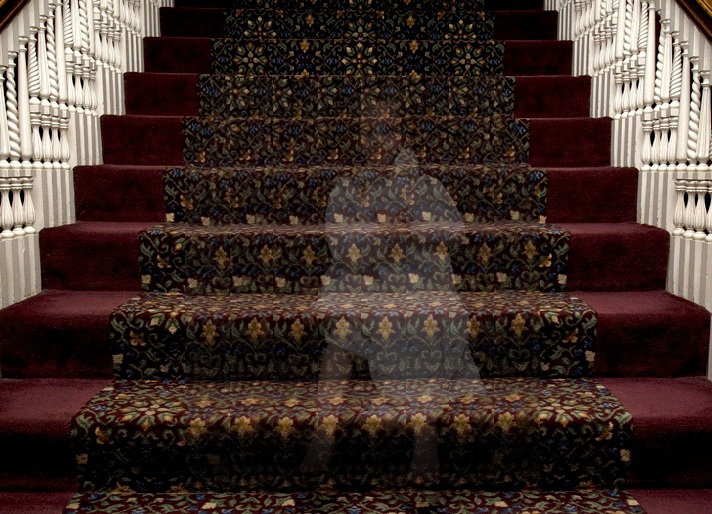
    Altered Image: Ghost on Stairs, Stanley Hotel © Deborah Hill


    Writing the Ghost Story

    4-5 Minute Read

    What makes a ghost story truly haunting?

    Ghost stories have chilled our bones for centuries—not just because of the specters themselves, but because of what they stir in us. The best ghost stories don’t just go bump in the night; they linger, unsettling our minds long after the last page is turned or the fire has burned low.

    If you’re hoping to write a ghost story—whether spine-tingling, sorrowful, or somewhere in between—here are a few timeless elements to guide your way:


    1. Atmosphere Is Everything

    A compelling ghost story begins with setting. Think of your setting not just as a backdrop, but as a character with a mood of its own—dripping with memory, silence, or decay. A fog-drenched marsh, a creaking farmhouse, a cold hospital corridor—these places pulse with potential.

    “It is the house that is haunted.” – Shirley Jackson


    2. Root It in Emotion

    The most enduring ghost stories tap into something deeply human: grief, guilt, longing, trauma. The supernatural often becomes a mirror for the emotional state of your characters. Ask yourself: What does the ghost represent?

    Whether it’s a metaphor for a buried secret or the echo of a tragedy, a ghost tied to emotion will resonate long after the scare fades.


    3. The Power of Restraint

    Don’t show everything. Let tension simmer. Often, what’s not seen is more terrifying than what is. Hint. Suggest. Let your readers’ imaginations fill in the blanks. A shadow under the doorframe. A child’s voice in an empty room. A chair rocking slowly in the attic.

    Ambiguity can be far more haunting than clarity.


    4. A Strong, Unsettling Hook

    Start with something slightly “off.” Maybe it’s a character who hasn’t slept in days. A letter that arrives from someone long dead. A recurring dream. The earlier you plant a sense of unease, the deeper your story will dig into the reader’s mind.


    5. Make It Personal

    Why this character? Why now? The haunting should feel intentional. Is it a long-buried family secret? An unresolved betrayal? A child who vanished without a trace? When the haunting is personal, the stakes rise—and so does the fear.


    6. Let the Truth Unravel Slowly

    Don’t give away the whole ghostly tale at once. Breadcrumbs of revelation—an old photograph, a diary, a recurring phrase—allow tension to build. A ghost story is a mystery wrapped in fog; each step forward should feel like sinking deeper into something forgotten.


    7. The Ghost (or Its Absence) Matters

    Some ghosts howl. Others whisper. And sometimes, the most terrifying presence is one the reader never fully sees. Whether it’s a pale figure at the foot of the bed or the unexplained scent of lavender where no one has been, make your ghost memorable—visually, emotionally, or symbolically.


    8. There Should Be Consequences

    By the end of a good ghost story, something has changed—someone is haunted, altered, broken, or freed. A ghost should leave a mark, not only on the characters but on your reader.


    Final Thought: A ghost story is never just about a ghost. It’s about what haunts us—personally, culturally, emotionally. If you write with that in mind, your story will do more than frighten. It will linger.

    Written with refinement from ChatGPT

  • She’s got Bette Davis’ Eyes. Correct that. She’s Bette Davis as Baby Jane!

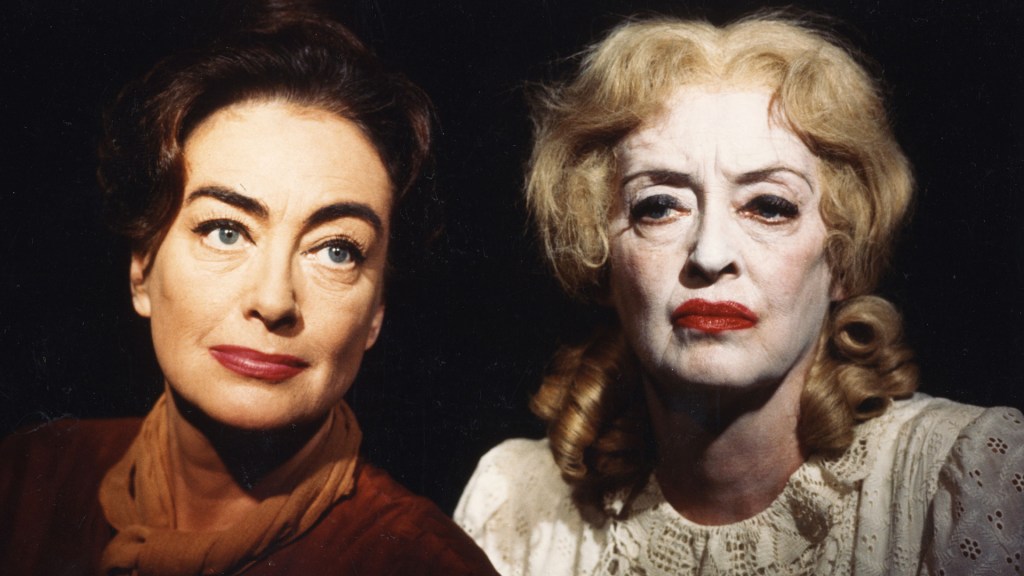
    Whatever Happened to Baby Jane was an excellent 1962 psychological horror thriller starring Bette Davis and Joan Crawford. They were two very prominent, award-winning actors of their time. Both gained celebrity in their acting and later in the pop music of 1981. She’s got Bette Davis’ Eyes by Kim Carnes, and Joan Crawford has Risen from the Grave by Blue Öyster Cult. Why am I telling you this?

    It was Saturday night, my birthday, and the extended family decided to take me to a smorgasbord called Shady Maple. It is noted to be the largest smorgasbord in the nation. As any respectable largest smorgasbord in the nation would be, it was crowded. Dining room after dining room of people smashed together at their seats and vying for food at the buffet.

    That was when I saw her—the splitting image of Bette Davis in the role of Baby Jane. She looked about seventyish at least. Her hair was dry, tangled, and bleached out with pin curls cascading down the sides of her neck. Her makeup was white, with exaggerated red lips, dark lines around her eyes, and heavy mascara.

    I tried not to stare, but I had to; there was really no option. I was staring at the very dead, Bette Davis—or more to the point—the madness of Baby Jane as she tortured and kept prisoner, her wheelchair-bound sister, played by Joan Crawford.

    I told my mother, “You have to turn around, look at this woman, and tell me who you see.”

    It was strategic, as suddenly turning around and facing this woman would look awkward. My 86-year-old mother, almost always up for a challenge, accomplished her goal. She turned around and said to me. “That’s Baby Jane.”

    Why would anyone, on purpose, make themselves up like a mentally unstable movie character unless they were going to a Comic-con or some other fan convention?

    Well, you can’t run up to someone and say, “You are the spitting image of a deranged woman in a movie. Did you plan it that way? If so, you pulled it off!”

    We continued eating, I, my surf and turf, and my mother, her beets and chicken. Occasionally, I looked over to see how this woman acted. I love a good character study, but this character was already well-written and acted out. Still, I was obsessed.

    I lost sight of her somewhere around getting garbanzo beans on my salad. Maybe it was a good thing. Did I mention that from the profile, her significant other looked a lot like Stephen King? Just slightly. Just enough to go, ah, I wonder.

    I highly recommend seeing Whatever Happened to Baby Jane. If you don’t mind the crowd, I’d recommend the smorgasbord, too. Stay spooky, my friends.

  • It’s Drive-In Movie Time: Let the Films Begin!

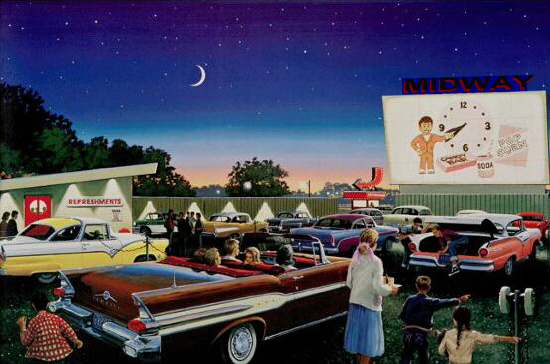
    It’s drive-in movie time again. Even though nights are still on the cool side, it didn’t stop our local drive-in’s opening weekend from being a near sell-out for Lilo & Stitch and Mission: Impossible. 

    Like good American nostalgia enthusiasts, we gathered our blankets, hooded sweat shirts, lawn chairs, a bag of McDonald’s food, folding table and a game of Haunted Mansion Life (yes it’s a Disney thing) and headed for the drive-in forty-five minutes away.

    It was good to see so many other cars, vans and trucks in attendance. The enticing smell of popcorn, hot dogs and fresh coffee filing the air. Kids of all ages running about, throwing around balls, swinging on swings or playing games with family and friends around their vehicles. Adults sat around playing cards, friends were reunited. We were about an hour from show time. You have to go at least an hour before show time for a good spot and for socializing.

    According to the LA Times, at the height of the drive-in theater craze there were over 4,000 drive-in movie screens or about 25% of all movie screens in the country. Today there are only approximately 368 or 1.5%. Drive-in movies are a dying bread in great family entertainment.

    Why go to a drive-in when you can attend a modern indoor theater with rocking, cushy chairs and state of the art Dolby surround-sound? Here are my top ten reasons.

    10. It’s an American institution that should be preserved.

    9. Two movies for the price of one.

    8. Before movie social time with family and friends.

    7. You can talk all you want during the film and no one cares.

    6. Sit in the car, on lawn chairs, laying in a truck or van, in sleeping bags on the ground. Whatever floats your boat.

    5. You control the volume of the sound around you.

    4. Bring the kids in their pajamas. If they fall asleep, no problem. Wrap them in a blanket. Once you are home, just plop them into bed. (Yes, put them in a car seat on the way home)

    3. Bring your own treats but make sure to patronize the concession stand. Most drive-ins depend on this to off-set cost of the business. Our concession stand is like a take-out restaurant.

    2. It’s an event, not just a film. Everyone gets excited when you tell them it’s drive-in movie night!

    1. You get to watch the dancing concession stand food advertisement at intermission. “4 minutes till show time, just enough time to get a fresh bag of popcorn and a refreshing soda.. 3 minutes till show time…” As the dancing hot dogs in buns jig with a couple bags of popcorn to hooky carnival music.

    Want to know if there is a drive-in near you? Go to DriveinMovie.com. They have them listed state by state. See you at the drive-in!

    Oh yes, Lilo & Stitch and Mission: Impossible were great films. I recommend those too.