
Tag: Healthy Relationships

  • Before You Get Mad Again: Read This!

    ©Deborah Hill

    Wouldn’t it be nice if people came with instruction manuals?
    Better yet—what if we came with our own?

    Imagine how much easier relationships would be—both with ourselves and with others—if we had a clear set of directions to follow. You might be surprised to learn: you don’t need a 200-page manual. A couple of index cards would do.

    That’s because the basics are simple. Unfortunately, most people never get taught them. So we end up walking through life with blinders on, trying one approach after another, hoping something sticks.

    Take this example:
    Someone gets angry and gives the silent treatment. Why? Because they believe the other person should know what they did wrong. The problem is—it solves nothing, gains nothing, and slowly chips away at the relationship. The more chips, the more dysfunction. Yet the behavior continues, often with confusion and surprise when the relationship sours.

    Why do we do this?
    Because no one gave us the index cards.

    Here’s the first card:

    1. People can only act and react (thinking, feeling, doing) based on what they know.

    Sounds obvious, right? But if it were, we’d all be a lot gentler with each other.
    Instead, we regularly expect others to respond the way we would, based on our experiences, our knowledge, and our perceptions (meanings).

    Let’s look at a few examples:


    Expectation:
    “If you loved me, you’d bring me chocolate donuts with sprinkles.”
    Reaction:
    “I brought you flowers. I thought that meant I loved you. How was I supposed to know donuts meant love?”


    Expectation:
    “You should know better than to leave the oven in clean mode when leaving the house! Everyone knows that’s a fire risk!”
    Reaction:
    “I didn’t know that. I’ve never cleaned an oven before. How would I know it could catch fire?”


    Expectation:
    “Can’t you do anything right? You can’t even load the dishwasher correctly!”
    Reaction:
    “Is there a right way? I was just trying to help. You know what—next time, you do it.”


    Want to be shocked? Try this:

    Spend one full day paying attention to how often you expect someone to act or respond based on your knowledge. Count how many times you assume someone “should just know.”

    Then, spend another day observing how you feel when others make the same assumption about you—expecting you to read their minds, meet their needs, or act in a way that makes sense only in their world.

    You’ll start to see just how much of our conflict stems from this silent mismatch of expectations.

    And one last thought:
    Even if you’ve known someone your whole life, don’t assume they know what you know—or that they’ll process things the same way.
    We’re all working without manuals.
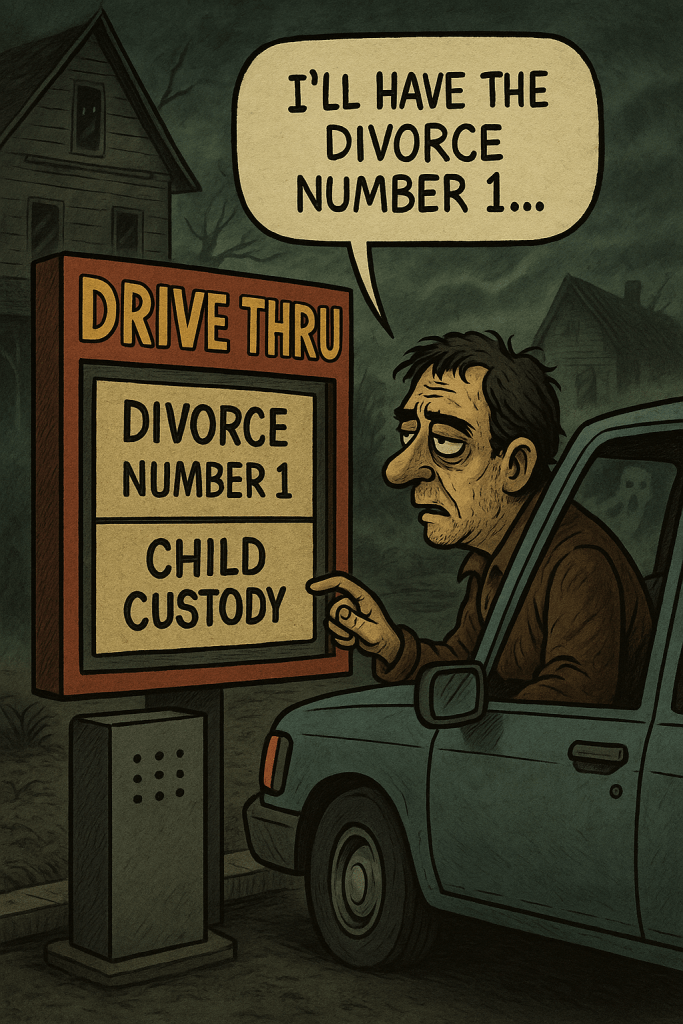
  • 25 POTENTIAL RELATIONSHIP KILLERS

    AI generated

    25 Potential Relationship Killers

    by Deborah Hill LCSW (ret.)

    I see books all the time about the five types of relationship killers. It’s ashamed we stop at five because naming the top five may not hit on the bumps in a relationship. If you look at a lot of the social and psychological data on relationships, the list looks more like this. (Note these are not in order of most damaging to least. There is no way to do that as each entry has its own dimensions and they differ couple to couple).

    1. Communication issues
    2. Dependency vs independence
    3. Money
    4. Ineffective problem solving or arguments
    5. Changes in sexual desire
    6. Affairs/one night stands/porn/excessive flirting
    7. Friends/family/in-laws
    8. Life Stress: job/unemployment/death/chronic illness/sudden illness/mental illness/increase in responsibilities/aging/moving/life style changes
    9. Habits/vices/addictions
    10. Taking the other for granted
    11.  Rushing into a phase in the relationship too quickly: weddings/babies/retirement
    12. Lack of trust
    13. Lack of Intimacy: feeling like you have to hide who you are due to fear of being unlovable/ no physical intimacy (touching)/ feeling like you have to be someone else to be loved
    14. Lack of care: feeling like you are not cared about or your partner does not understand you
    15. Judgementalism: feeling like you are always scrutinized, you can’t do anything right or being perfectionist and believing you can’t do anything right.
    16. Tests: partner sets up little tests to see if you pass and are worthy of trust/love
    17. Unrealistic expectations: if this is love, why am I so miserable – expecting partner to meet or fix your inner emptiness or meet unrealistic expectations or fantasies
    18. Lack of contributions in household, family responsibilities
    19. Raising kids
    20. Respect
    21. Comfort levels
    22.  Different goals in life
    23. Step parenting
    24. Mistakes: shutting down due to fear of making a mistake, making things worse
    25. Living in the past

    What is important to know is that while these can range in metaphor as a splinter, dagger or serial stabbing.

    What one couple sees as a serial stabbing another might see as a splinter. Why the difference and which couple is going to ride the wave and come out feeling connected? The quick and easy answer is in fluidity and commitment to the relationship.

    Fluidity means the ability to bend and not brake, to see the whole picture and not hyper-focus on one detail.  Think about your relationship as a porcelain bowl, for example. If you drop the bowl into a swimming pool full of water, it will get wet, but most likely will stay intact. If you drop it in the sand, depending on the height you drop it; it might stay intact or crack. If you drop it on concrete – it’s shattered – almost every time.

    There are ways to make you more mindful – more fluid. Keep in mind, however, that you are only one person in a relationship. The strongest relationships have fluidity in both partners.

    Until next time….