Tag: Ghosts

  • THE LONG GOODBYE, THEN THE SILENCE

    THE LONG GOODBYE, THEN THE SILENCE

    My uncle was dying in a Florida hospital, a thousand miles away. The call came early: Expect the inevitable. Keep your phone close.

    He wasn’t just an uncle—he was a second father. But I was home with my daughter, helping her recover from major spine surgery. She needed me. I couldn’t leave.

    All day, I juggled logistics, wondering if I could fly down. My mother said, “Let us visit the hospital, then we’ll talk tonight.” But the call never came.

    By midnight, my imagination took over. Maybe he’d already passed. Maybe they were too distraught to tell me—like when my sister died when I was seven and I couldn’t say goodbye.

    At 12:30 a.m., I half-joked to my daughter, “Maybe he’ll come say goodbye.” I thought of my grandmother’s rocker that moved by itself after she died. Surely my uncle could find a way.

    Unable to sleep, I crept downstairs for Lucky Charms, passing my late sister’s Chatty Cathy doll. I pulled out my uncle’s old camera, set it on the table, and cried until empty. Then—a shadow at my feet. I screamed. The milk went flying.

    “Meow.” Just the cat.

    The phone rang—he was still alive. Instead of relief, I felt emptiness. The next night, the real call came: my uncle was gone. I went numb, then collapsed into wailing.

    I’ve seen a lot of grief in my practice, and I know: do whatever healthy thing you need to survive. I let my thoughts spiral. I isolated. Days later, I picked up his camera and started shooting stills while playing childhood music.

    My office door swung open. A warm, healing feeling washed over me—comforting, not frightening. I like to think my uncle came to give me a hug. It was what I needed to begin the long, twisting road of healing. Who are you to tell me it was anything different?

    IF YOU ARE GRIEVING, KNOW THESE THINGS:

    • No one grieves the same.
    • Don’t let anyone tell you you’re taking too long.
    • Use your support system.
    • Keep a treasured object.
    • Write letters to your loved one.
    • Join a support group when ready.
    • Seek counseling if you’re struggling—or simply to talk.
    • Pray, meditate, or find your own way to connect.

    If you’re grieving, my condolences. I hope my experience helps you on your journey. —Debbie
  • Writing the Ghost Story

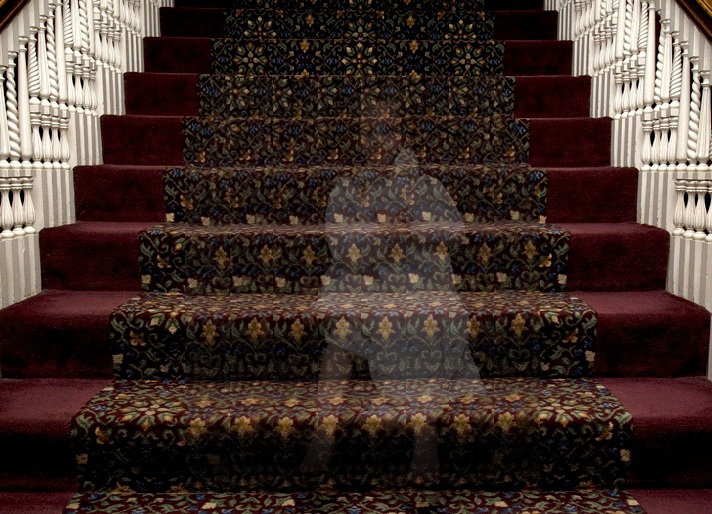
    Altered Image: Ghost on Stairs, Stanley Hotel © Deborah Hill


    Writing the Ghost Story

    4-5 Minute Read

    What makes a ghost story truly haunting?

    Ghost stories have chilled our bones for centuries—not just because of the specters themselves, but because of what they stir in us. The best ghost stories don’t just go bump in the night; they linger, unsettling our minds long after the last page is turned or the fire has burned low.

    If you’re hoping to write a ghost story—whether spine-tingling, sorrowful, or somewhere in between—here are a few timeless elements to guide your way:


    1. Atmosphere Is Everything

    A compelling ghost story begins with setting. Think of your setting not just as a backdrop, but as a character with a mood of its own—dripping with memory, silence, or decay. A fog-drenched marsh, a creaking farmhouse, a cold hospital corridor—these places pulse with potential.

    “It is the house that is haunted.” – Shirley Jackson


    2. Root It in Emotion

    The most enduring ghost stories tap into something deeply human: grief, guilt, longing, trauma. The supernatural often becomes a mirror for the emotional state of your characters. Ask yourself: What does the ghost represent?

    Whether it’s a metaphor for a buried secret or the echo of a tragedy, a ghost tied to emotion will resonate long after the scare fades.


    3. The Power of Restraint

    Don’t show everything. Let tension simmer. Often, what’s not seen is more terrifying than what is. Hint. Suggest. Let your readers’ imaginations fill in the blanks. A shadow under the doorframe. A child’s voice in an empty room. A chair rocking slowly in the attic.

    Ambiguity can be far more haunting than clarity.


    4. A Strong, Unsettling Hook

    Start with something slightly “off.” Maybe it’s a character who hasn’t slept in days. A letter that arrives from someone long dead. A recurring dream. The earlier you plant a sense of unease, the deeper your story will dig into the reader’s mind.


    5. Make It Personal

    Why this character? Why now? The haunting should feel intentional. Is it a long-buried family secret? An unresolved betrayal? A child who vanished without a trace? When the haunting is personal, the stakes rise—and so does the fear.


    6. Let the Truth Unravel Slowly

    Don’t give away the whole ghostly tale at once. Breadcrumbs of revelation—an old photograph, a diary, a recurring phrase—allow tension to build. A ghost story is a mystery wrapped in fog; each step forward should feel like sinking deeper into something forgotten.


    7. The Ghost (or Its Absence) Matters

    Some ghosts howl. Others whisper. And sometimes, the most terrifying presence is one the reader never fully sees. Whether it’s a pale figure at the foot of the bed or the unexplained scent of lavender where no one has been, make your ghost memorable—visually, emotionally, or symbolically.


    8. There Should Be Consequences

    By the end of a good ghost story, something has changed—someone is haunted, altered, broken, or freed. A ghost should leave a mark, not only on the characters but on your reader.


    Final Thought: A ghost story is never just about a ghost. It’s about what haunts us—personally, culturally, emotionally. If you write with that in mind, your story will do more than frighten. It will linger.

    Written with refinement from ChatGPT

  • Ghost or Imaginary Friend

    The driveway to our house was a mile-long tunnel, hand-cut by men long forgotten. In daylight, sunlight danced like fairies through the trees. But at night, shadows twisted into monsters that chased our old ’66 Chevy. I was five years old, safest tucked on the car floor before seat belts were a thing.

    The first time I saw him, it was a warm afternoon. I was wandering the woods around our house when I spotted an old man mowing a lawn I hadn’t seen before. He wore baggy grey pants, suspenders, and an off-white t-shirt. His hair was short and grey, his face clean-shaven. The lawnmower made no sound. Neither did the birds. The air chilled, and my skin tingled.

    He felt different, but I didn’t understand how.

    I returned often that summer. Sometimes, only trees and rubble remained. Other times, I saw him pushing that silent mower again, a small stone house behind him—only visible on certain days. When the air thickened and sounds warped, I knew I was close.

    I decided to talk to him.

    One day, I pushed through the invisible wall of static, stepped onto his lawn—and he stopped mowing. He looked at me, smiled, and in that moment my head throbbed, my breath caught, and I fell backward. He—and the world he came from—vanished.

    Later, he began appearing closer to home, sitting silently in one of our colorful metal lawn chairs. I’d tell him about my dog. He’d never speak, but I could feel his presence. I wanted him to acknowledge me. One day at lunch, he arrived. I jumped and danced in front of him. He smiled—then faded away.

    When I told my grandmother, she became angry. She called me a liar. “That man is dead. That house was torn down long before you were born.” My mother tried to explain it away as an “imaginary friend.”

    Desperate, I led them through the woods. But the house was gone.

    I was no longer allowed to wander alone, and he never came back.

    Years later, as an adult with a child of my own, I returned. Our old house was decaying—windows broken, graffiti on the walls, squatters likely nearby. The air felt wrong. We left.

    Even more years passed, and I returned again. The land was gone, replaced by townhouses. But I found what remained of our swing set and doghouse in the woods, took home a rusted piece of the past.

    Still haunted, I dug through property records. There it was: our home and his, built in the 1870s by a man named S. Disney (I’ll keep his full name private). His house sat exactly where I remembered.

    I never found a photo. But I found enough.

    Was he a ghost? My imaginary friend? A child’s dream or something more? I don’t know. All I know is I met a man who mowed a lawn that doesn’t exist anymore.

    You can believe what you want.

    But sometimes, life is stranger than fiction.