Category: writing

  • JUST HIT SEND!

    JUST HIT SEND!

    JUST HIT SEND!

    I finished it a month ago—my latest novel, Dark Consequences. Normally, I self-publish. More creative control, no middleman, a say in the logistics of the book, the title, and the cover. The best part, I don’t have to wait a year for the final product to come out.

    For reasons that escape me, I’ve decided to get this book commercially published. You know the rat race—finding an agent, finding a publisher, rewrites to fit someone else’s ideas of publishable, and a decrease in creative say in the book cover.

    I know why—I’m tired of hearing self-published authors don’t count. Bull sh–! Tired of my lack of marketing skills, damn introversion.

    Are these the real reasons, or do I suffer from imposter syndrome? I’ve never held a book opening event. Just quietly published, made some posts, and let it ride. People tell me both books, Death in Disguise and The Revelation, are gripping, with well-developed characters and plots and subplots that keep the reader engaged.  So what the f—- is my problem?

    Everything is ready: The synopsis, the query letter, the pitch. I think it’s a great story.  Just hit SEND!

    Did I tell you it’s the first novel of a four-part series—all of it written? Just hit SEND!

    You want to know what the story is about? It’s a dark historical supernatural novel. Set in 1848 Maryland amid the upheaval of a quarry town, the story blends gothic atmosphere with folk horror and social tension. It explores superstition, grief, and the resilience of working-class families. There is no reason not to hit SEND!

    Here I sit, everything ready to go, a destination picked out, and a fear of HITTING THE DAMN SEND BUTTON! Can anyone relate to this? If so, I’d love to hear how you overcame this affliction.
  • Memento Mori- Remember You Will Die

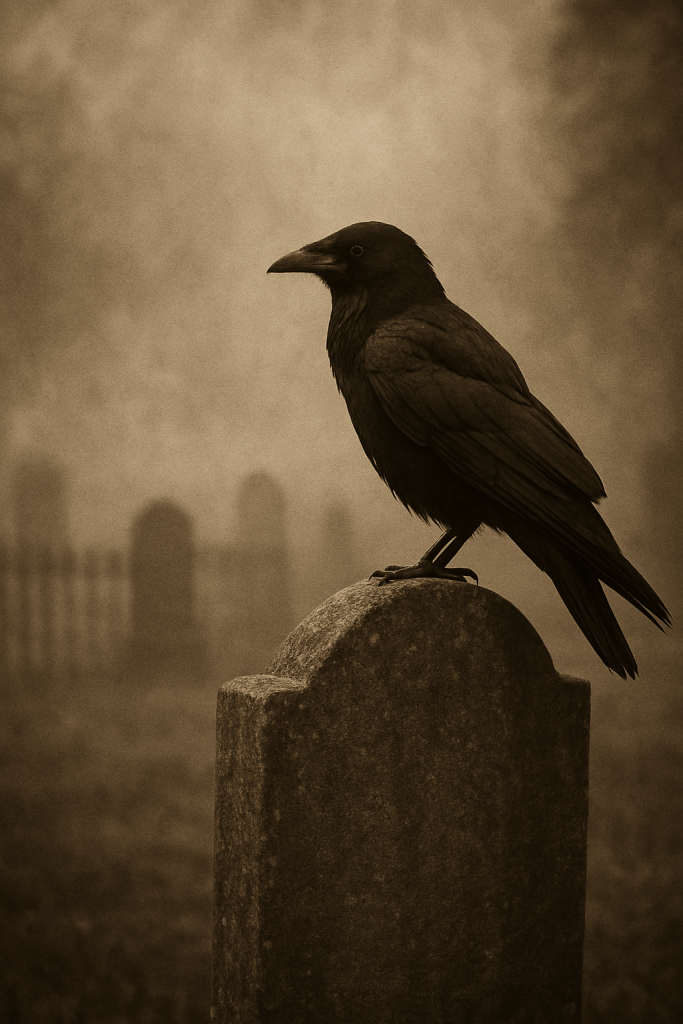
    MEMENTO MORI- REMEMBER YOU MUST DIE

    Call me morbidly curious, gothic—not goth, macabre, perhaps even a dark coper. They all mean about the same thing. Paraphrased from the dictionary, someone having a fascination for dark and unpleasant subjects, the supernatural, death, and melancholy. A dark coper, a person who uses scary media to process fear to gain a sense of preparedness for real-world dangers.

    You would never know this looking at me. I don’t advertise. This leads me to a quandary: trying to explain my writing to people who view dark fiction (horror) as slasher movies and grotesque. Yes, there is a market for this type of film. It’s not my market, and it is definitely only a sub-genre of a vast cornucopia of artistic endeavors.

    To me, a good dark fiction novel contains deep, well-rounded characters with strong arcs and meaningful relationships. They encounter, because of their own actions or the actions of someone or something else, a situation(s) leading them to a life and death situation. Physically or psychologically. A cause to reevaluate everything they thought they knew about life. A chance to make a difference. An opportunity to do the greater good—even if the result is self-sacrifice.

    Yes, there are works of fiction where the antagonist is the main character. The twists and turns of a mind deliberately cause the protagonist to struggle. Even then, both the antagonist and the protagonist need to be well-rounded characters—why else would you root for success? Though in some situations, the result is disquieting as the antagonist wins, leaving the reader with their own sense of dread or self-evaluation. The Invasion of the Body Snatchers is a good example of this. Spoiler: the aliens win.  

    Someone asked me, “Why do you write horror? Why not write romance or dramas?”

    All my novels contain historical drama and romance. However, my answer is simple.  It’s a great way to have a safe place to explore fears and past traumas. It’s cathartic, entertaining. I like it when a character beats the odds and comes out whole. And of course, it harks back to Memento Mori. I’m drawn to it like a moth to a flame, unable to resist its calling.  (Not today—at least I hope not!)

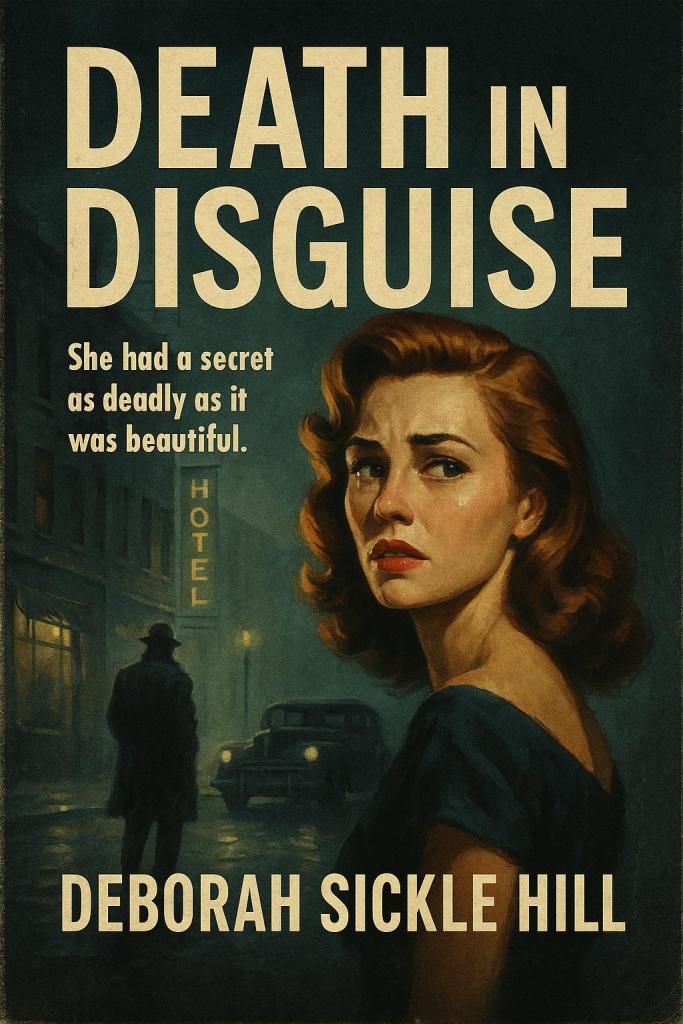
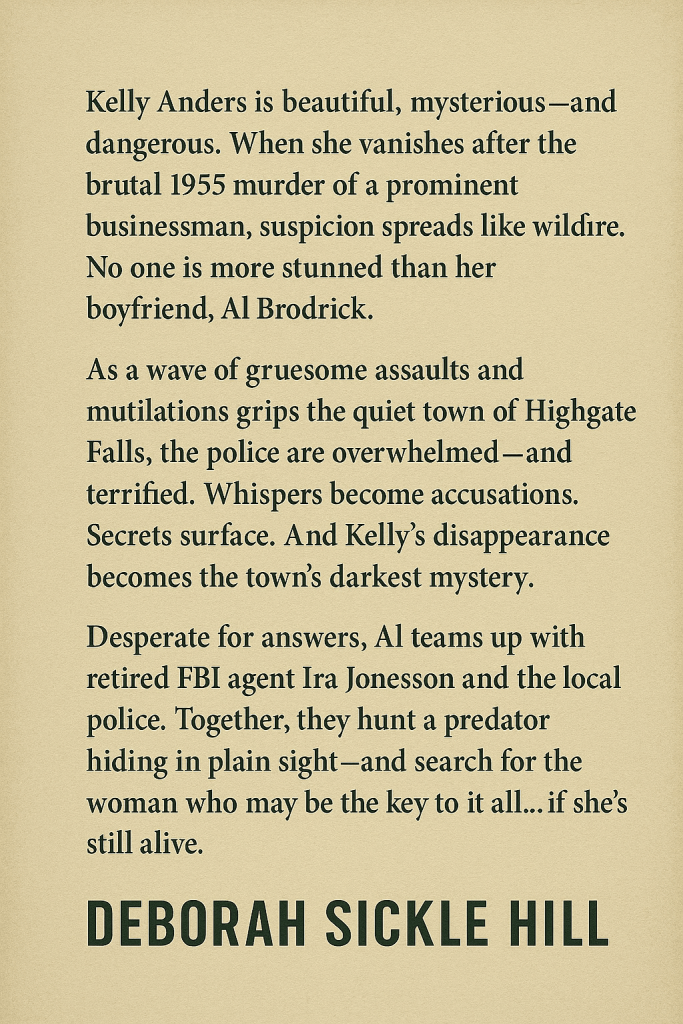
    To date, I’ve written and self-published two fiction books. Death in Disguise is a dark murder mystery taking place in the 1950s in a small fictional town. The Revelation is a dark, supernatural tale set on an archaeological site in the 1980s. My latest finishedwork, currently vying for an agent, is called Dark Consequences, about an Irish famine victim, forced to come to America, where he makes a fateful decision bringing death to the small quarry community where he settles. It’s book one of a four-part series.

    If you’re interested in well-developed characters living somewhere in history, a solid cast of characters and plots where the consequences of decisions are life-changing, exploring the world of the supernatural, give me a try. I’m really not that scary.

  • When a Muse Takes a Nap

    When a Muse Takes a Nap

    When a Muse Takes a Nap

    Some days, the words just don’t come. Today is one of those days. I haven’t written a blog in two weeks, and instead of writing, I’ve been building Super Mario characters for Halloween and planning a trip.  Creative, yes — but not the kind of writing I promised myself I’d be doing. And today? I’m just…blah.

    Today, though? I feel…blah. No big burst of inspiration. No profound story to share. Just the quiet reminder that creativity has its rhythms. Some days are fireworks, others are embers barely glowing. And that’s okay.

    Even “blah days” are part of the process. They give us space to rest, reset, and — eventually — return to the page with fresh eyes.

    So here’s to the ebb and flow, the spark and the silence. The muse may be napping today, but I know she’ll wake up again soon.

  • New Book Cover: Death in Disguise

    Death in Disguise New Cover 2025

    https://amzn.to/4lz0HgK E-book

    https://amzn.to/44r2Rs0 Paperback

  • Writing the Ghost Story

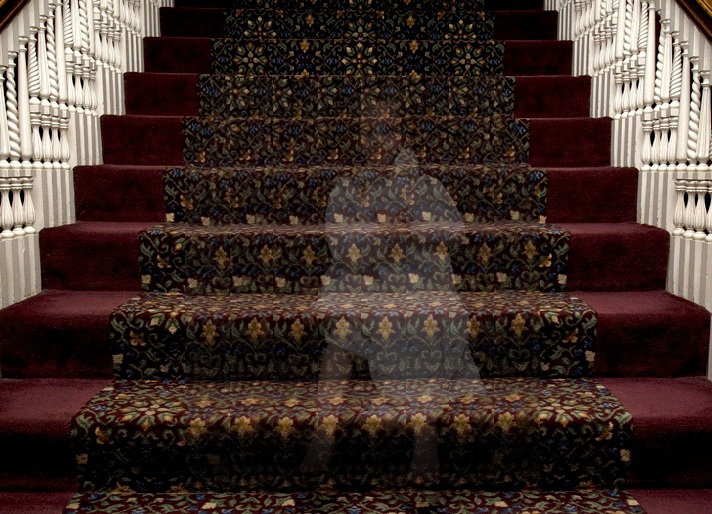
    Altered Image: Ghost on Stairs, Stanley Hotel © Deborah Hill


    Writing the Ghost Story

    4-5 Minute Read

    What makes a ghost story truly haunting?

    Ghost stories have chilled our bones for centuries—not just because of the specters themselves, but because of what they stir in us. The best ghost stories don’t just go bump in the night; they linger, unsettling our minds long after the last page is turned or the fire has burned low.

    If you’re hoping to write a ghost story—whether spine-tingling, sorrowful, or somewhere in between—here are a few timeless elements to guide your way:


    1. Atmosphere Is Everything

    A compelling ghost story begins with setting. Think of your setting not just as a backdrop, but as a character with a mood of its own—dripping with memory, silence, or decay. A fog-drenched marsh, a creaking farmhouse, a cold hospital corridor—these places pulse with potential.

    “It is the house that is haunted.” – Shirley Jackson


    2. Root It in Emotion

    The most enduring ghost stories tap into something deeply human: grief, guilt, longing, trauma. The supernatural often becomes a mirror for the emotional state of your characters. Ask yourself: What does the ghost represent?

    Whether it’s a metaphor for a buried secret or the echo of a tragedy, a ghost tied to emotion will resonate long after the scare fades.


    3. The Power of Restraint

    Don’t show everything. Let tension simmer. Often, what’s not seen is more terrifying than what is. Hint. Suggest. Let your readers’ imaginations fill in the blanks. A shadow under the doorframe. A child’s voice in an empty room. A chair rocking slowly in the attic.

    Ambiguity can be far more haunting than clarity.


    4. A Strong, Unsettling Hook

    Start with something slightly “off.” Maybe it’s a character who hasn’t slept in days. A letter that arrives from someone long dead. A recurring dream. The earlier you plant a sense of unease, the deeper your story will dig into the reader’s mind.


    5. Make It Personal

    Why this character? Why now? The haunting should feel intentional. Is it a long-buried family secret? An unresolved betrayal? A child who vanished without a trace? When the haunting is personal, the stakes rise—and so does the fear.


    6. Let the Truth Unravel Slowly

    Don’t give away the whole ghostly tale at once. Breadcrumbs of revelation—an old photograph, a diary, a recurring phrase—allow tension to build. A ghost story is a mystery wrapped in fog; each step forward should feel like sinking deeper into something forgotten.


    7. The Ghost (or Its Absence) Matters

    Some ghosts howl. Others whisper. And sometimes, the most terrifying presence is one the reader never fully sees. Whether it’s a pale figure at the foot of the bed or the unexplained scent of lavender where no one has been, make your ghost memorable—visually, emotionally, or symbolically.


    8. There Should Be Consequences

    By the end of a good ghost story, something has changed—someone is haunted, altered, broken, or freed. A ghost should leave a mark, not only on the characters but on your reader.


    Final Thought: A ghost story is never just about a ghost. It’s about what haunts us—personally, culturally, emotionally. If you write with that in mind, your story will do more than frighten. It will linger.

    Written with refinement from ChatGPT

  • Writing Blogs: Fiction or Reality

    I’ve found myself a bit of a casualty in today’s world of misinformation and half-truths online.
    Okay—casualty might be a strong word. Let’s say: misunderstood.

    I write what I know. Sometimes I embellish, sure—but it’s always rooted in truth, unless I clearly say otherwise. Maybe I should start putting disclaimers on each post:
    This is true.
    This is fiction.

    Take my recent blog about the miracle fish story. It actually happened. As unbelievable as it sounds, it was real. It didn’t even occur to me that readers might think I made it up—until one of my daughters commented, “I remember this.” That’s when someone reached out and asked, “Wait… this actually happened?”

    They were stunned when I said yes.

    Why do I write this blog?
    To share information. To offer insight. To spark a laugh. To make people think. But most of all, to leave the reader with a genuine sense of me—the person behind the words.

    Am I succeeding?

    Writing can feel like a blind art form. I can’t bring a blog post to show-and-tell the way someone might with a painting or sculpture. Writers can’t always tell where they stand with their work until there’s engagement. And when that engagement shows that I missed the mark—especially when something true is mistaken for fiction—it’s a shock to the system.

    How could someone not know this really happened? (I have to shake my head, I can definitely see how this example could be taken as fiction.)

    Clearly, I need to rethink that.
    Maybe other writers have been here too. Maybe it doesn’t matter as long as people enjoy the story. But I’m genuinely curious: Do you think the truth vs. fiction distinction matters in a personal blog?

    And, just for fun—
    How many of you thought the fish story was made up?

    Let me know in the comments. I’d love to hear what you think.

  • WRITING NAKED (REVISED)

    “You have quite the internet presence,” the woman said during my second interview for a part-time therapy position.
    “You’re exactly what we’re looking for—except… well, this is complicated.”
    She hesitated.
    “I’m not sure what I think of what you write. The topics you explore, you know? Granted, it’s not fair to judge you based on your writing. The other applicants don’t have the same visibility. It’s just—I’m more comfortable hiring someone whose beliefs and ideas are unknown to me.”

    I sat there, feeling naked.
    I had purposely exposed myself to the world through my writing—and now someone was judging those parts of me that, at the time, had nothing to do with my clinical career. I was shocked, to say the least.

    And I did the unthinkable: I stopped writing. No writer should do that. You would not like me when I’m not writing. It’s in my blood. It’s in my soul.

    Years later, while running my private practice, the urge returned—louder, deeper. And with it came the question:
    Am I prepared to get naked again in front of friends, family, clients, the whole world, by picking up the pen?

    I thought I was. I wrote two novels. And then… I let them sit. I was terrified to send them out into the world. Maybe I wasn’t ready to face that vulnerability after all.

    Would I lose something—too much? Would total strangers stumble across my blog and turn away?

    Screw it.

    I self-published those novels—then looked over my shoulder.
    People bought and read them. No angry mobs, no torches. But I still felt exposed. I didn’t market them. Fear had crept back in.

    Then came the saga: a historical fiction rooted in supernatural folklore and local legend. I poured my soul into it. Polished it to death. And again, fear gripped me—this time because I wanted to try querying agents.

    Talk about nakedness.

    I gave the manuscript to my parents. They’d seen me naked before (literally), so it felt safe. They gave positive feedback. Of course, they’re my parents.
    And still, the manuscript sat. Maybe it needed read-through number fifteen.

    Eventually, I checked out agents. Wrote a query letter. Created hooks, taglines, back cover blurbs. And then I hesitated. I needed a web presence again.

    And that same old fear of being naked returned.

    I fought it. Damn you, fear.

    I built a website. Shared my work. People responded positively. I even sold a few copies of those old books. But still—every keystroke felt risky. Any moment, someone might show up—someone I know, someone unexpected—and say, “I don’t like you naked.”

    Well—too bad, buck-o.

    I am who I am. I write what I know, and what stirs my curiosity. If that’s not to your liking, as one of my loved ones would say:

    Don’t let the door hit you in the ass.

    I sweat just typing that. Ha. I can be such a wuss.

    But seriously—there’s nothing wrong with being naked. Get out there. Do what your soul tells you to do.

    (Just… make sure it’s legal.)

  • Writing My Saga is Driving me Crazy (But I Wouldn’t Trade it for Anything)

    Five years ago—somewhere between too many coffees and too many visits to the psychiatrist—I finally sat down to write the saga that had been spinning in my head for years. It was time. The stories, the voices, the haunted places—they wouldn’t wait any longer.

    Since then, I’ve thrown myself into this world. I write every day, often for hours. I’ve researched until my eyes burned and the screen blurred. I’ve taken trips to key locations, walking where my characters walk, learning what they need to know to breathe fully on the page.

    Now, five years later, I’ve written four books in the series. And for the first time, I think I’m done. The first book is ready—really ready—to send to an agent. That’s a step I’ve never taken before. Wish me luck.

    My characters have taken on lives of their own. Sometimes they slip into my real world—I’ve caught myself calling friends by a character’s name more than once. Oops. I suppose that’s the sign of a story well-lived… but I’ll try to keep it in check. Maybe.

    Now comes the business side of writing. The query letter. The dreaded synopsis. Somehow, I’m expected to distill a nearly 400-page novel (double-spaced!) into a two-sentence pitch, a logline, a tagline—a hook sharp enough to snag a stranger’s attention in seconds. It threatens to swallow me whole, but I’m doing my best to learn the ropes.

    And then there’s the author website. I’ve spent two full weeks wrestling with it. Turns out, I’m a bit tech-challenged. Okay, more than a bit. But I’m determined to get it right—if it’s the last thing I do. The pages have to link up, the design has to make sense, and I will figure it out. Eventually.

    This whole writing business is a wild mess. A beautiful, maddening, soul-stretching mess. I might lose a few hairs and collect a few scraped knees along the way, but I wouldn’t trade it for anything.

  • Writing Naked

    “You have quite the internet presence,” said the woman on the phone who interviewed me six months ago for a part time position.  “Well, this is complicated,” she continued. “I think you are exactly what we are looking for, but I’m not sure what I think of what you write. The topics you write about, you know? Granted, it’s not fair to judge you based on your writing vs not having the same criteria for all the other applicants. It’s just I’m more comfortable hiring someone whose beliefs and ideas are unknown to me.”

    I put down the phone in stunned silence. I told my hubby what happened. He said, “Well, you obviously are not getting that job.”  And he was right. “Just let it go,” he said. That was six months ago.

    I did think, well, if she thought the content of my blog and web sites were controversial ( I don’t see the controversy), wait till she reads my novel. They would have fired me for sure, if I’d been hired.

    Yes, I do have the internet presence, but hey, I’m out there trying to connect, trying to get my writing out, trying to share my inner sanctum with others who might benefit. I think it’s altruistic, in some respects. Does it make me vulnerable to scrutiny? Yes, and I knew this when I finally got the courage to write and put it out there. So what is the problem?

    The problem is… this is the first thing I have written in six months. All editing, plotting, character development, research and blog writing came to a crashing halt. You don’t want to see me when I’m not writing. It’s not pretty. This is devastating to me and I am the one who is keeping me stuck!

    “Do you stand by your writing?” hubby asks on the one hundredth conversation about the same topic.  Of course I do. “Then this is a no-brainer, just start writing again and don’t let anyone slow you down.” God love him, he doesn’t get it.

    I walk around in this state of malaise, passing by the proof of my novel on the desk, the dust covered storyboard of the next novel in the works, and think – is this what life is all about? That’s when I know I’m in deep doo-doo, when I realize my daily writing has become a once in a six month event and I’m contemplating the meaning of life – again.

    It’s easy to tell my clients to do reality checks on those insidious thoughts and hidden emotions. It’s even easier to help my expressive writing clients work through their writing blocks and put their life on the page.  Oh, therapist, heal thy self. It’s not like I don’t have the skills.

    This is where the nude writing comes in. I thought my problem is that I felt vulnerable and exposed as a result of that ridiculous phone call six months ago. Even though I was already willingly vulnerable and exposed, having it brought to my attention somehow changed things.

    Hmm, I often tell my clients to embrace that which causes us pain instead of hiding or running. So, I’m embracing feeling vulnerable and exposed. The next step is called flooding. It’s where you find a situation where you feel really uncomfortable with what ails you and work your way through. I can’t currently think of any situation other than writing this blog naked to feel totally exposed and vulnerable. So here I am writing again!

    Am I naked? Hell no! Its sixty-four degrees in this house and the heater is not on! Do you think I’m insane?  Which brings me to my last point, the imagination is an amazing tool. In a world of pure imagination you can conquer just about anything – and you get to keep your clothes on.

  • The Journey of a Writer and a Novel – The Release of Death in Disguise

    Death in Disguise New Cover 2025

    3-4 minute read

    “You cheating son of a bitch!” Muriel screamed at him.

    That’s the first line of my novel, Death in Disguise. It took me ten years to get that sentence on paper to my satisfaction—not because of writer’s block. I wrote the first draft in a few months. But then fear took over.

    Not fear of rejection from publishers. That’s part of the business. This was deeper: fear that my story wasn’t good enough—that I wasn’t good enough. So it sat on a shelf.

    We talk a lot about writer’s block, but not enough about writer’s fear. For me, it was perfectionism, tangled in the belief that my debut had to be flawless or it wasn’t worth sharing. That kind of thinking leads to silence.

    In those ten years, I wrote constantly. I filled binders with stories, red-inked drafts, and characters I loved. But envy started to creep in. Artists hang their work. Musicians perform. Writers? We wait to be read. Unless we’re published, our creations often stay invisible.

    Eventually, I took a class called Writing from the Heart. It broke through the perfectionism. I began to understand that perfection is a myth—and often a trap. Growing up as a performer, I believed hard work equaled flawless results. In writing, that’s rarely the case. Without feedback, I kept polishing drafts in isolation, terrified to let them go.

    I tried sharing with family and friends. Some promised to read but didn’t. I took it personally—maybe too personally. I confused their silence with rejection. I let it hurt my relationships, when really, it wasn’t about me. People have their own reasons. I had to learn that support doesn’t always look like a critique.

    Eventually, my parents read a draft—and loved it. My daughter even edited one and said, “Mom, I couldn’t put this down.” That was the moment I started to believe in my work again.

    I decided to publish Death in Disguise independently—not because I wasn’t good enough for a big publisher, but because I wanted full creative control. It was a steep learning curve, but I embraced every part of it. After years of fearing imperfection, I took the leap. I made the baby—I wanted to deliver it myself.

    We all have voices in our heads—old mentors, harsh critics, even well-meaning family members—who plant doubt. But writing isn’t about impressing anyone. It’s about sharing something true. Screaming into the forest and hoping someone hears.

    My book is finally out. I’m proud. Nervous. Ecstatic. And yes, a little scared. But this time, fear isn’t the driver. I am.


    ISBN: 9871497333420

    https://amzn.to/4kNGTq9 E-Book

    https://amzn.to/4ehTNKv Paperback