This is the question my 4-year-old grandson asked me.
“What do you mean?”
“You know, how many sleeps do you have before you have to go to heaven to see Jesus?”
Blew my mind away. How do you answer? I told him nobody knows how many sleeps they will have before they meet Jesus.
“But how many sleeps? A couple or a lot?”
“So many sleeps I can’t count them.” Is my answer. It seems to satisfy him.
There was the time when my 4-year-old granddaughter asked me.
“Do you remember when I was your grandmother. I always loved you so much.”
Blew my mind away. How do you answer? I told her, “Why not tell me about some of our times together?”
My memory is clear, as I was very close to my grandma. Granddaughter smiles, takes my hand, and we play.
How about you? Do you have any experience with young children asking you profound questions concerning the afterlife? Tell me in the comments. I’d love to know.
Have you ever heard the saying, “Don’t throw out the baby with the bathwater”?
A friend and I have both survived near-death experiences—events that altered us permanently. On long drives, we often dive deep into conversations about spirit, soul, God, and nature. We’ve walked away from rigid dogmas—those rules imposed by religion that demand your belief to belong—and instead, we’ve chased after truth. Real truth. The kind you feel in your bones.
Hence, throwing out the bathwater and keeping the baby.
That mindset often leads us to places charged with meaning. On this particular day, we felt called to Gettysburg National Battlefield.
We took the Taneytown exit just before sunset. As we approached the old Cyclorama, my friend said quietly,
“I feel something pulling me here. Something important.”
“Tell me when to stop,” I said.
“Stop.”
We parked beside an older man and his massive Irish Wolfhound, Tanner. He greeted us kindly and shared that he was a local who came to the battlefield seeking meaningful encounters. Usually, he sat at Little Round Top. But tonight, he’d felt drawn here instead.
He’d had a near-death experience—just like us.
For over an hour, the three of us stood and talked. About life. About death. About energy, God, and the battlefield itself. “This place is alive with spirit,” he said. “Something here vibrates because of the hell that happened.”
And I understood exactly what he meant.
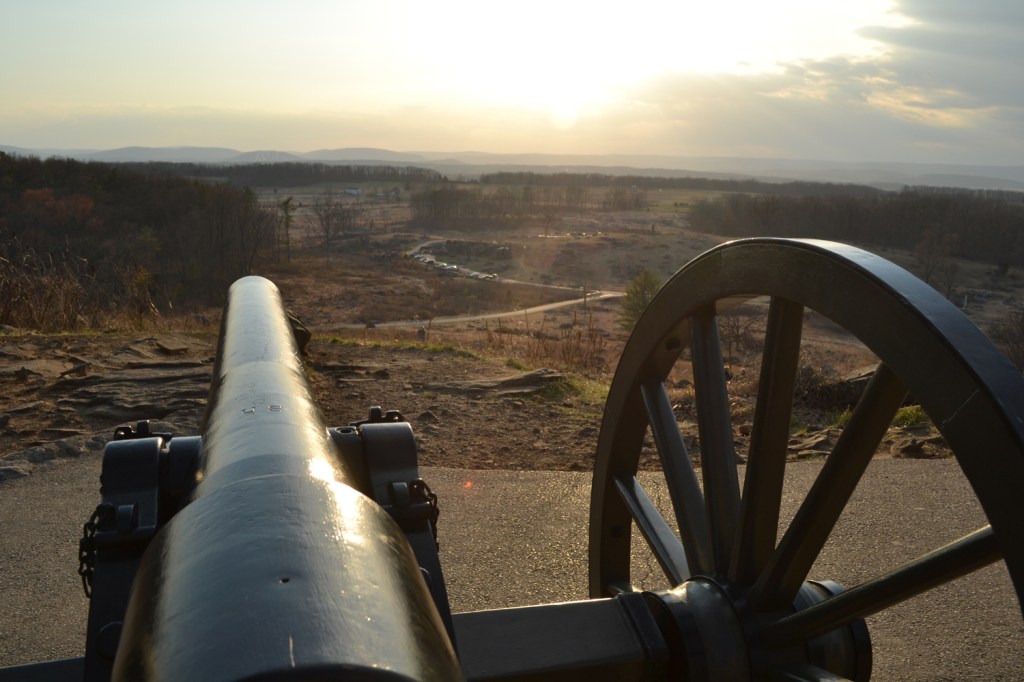
We looked around at the silent cannons—posed and waiting, like sentinels. Witnesses to the deadliest battle of the Civil War. I shivered.
We are sensitives—whether born or trauma-made. Drawn like moths to flame. To trauma. To death. To sacred, ruptured ground.
“It’s the energy,” my friend said. “Spiritual energy.”
I couldn’t disagree. What is spirit, if not supernatural energy? The Shekinah. The Holy Spirit. Energy.
She seeks to understand it. Me? I feel it. Especially trauma. It lights something up in me.
You don’t need a wild imagination to be humbled by Gettysburg. The place speaks for itself.
As the sun set (the park remains open until 10:00), we parted ways with the man—three strangers connected through invisible threads. Before he left, he said, “Be careful.”
We drove slowly through the darkening park and passed the Wheatfield. Suddenly, we both felt it—tingling skin, tight throats, nausea. The air felt electric, charged with something unseen. Then, as soon as we passed the bend, it disappeared.
“You felt that?” she asked.
We described it the same way. Yes, I had.
At Devil’s Den, we got out and wandered behind the granite boulders. A low rumble echoed nearby—maybe thunder, maybe phantom cannon fire. That’s not unheard of here.
My friend led me to a tall tree and stood still.
“There’s peace here,” she said.
But I felt dizzy. Nauseous. Unbalanced. “Stand next to me,” I told her. She did—and immediately felt the same. The air smelled metallic.
Blood, I thought, but didn’t say. I know that smell.
Maybe it was the dark. The uneven ground. But we didn’t feel normal again until we walked away.
Later, as we drove past Little Round Top, I was hit by sudden chest pain, nausea, and a sharp pain behind my eye.
For a split second, I thought I’d been shot.
I swerved and pulled over. The sensation vanished.
“Do you still feel peace?” I asked. “No,” she said. “It feels horrible now. So much death. I’m ready to leave.”
As we exited the park, we passed the same cannons we’d seen earlier—but I saw them differently this time. They were more than relics. They were keepers—of sorrow, of pain, of history we can’t possibly comprehend.
They reminded me of my own inner wounds. Silent. Unnoticed by most. But always there.
Not everything in life can be explained. But we’re not alone.
There are hundreds of thousands of us—like Tanner’s owner, like me and my friend—living on the fringe between the seen and unseen. We’ve experienced too much. We’ve been changed. And we’ve been given a gift: vision born from trauma.
A gift that lets us throw out the bathwater—and still keep the baby.
Maybe that’s why we keep returning to places like Gettysburg. Not just to understand the past.
I’m in my office working on another novel, and my palm started itching. I thought, good, it’s my left hand–money is coming my way. And then I laughed–silly old superstitions.
I needed a break, so I thought, how many superstitions or old wives’ tales do I carry around with me? How about you? Do any of these ring true for you? If you have one not on the list, add it in the comments.
Left palm itches, money is coming. Right hand, kiss it goodbye.
Bird flies into a window it means death will follow.
If a person’s picture falls over, it’s an omen they need help.
Throw salt over your shoulder for good luck.
Black cat crosses your path, bad luck is coming.
Crickets in your house is good luck–unless you kill them!
People can throw you the evil eye and make you sick.
It’s bad luck to stumble upon a funeral.
Make a wish on a four-leaf clover.
Friday the 13th is a day horrible things happen.
Don’t open an umbrella inside, bad luck will rain on you.
Don’t walk under a ladder.
Don’t pick up a penny unless it’s heads up.
Horseshoes turned up, are good luck. Turned down, your luck runs out.
Bad things happen in threes.
The size and number of the brown bands on a woolly caterpillar indicate the snowfall for the winter.
You must eat pork on New Year’s Day.
Laying hands on someone can cure them.
If a groundhog sees his shadow, we have 6 weeks of winter (or is it the opposite)
Many people live with chronic mental health conditions—depression, anxiety, ADHD, PTSD, and more. These are real, brain-changing diagnoses that often require medication and therapy just to maintain a sense of “normal.” For some, the illness is severe enough that the old normal no longer applies. They’re left to build a new one from scratch.
The same is true for those facing chronic or life-altering physical illness. They too must learn how to cope, adapt, and find a new way forward.
I live with CPTSD, depression, and anxiety. Over the years—both personally and professionally—I’ve seen a pattern: we often see ourselves as broken pieces of china, trying desperately to glue the fragments back together. But at the same time, we treat ourselves like disposable red Solo cups—crushed under the weight of perceived failure, the loss of a “normal” life, self-blame, and anger toward ourselves, others, the universe, even God.
It doesn’t have to be this way.
We deserve better from ourselves. Healing is hard enough. Beating yourself up will only make it harder.
If life has chipped or cracked your fine china, you have every right to grieve. You have every right to mend. But stop letting yourself—or others—treat you like a crushed plastic cup.
Here are some ways to start reclaiming your worth:
Know your limitations—and respect them. Boundaries aren’t weakness; they’re wisdom.
Create a safe space. Whether physical or emotional, make a place where you’re untouchable.
Practice stress reduction. Listen to music. Meditate. Read. Walk in nature. Do what calms your nervous system.
Pay attention to your self-talk. Are you your own worst enemy? Are you constantly angry, hopeless, or stuck in shame?
Spend time with supportive people. Seek out those who lift you up, not tear you down.
Explore a spiritual practice. Remind yourself that you are more than this moment, this diagnosis, or this body. There is a bigger picture—and you are a meaningful part of it, even if you don’t fully see it yet.
You are not broken. You are fine china—fragile, perhaps, but still beautiful. Still valuable. Still worth protecting.
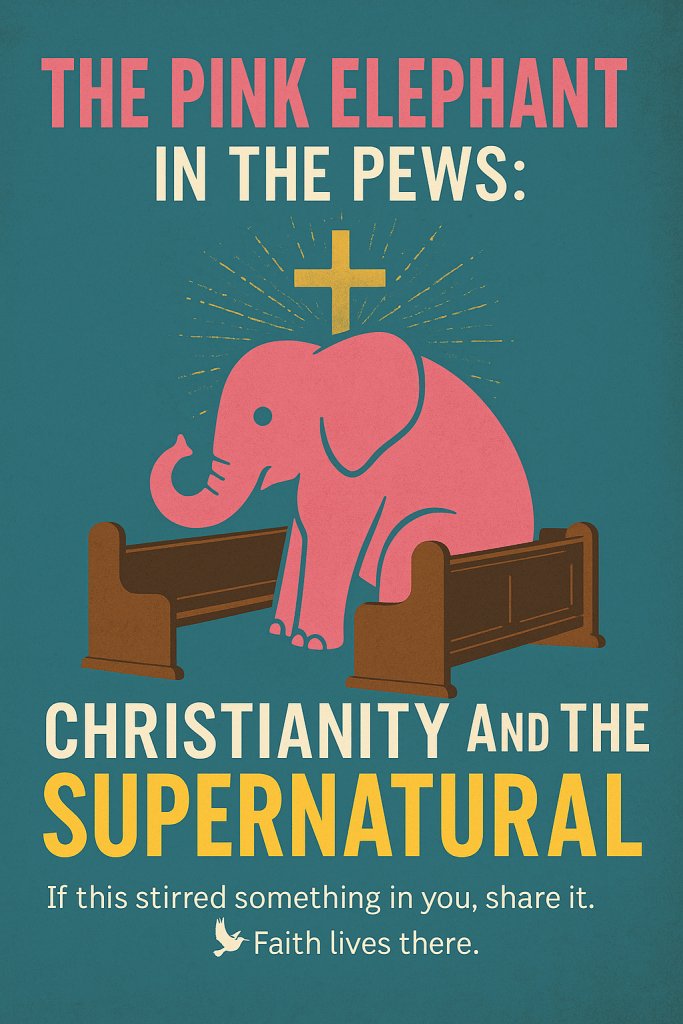
The Pink Elephant in the Pews: Christianity and the Supernatural
Reading time: ~4 minutes
“The supernatural is the manifestation of events attributed to forces beyond scientific understanding or the laws of nature.” — New Oxford American Dictionary
What does the supernatural have to do with Christianity?
Everything.
Without the supernatural, there is no God. No miracles. No answered prayers. No angels or demons. No resurrection. No afterlife. No parting of the Red Sea or plagues in Egypt. Remove the supernatural, and you’re left with a shell of spiritual tradition—fairy tales dressed in Sunday clothes.
So why do so many Christians hesitate to say they believe in it?
It’s like caring for a beloved pink elephant and then denying it exists the minute someone asks. “What pink elephant? I don’t believe in pink elephants. That’s absurd!”
But supernatural experiences didn’t end thousands of years ago, did they?
Some argue, “The age of prophets is over.” Others say, “Only Jesus could perform miracles.” Still others cite Scripture’s warnings against sorcery, divination, and necromancy—as if these verses deny supernatural reality. In fact, they confirm it. You can’t be warned about something that doesn’t exist.
Remember when Saul summoned the spirit of Samuel from the dead? He didn’t imagine it. Samuel appeared and spoke. That’s not symbolism. That’s a ghost. It’s right there in the Bible.
So why the discomfort?
Why do some Christians shut down when the supernatural is brought up—as if faith in the unseen doesn’t require belief in the unexplainable?
Here’s the truth: If you don’t believe in the supernatural, you can’t fully believe in Christianity.
Spirituality and the supernatural are intertwined. Without one, the other crumbles. The Bible isn’t just a collection of moral stories. It’s a chronicle of the extraordinary breaking into the ordinary. A burning bush. A virgin birth. Water turned to wine. A man raised from the dead.
In fact, the more literally you take the Bible, the more you must embrace the supernatural. It’s not just the foundation of the faith. It is the faith.
U.S. Catholic magazine affirms this in Tim Townsend’s article, “Paranormal Activity: Do Catholics Believe in Ghosts?” It states:
“Ghosts confirm, rather than refute or disturb, Catholic theology of the afterlife.” Belief in the seen and the unseen isn’t optional—it’s essential.
And yet, in conversations, I’ve heard this:
“Of course I’m a Christian. Jesus died and rose again for my sins.”
“So you believe in the supernatural?”
“No, absolutely not. You don’t really believe in that stuff, do you?”
Sigh.
Why are we hiding our light under a bushel? Is it fear of judgment? Of being called foolish or irrational?
It can’t be fear of God—because without the supernatural, there is no God to fear.
If we deny the supernatural, we deny the very core of our faith. No resurrections. No divine interventions. No hope for eternal life. No visions, no visitations, no burning hearts stirred by an unseen presence.
Without it, there is no mystery. No wonder. No awe.
In the same article, theologian John Newton reflects on those who claim to see ghosts:
“I certainly see no good reason, all other factors being equal, to deny that someone who claims to have seen a ghost has not had a genuine experience of some sort. The question then is: what sort of experience has occurred?”
Exactly.
Should Christians run from the supernatural? If we did, we’d have to throw out half the Bible and all of our hope.
Without it, there’s no revival. No being born again. No faith healing. No dreams or visions. No heaven. No hell. No divine purpose. Just Sunday routines, stripped of spirit.
And if we deny it out of fear or pride, are we not like Peter when the rooster crowed?
So I’ll ask you plainly: Do you believe in the supernatural?
Maybe the language feels uncomfortable. Maybe it’s easier to say “God” than “spirits” or “angels” or “miracles.” But that doesn’t make them any less real. We’re ants trying to comprehend the foot that built the stars. And if God could create the laws of nature, DNA, time, and consciousness itself—how arrogant are we to say what can’t be?
We don’t have to understand the supernatural. But we do have to acknowledge that it’s always been part of the story.
Call to Action: If this stirred something in you, share it. Start a conversation. Acknowledge the pink elephant. And most importantly—don’t be afraid to believe in what you cannot see. 🕊️ Faith lives there.
Miracles happen when you least expect them—or maybe it’s luck, or fate?
It was an ordinary Tuesday, except the dryer was on the fritz. So, the jeans were strung across a rope from the dining room buffet to the living room bookcase. I should also mention that a gallon of Country Pink paint was sitting—lid half-on—on a stack of newspapers atop the buffet. (I’d been painting before the dryer died.)
And then there was Frodo—a York Fair goldfish—swimming peacefully in his bowl, completely unaware that things were about to go terribly wrong.
As usual, I was dancing around the living room, music loud, getting in my daily “exercise.” The second verse of Ghost Dance by Robbie Robertson was playing when all hell broke loose.
The top of the buffet collapsed.
The paint can launched into the air.
The jeans came crashing down.
And Frodo—poor Frodo—soared skyward, caught midair in a rain of pink. I watched, helpless, as he splashed down into the tangled denim, disappearing into a puddle of Country Pink on the carpet.
“Help me!” I yelled into the phone at my husband.
“What do you want me to do?” he asked, calm as ever.
“Frodo is in there somewhere!” I cried. (Forget the jeans, the broken buffet, the ruined carpet. I had a fish to save.)
“Well, if the fall didn’t kill him, the paint probably did. Start looking.”
I hung up and began frantically sifting through the wreckage. Five minutes passed. Then ten. Frodo was nowhere to be found.
And then—I spotted him. A small, motionless blob in a deep pink puddle. He wasn’t moving. I’d killed him.
Panicked, I picked up his slimy, paint-covered body and rushed him to the sink. I knew chlorine could kill a fish—but figured you can’t kill a fish twice. I rinsed him gently under running water, laid him on a paper towel, and stared at his lifeless body.
What was I going to tell the kids?
Then I saw the bowl—miraculously unbroken. I cleaned it, filled it with water, and—though it felt absurd—I dropped Frodo in.
He floated.
I walked away, too heartbroken to do anything else, and started the monumental task of cleaning up the mess.
Thirty minutes passed.
At some point, between loading the washer and mopping the floor, I passed the sink—and stopped. Frodo was swimming.
He was alive.
We renamed him Lazareth. He lived for years after that in a bigger, better aquarium, in a much safer spot.
So how do I explain it?
I don’t know. Was it a miracle? Maybe. Does the creator of all things get involved at that level? Perhaps. Was it luck? Fate?
They say zombies are the living-dead—soulless husks roaming the earth in search of flesh to satisfy an unholy hunger.
But I say zombies are the dead-living—those still breathing, still walking, yet hollowed by pain, wandering this world and beyond in search of something to quiet an unrelenting restlessness.
We think hauntings happen only in places touched by death—houses, graveyards, battlefields. But hauntings happen in the mind, too.
Some people haunt themselves. Others are haunted by their everyday reality. And then there are those whose haunting was born in unspeakable terror—one that doesn’t fade with the light, but grows stronger after dark, when the vulnerability of sleep sets in.
This isn’t just restlessness of the body. It’s a soul-deep disturbance. It whispers at the edges of consciousness, like a ghost speaking through a medium. No one else sees it—only the aftershocks etched across a person’s face, voice, choices.
It’s tempting to run. I’ve run. I’ve searched shadows, scoured dark corners, tried to flee from the thing inside me. But here’s the truth:
Listening to the Sounds of Nothing ~ Approx. 4–5 min read
Monument Valley
Monument Valley National Park spans the corners of Utah, New Mexico, Arizona, and Colorado, and rests within the Navajo Nation. I’d never been, but something about that red earth called to me. I wasn’t interested in the usual dirt drive tourists take. I needed more. I needed connection.
My husband and I hired a Navajo (Diné) guide and climbed into his jeep. He took us to parts of the valley off the beaten path. About two-thirds through our tour, nearly axle-deep in rich orange sand, he stopped the engine.
“What do you hear?” he asked.
“Nothing,” I said. I had never heard nothing before. My heart beat faster.
“Exactly.”
He grinned, turned the key, and we continued through the quiet, swerving toward a towering sandstone alcove. Once parked, he motioned for us to follow.
Inside the alcove, the temperature dropped twenty degrees. He told us to lean against the stone wall, and we did. The rock was smooth, cool, grounding. I closed my eyes. I didn’t want to leave.
Again, he asked, “What do you hear?”
This time, I heard our breathing echoing in the stillness. Then he began to sing. Words I didn’t understand in a rhythm that seeped deep into my bones. His voice reverberated across the alcove in a way that felt like a secret between the rock and my soul.
He stopped. “Isn’t that something?”
I couldn’t answer. My body felt full and hollow at the same time. He nodded, understanding.
“We have to go back,” he said.
I didn’t want to. This encounter changed me, inspired me, and saddened me as well. What did it mean?
The Gift
Later,we detoured to a cliffside overlook where you can view ancient dwellings carved into the stone. As I walked the path, an elderly Native woman and a teenage girl approached me. The woman held a necklace—glass beads and juniper berries with a wire dreamcatcher pendant.
She said something I didn’t understand. The girl smiled. “It’s a gift,” she said. “From my grandmother.”
I hesitated. Was this a tourist trap? A silent exchange of expectation?
Maybe I looked wary because they grew more insistent. So, I took the necklace and said thank you. They both smiled, then disappeared up the path.
After taking my photos, I returned to find a tin can on a folded blanket with a few bills and coins inside. I dropped in a twenty, unsure if I’d just honored or violated something sacred.
And that’s the word that felt right–sacred. I felt at one with the universe, hearing something most people will never hear—nothing. And it was powerful.
The necklace hangs on my wall, a quiet reminder that in stillness, we touch the sacred.
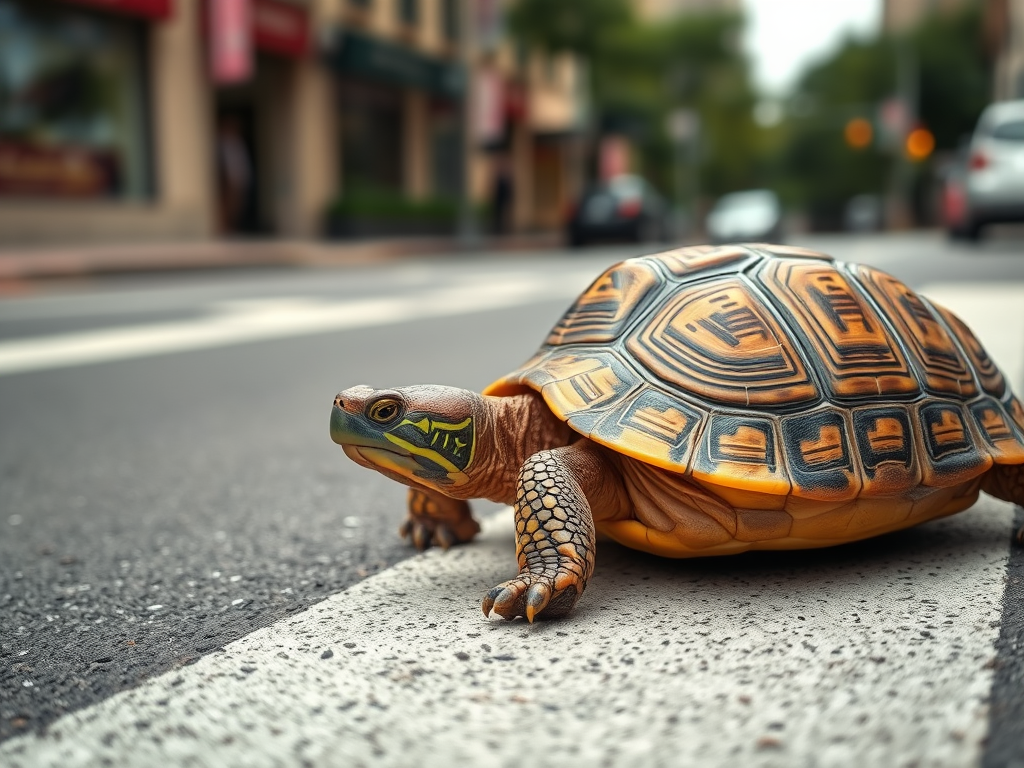
“Have you ever watched a turtle?” an Oneida woman asked me from behind the counter at the Shako:wi Cultural Center in Oneida, New York.
“Not really,” I admitted—but told her the subject of turtles kept coming up in my life.
She smiled. “Turtles are slow, steady, and strong.”
As she gave me a tour of the center, I mentioned I was looking for a book about Deganawidah and Hiawatha—figures I admired from Travels in a Stone Canoe. I also picked up one on the Oneida creation story.
“It’s the turtle that grows and becomes the island of North America,” she said.
Months later, I found myself at a Lenape inter-tribal Winter Solstice gathering in Pennsylvania, deep into the night as we sang the Walam Olum, the Lenape creation story. As I read along, the words jumped out: and the turtle became the foundation of the earth.
Turtles again.
Overheated and restless, I stepped outside into the cold. A man wrapped in a wool blanket joined me by the fire. “I’m Walking Bear,” he said. “You looked cold. Drum too loud?”
“I just needed a break,” I told him.
He studied me. “What do you know about turtles?”
“Not a lot,” I replied.
“I saw you inside,” he said. “Sometimes, you reminded me of a turtle. Other times, it looked like you forgot how to be one.”
“Turtles are slow, steady, and strong,” I offered.
He nodded. “Turtles carry the horrors of the world and remain connected to the Creator. You have a turtle shell. I see it.”
Then, pausing, he asked: “You’ve seen the Creator, haven’t you?”
He didn’t know me, didn’t know about my near-death experience, my years of service to others, or the guilt-driven urgency I carried. I said nothing. He was called back inside. I never saw him again.
But I couldn’t stop thinking about turtles.
I researched turtle totems, animal behavior, legends—driving my friends nuts. Everyone told me to slow down. I didn’t listen.
Then one summer in Oriskany, a large turtle stopped in front of our RV and stared us down. I jumped out, laid on the road, face-to-face, and begged it: What does this mean?
No answer. It eventually turned and walked away—slow, deliberate, unbothered. I watched until it was safe, mildly disappointed.
Weeks later, before a major presentation—my first in 25 years—I was spiraling. Panicked. My friend, sharing the hotel room, finally snapped: “Go splash your face. You’re driving me crazy.”
In the bathroom, a silver turtle charm fell out of the washcloth.
Tears welled in my eyes. I rushed out. “Look! The Creator sent me a turtle!”
My friend sighed, picked up a pillow, and whacked me. “I put it there, genius. Maybe I’m the miracle. Ever think of that?”
She was right. I calmed down. The presentation went beautifully. Had I been rushing, I would’ve missed that moment entirely.
Months later, burned out, sick, and disconnected, I knew I couldn’t keep living that way. I began training my replacement—an ex-priest who, somehow, knew what I needed better than I did. On my last day, he handed me two gifts: a stitched saying, To help another person is to touch the heart of God—and an Oneida creation story print.
Of the turtle.
“You’ve got the shell,” he said. “You just need to live like it.”
I didn’t get it then. Not fully. It took four more years, a chronic illness, and finally crashing from overdrive to understand. I’d been trying so hard to prove I was worth the second chance I’d been given, I forgot how to live it.
Now, forced to slow down, I hear more: in doctor’s offices, waiting rooms, quiet walks. I catch moments I used to miss.
“Slow down,” the man said. The turtle says it too.






 Deborah Sickle Hill
