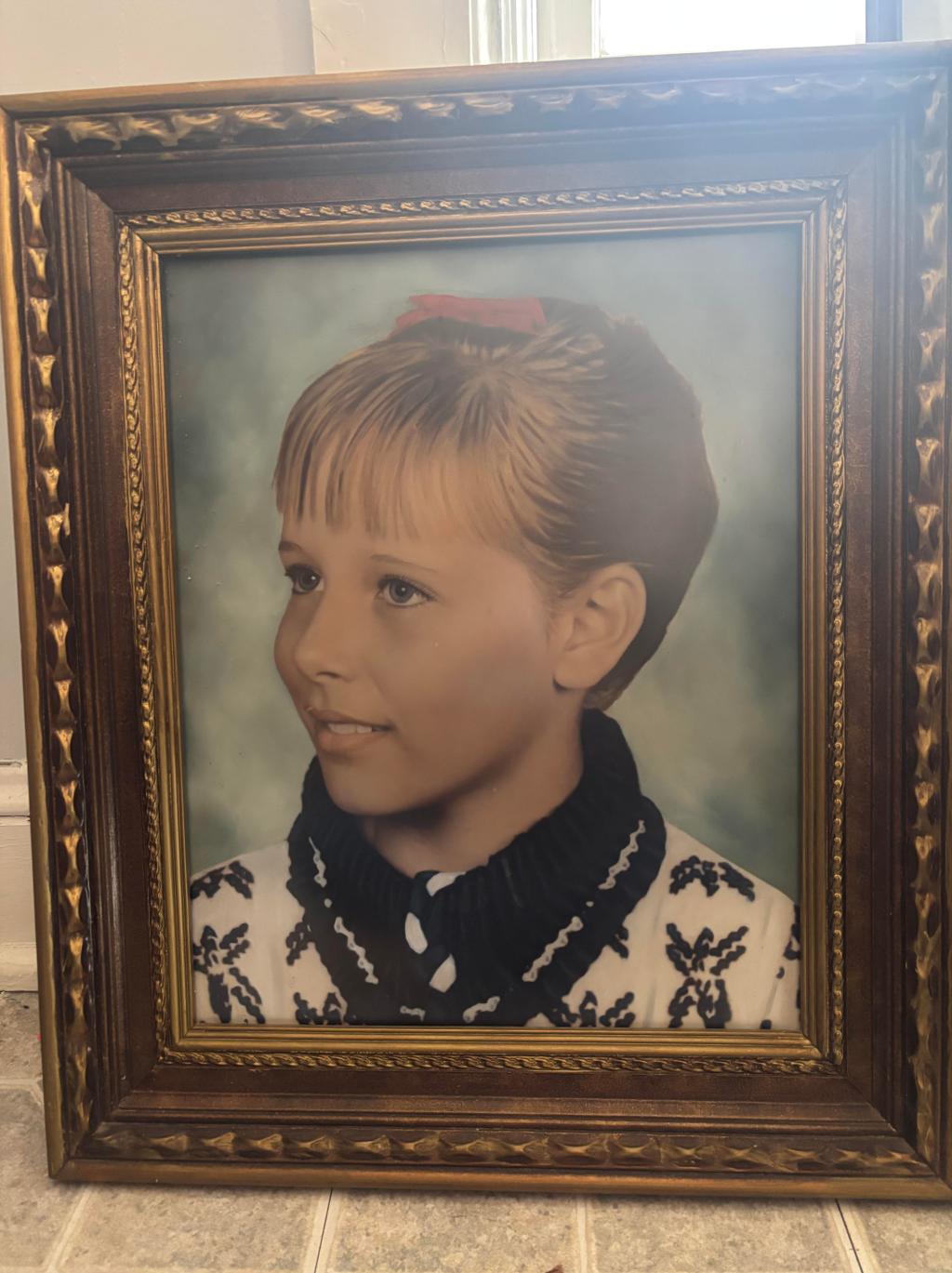
It’s been fifty-seven years since she passed. I keep mementos around my office and bedroom, so she’s never far from my thoughts. About fifteen years ago, I realized I could talk about her and see pictures of her without losing my mind. Our long book of grief was finally closed and set on the shelf. Then I was given the portrait.
A huge school picture, the kind meant for hanging over a fireplace. I’d stared at this picture and longed for it most of my life. Now it sits in my office, still without a place on the wall. Part of me wants to hang it prominently in the living room—but she means nothing to my family. My office? Would that be hiding her away—or finally putting her where she belongs?
Last night, she sat in my living room while we watched TV. I think I spent as much time watching her as I did the screen. Remembering words I never got to say. I was probably much too young to speak them then. Not that I haven’t talked with her over the years—countless hours lying by her grave, telling her about my day, playing our music, and getting lost in our past. My portrait. Her face.
I always thought I should have been the one to pass on, me being the sickly one. Irrational, but a part of me still carries that guilt. Growing up, I wanted to be perfect so I’d get to heaven and see her again. I wanted to be the best to fill the hole her absence left. I was just a kid—I’ve had plenty of therapy since then.
So why am I sitting here now, lightly sobbing? It’s only a portrait that needs a home. But I wonder if I ever told her I loved her—not after the fact, but in the moment, when she could answer back.
It’s been fifty-seven years since she passed, fifteen since I stopped punishing myself. And now this portrait sits here, reminding me that maybe grief isn’t a closed book after all—it’s a story that keeps finding its way back into my hands.
Some days, the words just don’t come. Today is one of those days. I haven’t written a blog in two weeks, and instead of writing, I’ve been building Super Mario characters for Halloween and planning a trip. Creative, yes — but not the kind of writing I promised myself I’d be doing. And today? I’m just…blah.
Today, though? I feel…blah. No big burst of inspiration. No profound story to share. Just the quiet reminder that creativity has its rhythms. Some days are fireworks, others are embers barely glowing. And that’s okay.
Even “blah days” are part of the process. They give us space to rest, reset, and — eventually — return to the page with fresh eyes.
So here’s to the ebb and flow, the spark and the silence. The muse may be napping today, but I know she’ll wake up again soon.
My uncle was dying in a Florida hospital, a thousand miles away. The call came early: Expect the inevitable. Keep your phone close.
He wasn’t just an uncle—he was a second father. But I was home with my daughter, helping her recover from major spine surgery. She needed me. I couldn’t leave.
All day, I juggled logistics, wondering if I could fly down. My mother said, “Let us visit the hospital, then we’ll talk tonight.” But the call never came.
By midnight, my imagination took over. Maybe he’d already passed. Maybe they were too distraught to tell me—like when my sister died when I was seven and I couldn’t say goodbye.
At 12:30 a.m., I half-joked to my daughter, “Maybe he’ll come say goodbye.” I thought of my grandmother’s rocker that moved by itself after she died. Surely my uncle could find a way.
Unable to sleep, I crept downstairs for Lucky Charms, passing my late sister’s Chatty Cathy doll. I pulled out my uncle’s old camera, set it on the table, and cried until empty. Then—a shadow at my feet. I screamed. The milk went flying.
“Meow.” Just the cat.
The phone rang—he was still alive. Instead of relief, I felt emptiness. The next night, the real call came: my uncle was gone. I went numb, then collapsed into wailing.
I’ve seen a lot of grief in my practice, and I know: do whatever healthy thing you need to survive. I let my thoughts spiral. I isolated. Days later, I picked up his camera and started shooting stills while playing childhood music.
My office door swung open. A warm, healing feeling washed over me—comforting, not frightening. I like to think my uncle came to give me a hug. It was what I needed to begin the long, twisting road of healing. Who are you to tell me it was anything different?
IF YOU ARE GRIEVING, KNOW THESE THINGS:
No one grieves the same.
Don’t let anyone tell you you’re taking too long.
Use your support system.
Keep a treasured object.
Write letters to your loved one.
Join a support group when ready.
Seek counseling if you’re struggling—or simply to talk.
Pray, meditate, or find your own way to connect.
If you’re grieving, my condolences. I hope my experience helps you on your journey. —Debbie
A stress is something in your environment that convinces your body to react as though it’s in danger. It can be simple things such as new responsibilities at work, changes in your schedule, or ever stimulation such as overcrowding, too much light, too much noise.
Stress can be Positive, Negative or Neutral.
Negative: It can quickly cause headaches, muscle tension, irritability, anxiety, and anger. Examples: Losing a job, health scares, being burgled, too many deadlines.
Neutral stress typically has the slowest reactions, unless multiple stresses combine. Examples: Finishing a project, moving to a new city, or a change in family dynamics.
Relationships are like trees. When the storm of stress hits, it will either bend or snap. All relationships experience stress. You can’t avoid it.
If you start out with the great relationship, increased stress will still put a strain on that relationship. If you have a mediocre or poor relationship increased stress will make the road much rockier and possibly snap the relationship.
The severity of the stress, the couple’s support system and how well they communicate will help determine how strong and healthy their relationship will be after the storm. Therefore, I always tell people they should have stress inoculation.
Each person handles threats in a different way. You may remember being taught that people either flee, fight, freeze or flop. Stress is experienced in the brain as a threat.
Two people in the same situation can react completely differently from each other.
Fleeing: One person in the relationship may need to take more walks alone or go out with friends more often. This person is fleeing. They need to escape the situation, even if only temporarily. They feel if they don’t flee they will be unable to tolerate the situation.
Fighting: Another person may start arguments, have tantrums, or start physical fights when they are stressed. They may tell you they feel they’re up against the wall and need to react this way to protect themselves. There really is no physical danger or need for protection, but their biology and past learning convinces them otherwise. These people are the fighters.
Freeze: Another person will do nothing. These people become quiet, withdrawn and can’t handle having confrontations. The more upsetting the stress around them the more they shut down. These people are the freezers.
Flop: Another person will flop. Flopping means the person falls down or faints. This usually occurs during times of extreme, sudden stress.
Adrenaline fatigue is an example of flopping (burnout) can happen when a person experiences a long-term stressful environment. It manifests as extreme fatigue sometimes debilitating, and the person can’t function. In time the body wears down and the person gets sick more often and in severe cases can cause or speed the rate of heart disease and death.
So how can a person stress inoculate?
Step one: remember stress happens it’s only a matter of when and what kind.
Step two: know how you react to stress. Are you a flopper, the fleer, a fighter, or someone who freezes?
Step three: if you’re in a relationship, which of these reactions does your significant other use?
Step four: acknowledge and accept that the way your significant other reacts does not have to be the way you react.
Step five: develop good communication before stress hits. If you’re already in the stress boat, take a timeout away from home in neutral territory where you can discuss the stress and how it affects each of you.
Step six: do not bring other parties into your conflict. This is not about he said, she said, he’s bad, she’s bad, I’m right, they’re wrong. It’s about coping when you’re not your best or when loved ones are not at their best
Step seven: do not make any life changing decisions while under extreme stress unless absolutely necessary. You’re not in your normal thinking mind. You’re in survival mode and the part of your brain that deals with rational thinking has taken a side seat to your primitive survival brain.
Step eight: focus your thinking on elements in your life that currently give you joy. There is no such thing as not having joy. Joy is a way of looking at elements in your life that bring peace, appreciation, good healthy feelings if viewed in a positive light. Find it and make it significant.
Step nine: this too shall pass. The outcome of a stressful event may not be positive but the events unfolding are moving in time as you are. You’ll either make decisions for change to get in a better place or the events will change and there will be release.
Step 10: after riding that storm of stress, sit down and evaluate how you reacted and how you both reacted as a team. What worked, what needs tweaked and what needs changed to prepare for the next round.
In the end I’d like to think that most people want their relationships to be healthy, happy and supportive. Remember you are team. Even if you didn’t say the words, for better or worse, as part of a marriage ceremony or you have a committed relationship of any kind, the intent is implied. If your relationship starts looking rocky, do a stress evaluation for both of you. Do it together. Remember, this too shall pass.
Let’s continue the conversation about how to build healthier relationships—with others and with yourself.
Here’s a powerful truth to sit with:
Everything we think, feel, or do is based on what we believe is in our best interest at the time. Even when it looks like the exact opposite.
That’s a hard concept to swallow—especially when we think about someone staying in an abusive relationship, joining a gang, getting hooked on drugs, or constantly procrastinating. Even in these situations, the person believes—on some level—that their actions are helping them survive, cope, or meet a deep emotional need.
We all do things that aren’t in our best interest sometimes. That’s human. (And if you think you never do, you may want to call a mental health provider. Just saying.)
So why do we act against our own well-being?
It comes down to how our brains are “programmed.”
Think of your brain like a computer. It only works based on the data it’s been fed. You were born with some basic instincts—crying when hungry, searching for comfort—but most of your programming came from your parents, your environment, school, relationships, and everything you’ve experienced since birth.
And the earlier that programming is installed, the deeper it runs.
Let’s say Joe is a warm, affectionate guy who grew up in a cold, distant home. His inner radar is now tuned to search for love and connection—sometimes in all the wrong places. If his need is strong enough, he might even engage in risky or self-destructive behaviors just to feel loved or valued.
Our brains are always scanning for ways to meet our needs, just like we search for a deal on ground beef or the right words to win an argument. Every choice we make—whether we eat a salad or grab a Big Mac—is based on our filters and beliefs about what will help us feel better, safer, happier, or more in control.
So here’s your challenge: Pause today and ask yourself why you’re doing (or not doing) something.
Why did you hold the door for someone?
Why did you snap at your spouse?
Why are you running late again?
Why are you reading this blog?
Every action has a deeper motivation, even if it’s buried.
Let me give you an example: You’re late for work, exhausted, and have to give a big presentation. You know espresso makes you jittery, but you drink one anyway—and sure enough, you flub the presentation.
Why did you drink it? Not just because you were tired.
Dig deeper. Maybe you were desperate to impress, hoping for a promotion. Why? Because you want to be seen as a good provider. Why? Because you want your family to love and respect you. Boom. That’s the real reason.
But here’s the twist: What if chasing that promotion makes you less available to your family? What if it leaves you feeling even less loved?
It’s time to ask the bigger question: What does love really look like to me? And are my current actions bringing me closer to it—or pushing it away?
You don’t have to have all the answers. But if you can recognize your deeper needs, question your beliefs, and stay open to new perspectives—you can begin to make healthier, more intentional choices.
And always remember: Sometimes, the choice that seems irrational to others is the best a person can do in that moment—especially when survival is on the line.
Wouldn’t it be nice if people came with instruction manuals? Better yet—what if we came with our own?
Imagine how much easier relationships would be—both with ourselves and with others—if we had a clear set of directions to follow. You might be surprised to learn: you don’t need a 200-page manual. A couple of index cards would do.
That’s because the basics are simple. Unfortunately, most people never get taught them. So we end up walking through life with blinders on, trying one approach after another, hoping something sticks.
Take this example: Someone gets angry and gives the silent treatment. Why? Because they believe the other person should know what they did wrong. The problem is—it solves nothing, gains nothing, and slowly chips away at the relationship. The more chips, the more dysfunction. Yet the behavior continues, often with confusion and surprise when the relationship sours.
Why do we do this? Because no one gave us the index cards.
Here’s the first card:
1. People can only act and react (thinking, feeling, doing) based on what they know.
Sounds obvious, right? But if it were, we’d all be a lot gentler with each other. Instead, we regularly expect others to respond the way we would, based on our experiences, our knowledge, and our perceptions (meanings).
Let’s look at a few examples:
Expectation: “If you loved me, you’d bring me chocolate donuts with sprinkles.” Reaction: “I brought you flowers. I thought that meant I loved you. How was I supposed to know donuts meant love?”
Expectation: “You should know better than to leave the oven in clean mode when leaving the house! Everyone knows that’s a fire risk!” Reaction: “I didn’t know that. I’ve never cleaned an oven before. How would I know it could catch fire?”
Expectation: “Can’t you do anything right? You can’t even load the dishwasher correctly!” Reaction: “Is there a right way? I was just trying to help. You know what—next time, you do it.”
Want to be shocked? Try this:
Spend one full day paying attention to how often you expect someone to act or respond based on your knowledge. Count how many times you assume someone “should just know.”
Then, spend another day observing how you feel when others make the same assumption about you—expecting you to read their minds, meet their needs, or act in a way that makes sense only in their world.
You’ll start to see just how much of our conflict stems from this silent mismatch of expectations.
And one last thought: Even if you’ve known someone your whole life, don’t assume they know what you know—or that they’ll process things the same way. We’re all working without manuals.
Mental Illness Is No Joke By Deborah Hill, LCSW (Ret.)
Mental illness is a health condition that affects thoughts, feelings, and behaviors—and makes everyday functioning harder. (NIH) Think: Depression, Anxiety, Bipolar Disorder, PTSD, Schizophrenia, ADHD, and more.
I often write about how we all make choices to meet our needs. But for those living with mental illness, that process can feel like walking through fog. Brain chemistry can distort reality and make even basic questions harder to answer:
What do I want?
What am I doing to get it?
Is it working?
Why or why not?
What could I do instead?
Mental illness isn’t a character flaw. It’s not weakness. It’s not “just in your head.” And it’s definitely not a joke.
Working with a trained therapist can help untangle thoughts, challenge distorted beliefs, and build a life worth living—even if a cure isn’t possible.
If you’re struggling, please know: You are not alone. You are not broken. And you can feel better—with help.
Eliminate the Worrywart: Understanding and Managing Everyday Anxiety By Deborah Hill, LCSW (Ret.)
“I had a big presentation today and was up all night worrying.” “I’m running late again—I’m afraid I’ll lose my job.” “I’m so worried about Jim’s health, I can’t eat.”
Sound familiar? We all worry. But chronic worry is more than emotional discomfort—it’s a contributor to high blood pressure, digestive issues, insomnia, and even long-term health breakdowns. Some people literally worry themselves sick.
Worry Is an Illusion of Control
Worrying often feels like doing something—but it’s really just a poor attempt at control. When we worry, we unconsciously think:
“If I think hard enough, I can stop something bad from happening.”
“If I don’t worry, I’ll be unprepared or uncaring.”
“If I mentally run every possible outcome, I can force the right one.”
None of that is true. A woman worrying in the waiting room during her husband’s surgery isn’t helping him heal—she’s draining her own energy. If she took a walk, grabbed coffee, or talked with a friend, the outcome wouldn’t change—but her resilience to face it would improve.
Worry = Self-Induced Stress
Unlike external stress (deadlines, illness, difficult people), worry is internal and voluntary. It places your body on red alert:
Muscles tense
Digestion slows
Heart rate and blood pressure rise
Adrenaline spikes
You lose sleep, focus, and peace
Your body thinks it’s in battle mode. But there’s no enemy. Chronic worriers stay on this battlefield for years—until their body breaks down.
Why We Worry
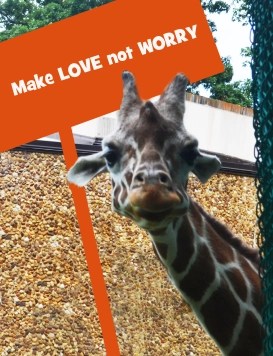
Worry can stem from love, fear, or habit. People say, “If you love someone, you worry about them.” But love doesn’t require mental telepathy. It asks for care and presence—not obsessing over things you can’t control.
The term “worrywart” makes sense. Left unchecked, worry grows and consumes. Like a wart on the body, it starts small but can overtake everything.
How to Squash the Worrywart
1. Recognize What Worry Is
Worry is a thought loop aimed at controlling the uncontrollable. You’re trying to predict, prevent, or fix something—often using nothing but mental energy.
2. Acknowledge You’re Not Telepathic
You cannot control life, death, illness, or other people’s decisions by thinking hard enough. No one can. And that’s okay.
3. Tune into Your Warning Signs
Your body gives you early alerts—like a ship moving from green to yellow to red alert. Ask yourself:
Are my thoughts racing?
Do I feel tense or sick?
Am I imagining worst-case scenarios?
Name it: “I’m worrying.” Awareness breaks the cycle.
4. Ask: Can I Control This?
If the answer is no, accept that. Letting go doesn’t mean you don’t care—it means you’re reclaiming energy for what is within your power.
5. Turn Worry into Work
✦ Prayer or Reflection
Prayer isn’t worry—it’s surrender. It can offer peace and perspective. If prayer’s not your thing, mindful reflection or meditation works too.
✦ Redirect Your Thoughts
Change your environment: get up, move around, talk to someone, take a walk, or do something tactile. Worry often fades when we shift context.
✦ Focus Your Mental Beam
Engage in hobbies or tasks that require concentration—baking, puzzles, gardening, music. Focus crowds out worry.
✦ Move Your Body
Physical activity releases stress. You don’t need a gym membership. Dance in your kitchen, walk the dog, clean the garage. Use that fight-or-flight energy productively.
✦ Get Involved
Channel worry into action:
Concerned about health? Research and prepare.
Afraid of crime? Join a community initiative.
Overwhelmed by a deadline? Learn time management or ask for help.
The Energy Shift
“I wish I had her energy—I feel so drained.” She may not have more energy, just fewer leaks. Chronic worry is an energy drain. When you stop trying to control what you can’t, that energy returns. You feel lighter. Healthier. Calmer.
Bottom Line?
Worry is optional. Learned behavior can be unlearned. Stop rehearsing disaster. Step away from the red alert. Reclaim your body, mind, and peace. It’s never too late to squash the worry wart.
I see books all the time about the five types of relationship killers. It’s ashamed we stop at five because naming the top five may not hit on the bumps in a relationship. If you look at a lot of the social and psychological data on relationships, the list looks more like this. (Note these are not in order of most damaging to least. There is no way to do that as each entry has its own dimensions and they differ couple to couple).
Communication issues
Dependency vs independence
Money
Ineffective problem solving or arguments
Changes in sexual desire
Affairs/one night stands/porn/excessive flirting
Friends/family/in-laws
Life Stress: job/unemployment/death/chronic illness/sudden illness/mental illness/increase in responsibilities/aging/moving/life style changes
Habits/vices/addictions
Taking the other for granted
Rushing into a phase in the relationship too quickly: weddings/babies/retirement
Lack of trust
Lack of Intimacy: feeling like you have to hide who you are due to fear of being unlovable/ no physical intimacy (touching)/ feeling like you have to be someone else to be loved
Lack of care: feeling like you are not cared about or your partner does not understand you
Judgementalism: feeling like you are always scrutinized, you can’t do anything right or being perfectionist and believing you can’t do anything right.
Tests: partner sets up little tests to see if you pass and are worthy of trust/love
Unrealistic expectations: if this is love, why am I so miserable – expecting partner to meet or fix your inner emptiness or meet unrealistic expectations or fantasies
Lack of contributions in household, family responsibilities
Raising kids
Respect
Comfort levels
Different goals in life
Step parenting
Mistakes: shutting down due to fear of making a mistake, making things worse
Living in the past
What is important to know is that while these can range in metaphor as a splinter, dagger or serial stabbing.
What one couple sees as a serial stabbing another might see as a splinter. Why the difference and which couple is going to ride the wave and come out feeling connected? The quick and easy answer is in fluidity and commitment to the relationship.
Fluidity means the ability to bend and not brake, to see the whole picture and not hyper-focus on one detail. Think about your relationship as a porcelain bowl, for example. If you drop the bowl into a swimming pool full of water, it will get wet, but most likely will stay intact. If you drop it in the sand, depending on the height you drop it; it might stay intact or crack. If you drop it on concrete – it’s shattered – almost every time.
There are ways to make you more mindful – more fluid. Keep in mind, however, that you are only one person in a relationship. The strongest relationships have fluidity in both partners.
Understanding Triggers: PTSD, Trauma, and the Unexpected Connections
By: Deborah Hill LCSW (Ret.)
I’ve heard it said that death begets death. In other words, when you’re grieving—or helping someone who is—past losses often come rushing back. Old funerals, lingering memories, and unhealed wounds rise to the surface, uninvited.
The same is true with trauma. When someone is navigating severe trauma, another person’s trauma can feel like a mirror, unexpectedly reflecting their own. That’s why I often advise my clients to be cautious with news broadcasts and certain TV shows or films. Until you’ve identified your own trauma triggers, you may unknowingly stumble into a scene too similar to your lived experience, and suddenly you’re not watching a story—you’re reliving your own.
It’s tempting to think trauma triggers are obvious: Such as someone saying, “I experienced child abuse, so I’ll avoid media that deals with abuse.” But trauma imprints itself in the brain like a four-dimensional movie camera, recording not just the event but sights, smells, sounds, body sensations—even the temperature of the room. The obvious isn’t always what sets you off.
.This is what makes living with PTSD so complex. Learning to recognize how trauma affects the brain is step one. Learning your own unique triggers is step two. From there, you begin the work of managing those triggers, lessening their power, and understanding your limits. Most importantly, you learn never to give up—not on your healing, and not on yourself.
What To Do When You’re Triggered
1. Ground Yourself. Take a mental roll call. Where are you? Who’s with you? Are you safe? Tell your brain: I’m in my living room. The curtains are green. I’m drinking Lemon Zinger tea. It may seem silly, but it sends your brain the message: This is now, not then.
2. It’s Okay to Be Triggered. Triggers feel awful. They can cause intense physical, emotional, and even visual flashbacks. But once you’ve calmed down, don’t shame yourself. You reacted because your brain was doing its job—trying to keep you safe. Triggers are like smoke alarms; they may be oversensitive, but they exist for a reason.
3. Become an Investigative Reporter. Keep a log. What were you doing, watching, or thinking when the trigger hit? What did you feel? What happened afterward? Over time, patterns emerge. Maybe it’s the sound of sirens or the scent of a certain food. Even if two people experience the same trauma, their triggers are uniquely personal.
4. Bring Your Insights to Someone Who Can Help. Working with a trauma-informed therapist can make all the difference. Bring your log, your questions, your insights. You are the expert on your own experience. A good therapist isn’t there to “fix” you—they’re there to walk beside you, equipped with tools for the journey.
Herman Melville once wrote in Moby Dick: “To the last I grapple with thee; from hell’s heart I stab at thee; for hate’s sake I spit my last breath at thee.” He was writing about a man’s obsessive pursuit of a sea monster—but perhaps he was also writing about grappling with the monsters within.




 Deborah Sickle Hill